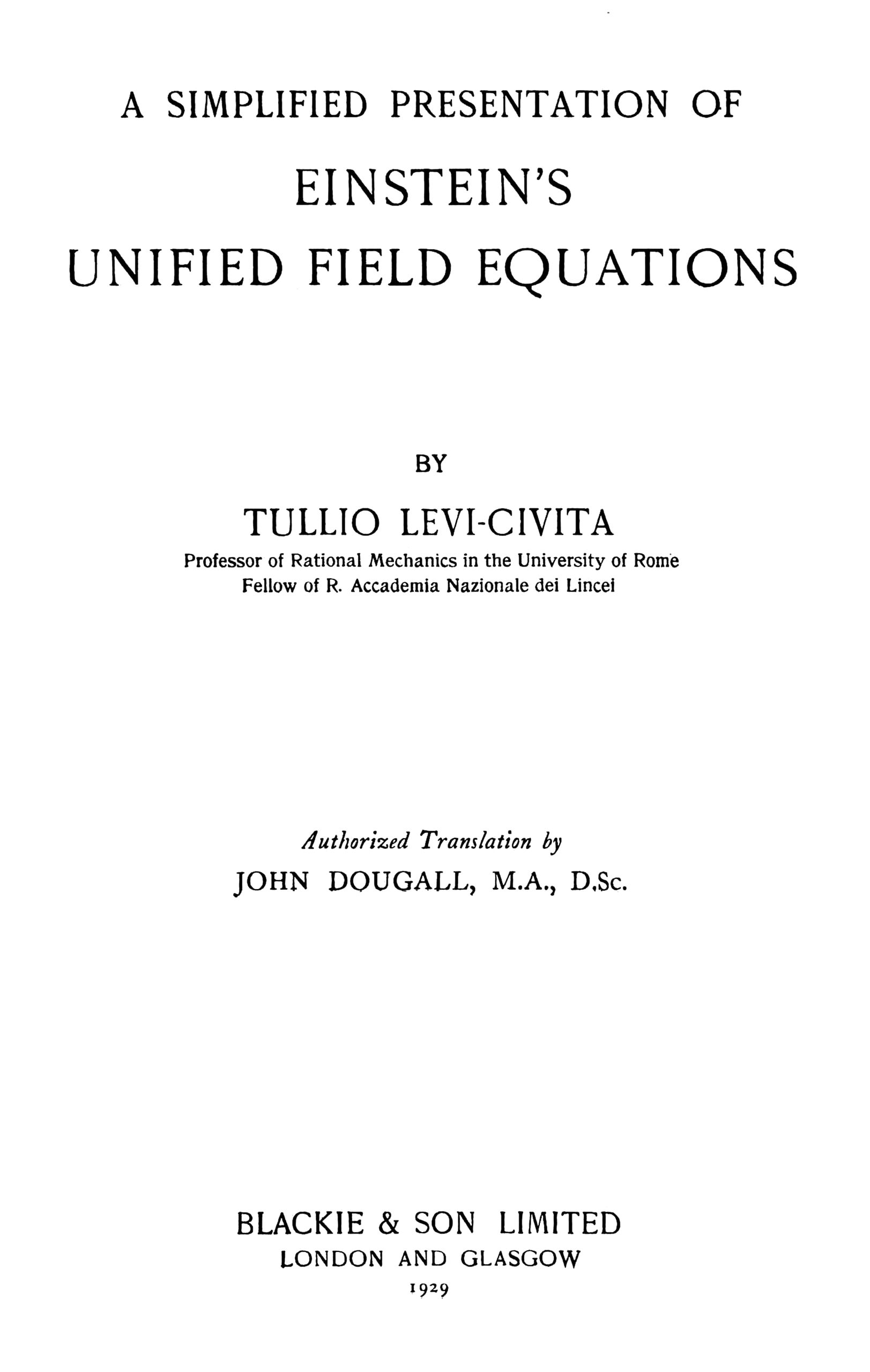
By
TULLIO LEVI-CIVITA
Professor of Rational Mechanics in the University of Rome
Fellow of R. Accademia Nazionale del Lincei
Authorized Translation by
JOHN DOUGALL, M.A., D.Sc.
BLACKIE & SON LIMITED
LONDON AND GLASGOW
1929
BLACKIE & SON LIMITED
50 Old Bailey, London
17 Stanhope Street, Glasgow
BLACKIE & SON (INDIA) LIMITED
Warwick House, Fort Street, Bombay
BLACKIE & SON (CANADA) LIMITED
1118 Bay Street, Toronto
Printed in Great Britain by Blackie & Son, Ltd., Glasgow
In his recent paper, "Zur einheitlichen Feldtheorie",[1] Einstein made use of the fundamental idea that it is both possible and useful to give a geometrical interpretation of the complete system of the sixteen field equations (consisting of Einstein's celebrated gravitational equations and Maxwell's equations) in such a way as to include the definition (and the definition only) of an orthogonal quadruplet[2] embedded in the space-time world.
Conversely, the sixteen parameters determining a quadruplet are to give a complete definition not only of the Riemannian metric of space (as is well known, this takes place automatically), but of the phenomena of electromagnetism as well.
For this purpose the eminent author introduced covariant derivatives with respect to the quadruplet, and suggested relationships between them which to a first approximation lead to the required co-ordination of gravitational and electromagnetic phenomena.
It appears to me, however, that the root problem raised by Einstein can be solved in a simpler and more general way by making use of perfectly familiar methods of the absolute differential calculus on the one hand, while, on the other hand, retaining unaltered all results previously obtained.
1. Geometrical and formal preliminaries.[3]
Let  be general co-ordinates of a
Riemannian space
be general co-ordinates of a
Riemannian space 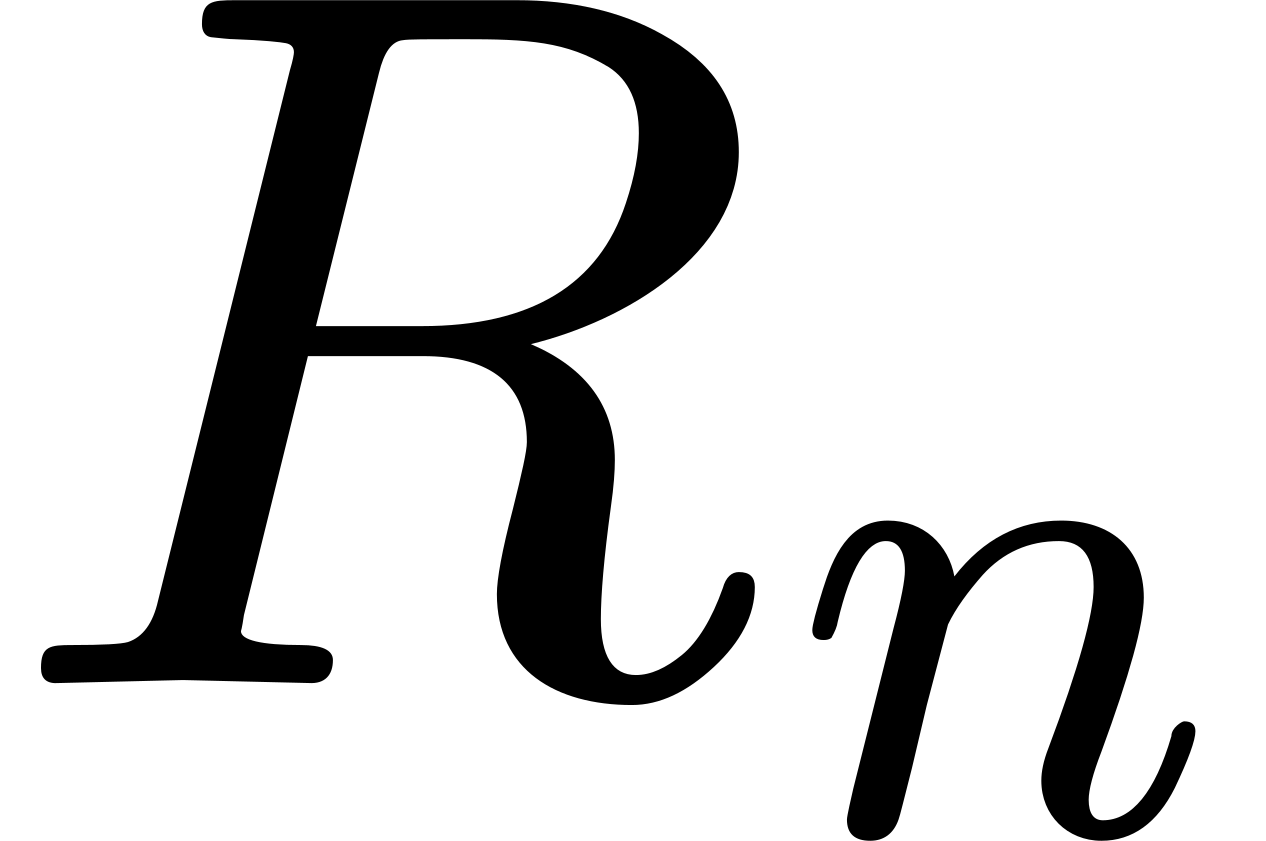 , and
, and  the parameters of
 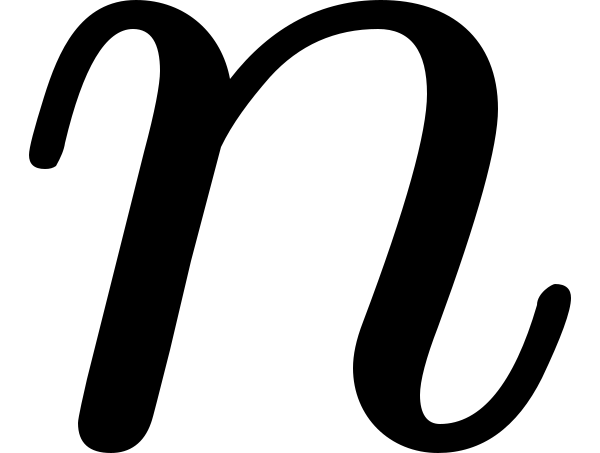 congruences, which define a lattice of
lines in and an -uplet[4] at every point.
congruences, which define a lattice of
lines in and an -uplet[4] at every point.
Following Einstein's example I shall use Greek letters for co-ordinate
indices (such as 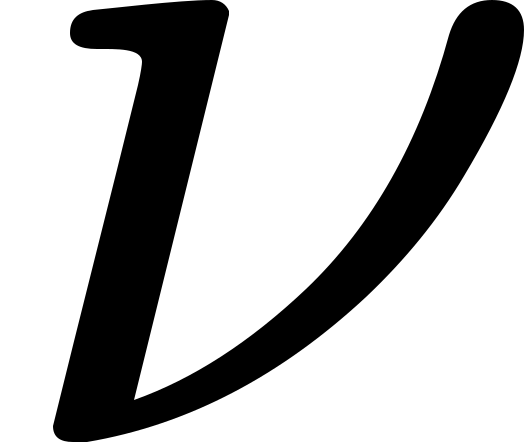 ), and Roman letters, on the other hand, for
indices referring to the -uplet (such as
), and Roman letters, on the other hand, for
indices referring to the -uplet (such as 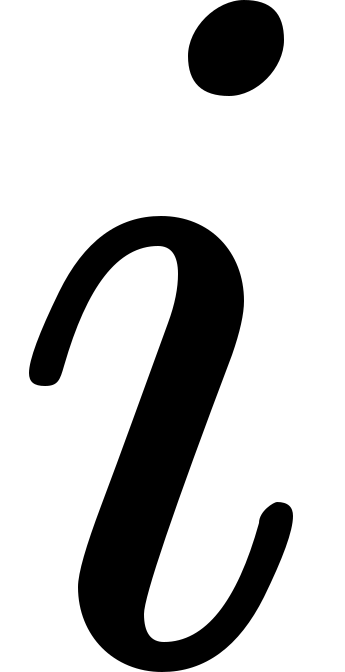 ). I shall leave out
signs of summation with respect to Greek indices (provided they occur
once above and once below), but other
). I shall leave out
signs of summation with respect to Greek indices (provided they occur
once above and once below), but other  's will be retained.
As usual, let the quantities 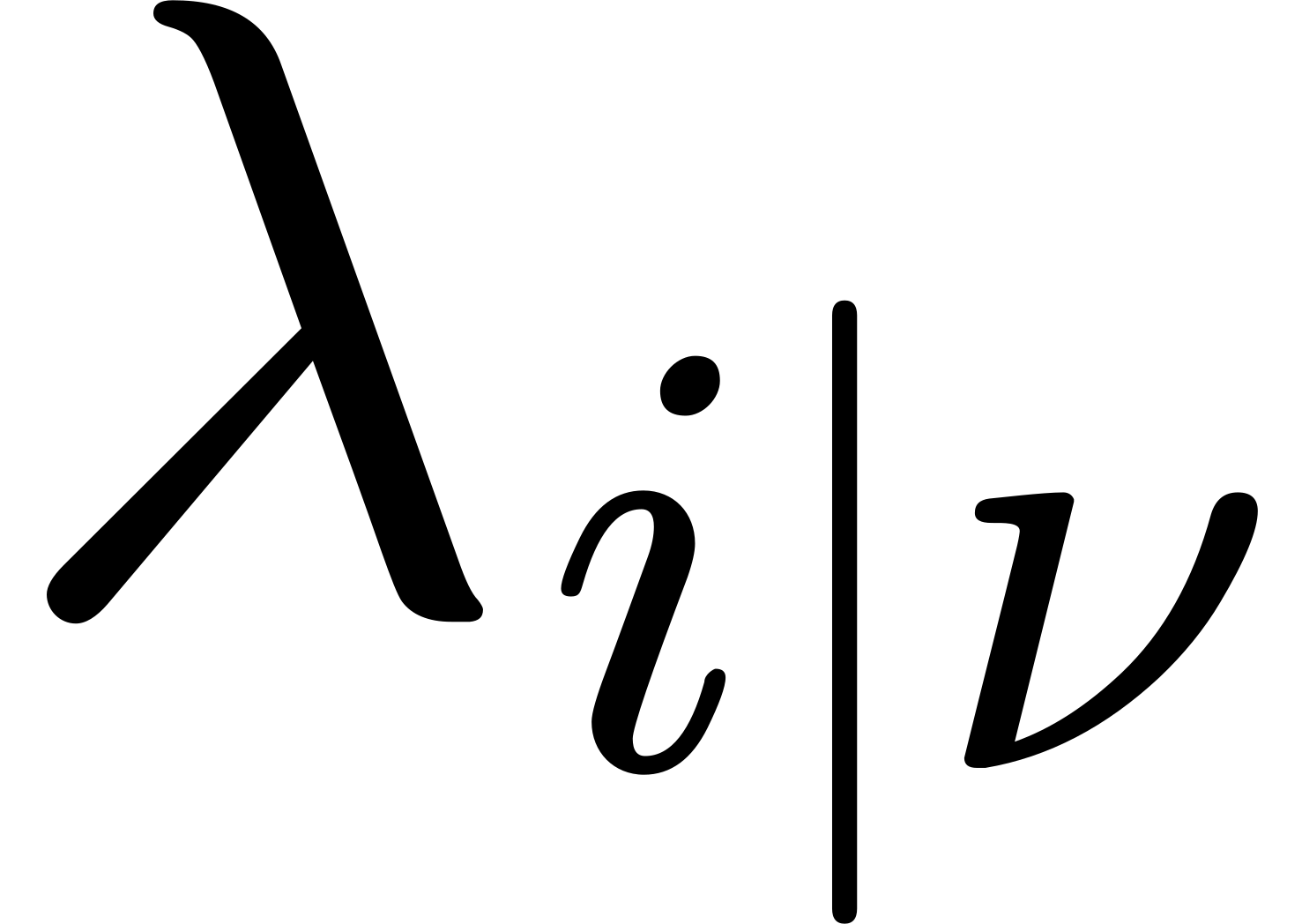 be the elements
reciprocal to
be the elements
reciprocal to 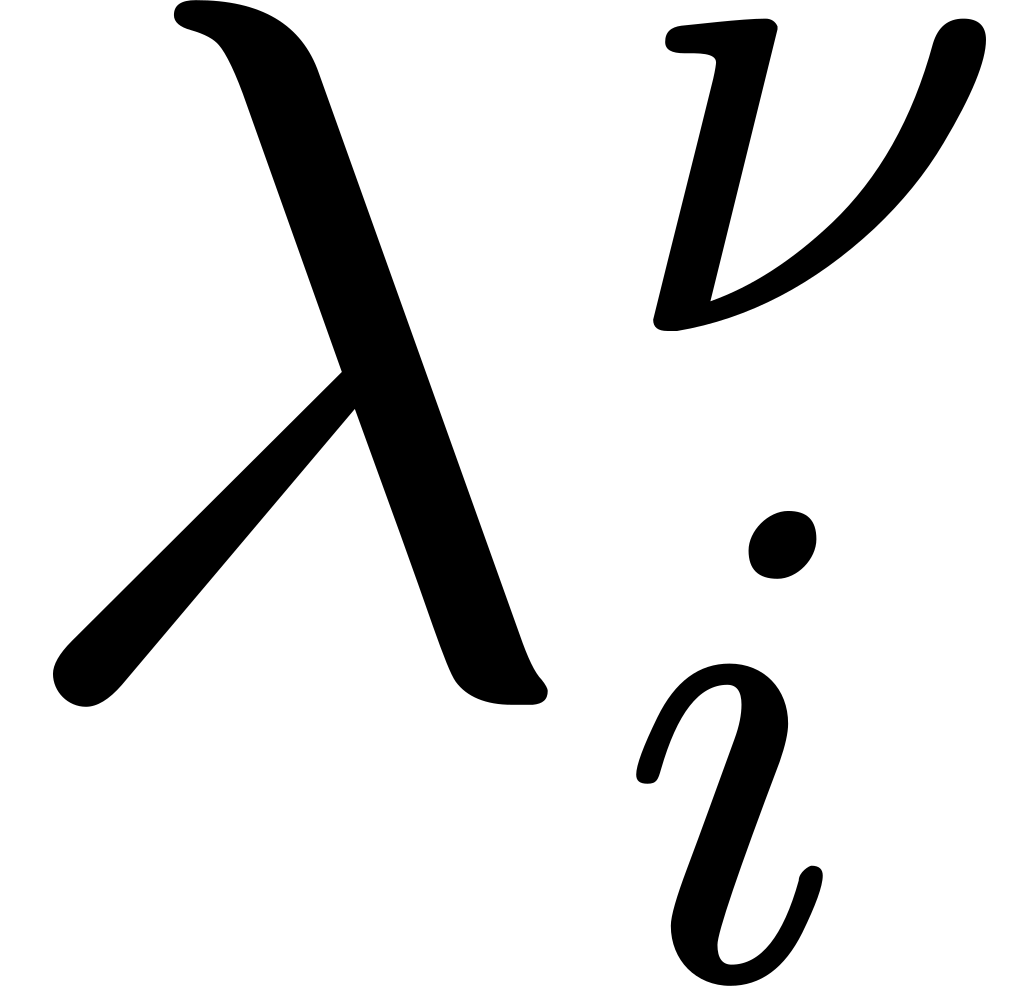 (normalized cofactors). For every
they form a covariant system (moments of the -uplet in
question). By composition with the quantities ,
we obtain, from every mixed tensor of rank
(normalized cofactors). For every
they form a covariant system (moments of the -uplet in
question). By composition with the quantities ,
we obtain, from every mixed tensor of rank
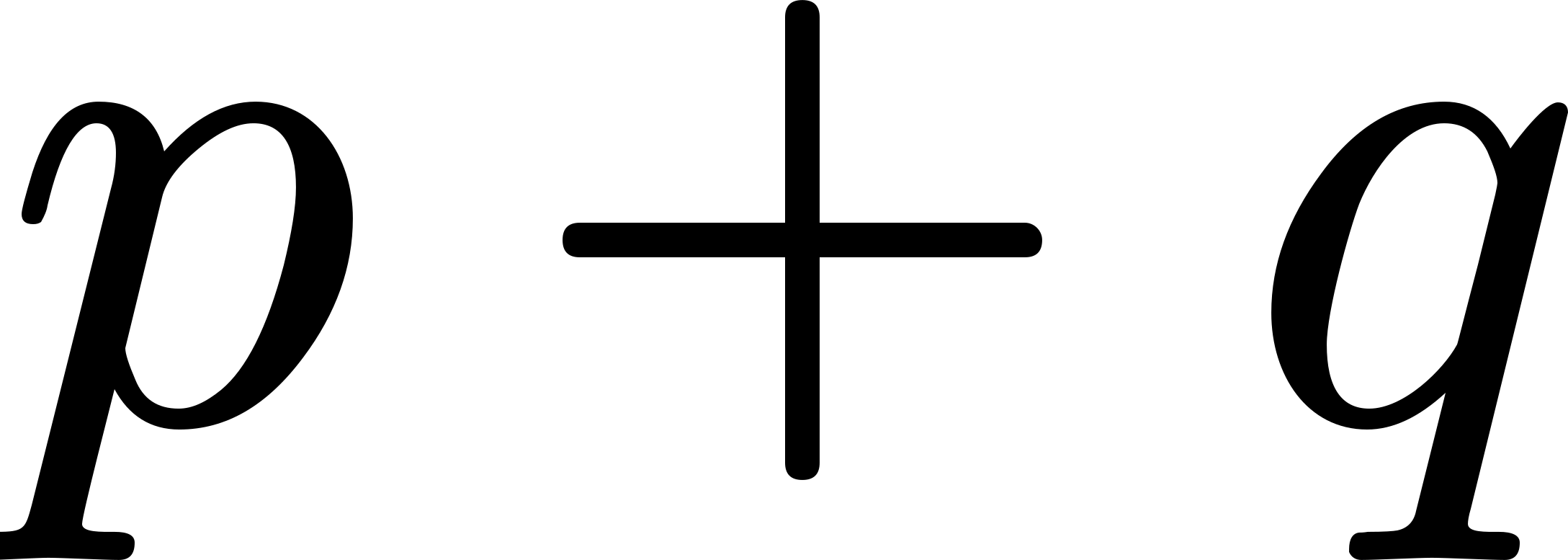 with the components
 an "-uplet tensor",[5] the components of which are defined by the
formulæ
an "-uplet tensor",[5] the components of which are defined by the
formulæ
 and conversely, since these formulæ can be solved for the co-ordinate
components in the form
and conversely, since these formulæ can be solved for the co-ordinate
components in the form

The components of the -uplet tensor are pure invariants with
respect to transformations of co-ordinates; they essentially depend
on the -uplet considered, but, as is easily verified, they also
behave like a tensor when the quantities 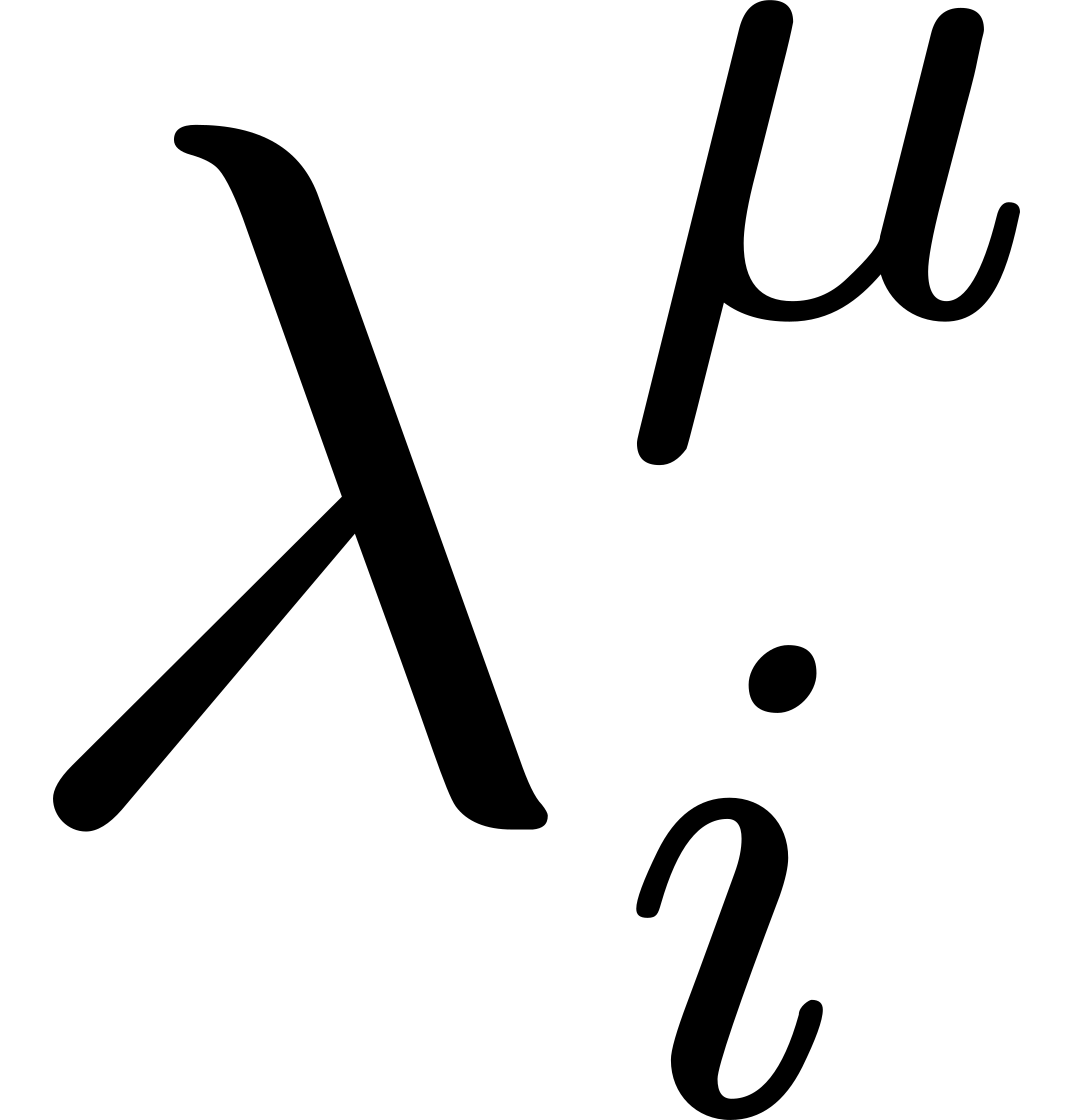 and
and
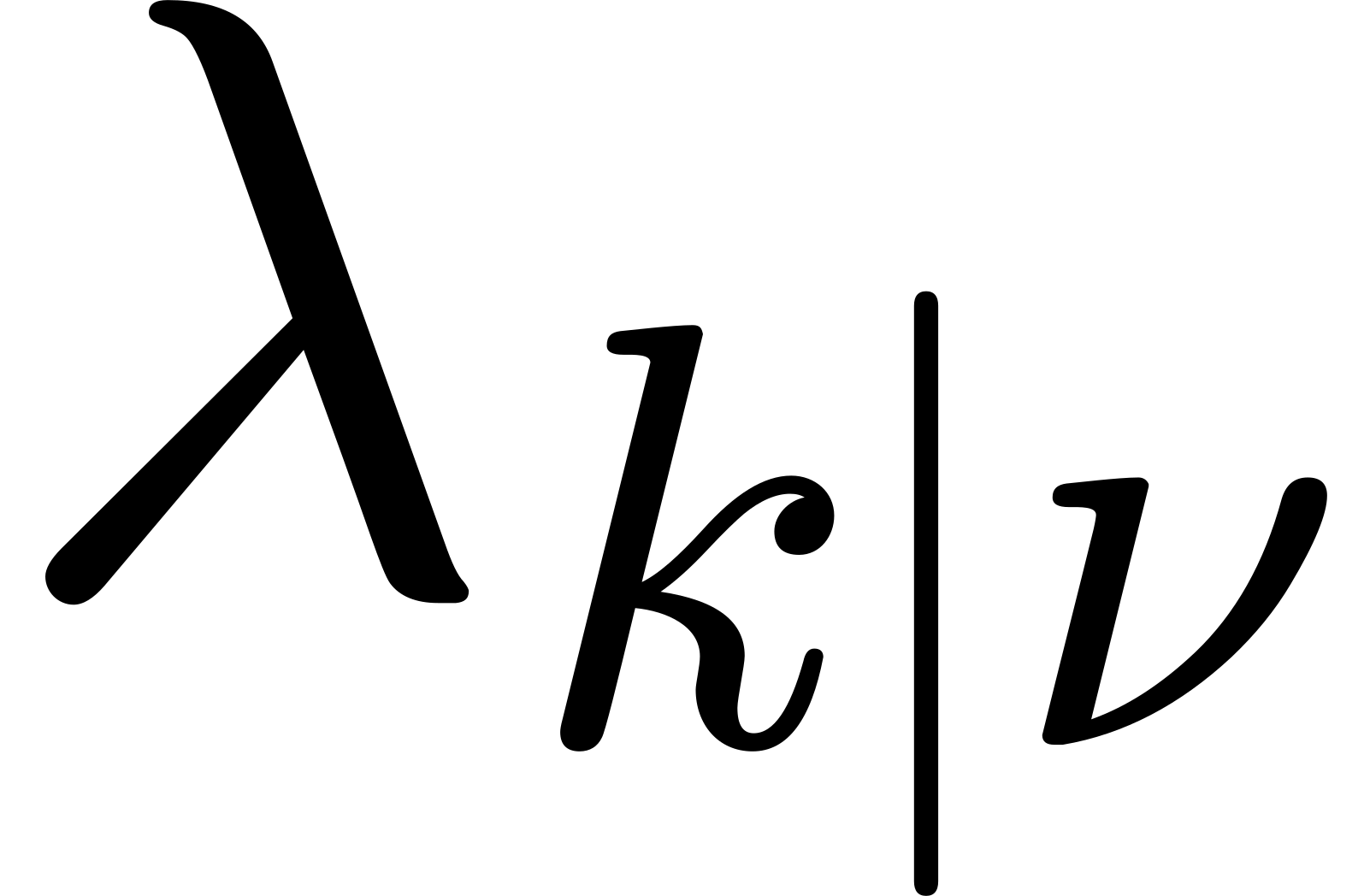 are simultaneously subjected to orthogonal
transformations.
are simultaneously subjected to orthogonal
transformations.
If we put
 a definite metric
 (for real values of the quantities involved) is introduced into
in such a way that our -uplet turns out orthogonal.
Later (§3) I shall give the (unimportant) modifications required
to transfer the -uplet theory, avoiding any appearance of
imaginaries, to an indefinite metric (with a given index of inertia).
(for real values of the quantities involved) is introduced into
in such a way that our -uplet turns out orthogonal.
Later (§3) I shall give the (unimportant) modifications required
to transfer the -uplet theory, avoiding any appearance of
imaginaries, to an indefinite metric (with a given index of inertia).
Meanwhile I suppose that the covariant derivatives of the moments
have been introduced, and, following Ricci, I
take the coefficients of rotation

In virtue of the identities
 (which result from the relationships between parameters and moments),
Ricci's quantities
(which result from the relationships between parameters and moments),
Ricci's quantities 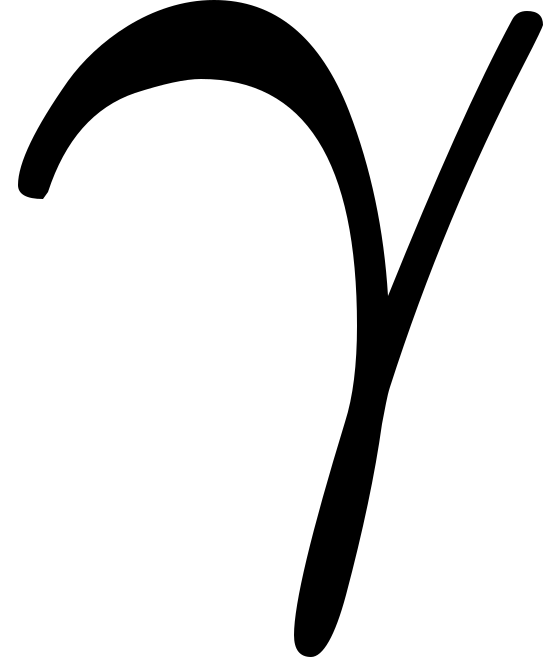 form
form 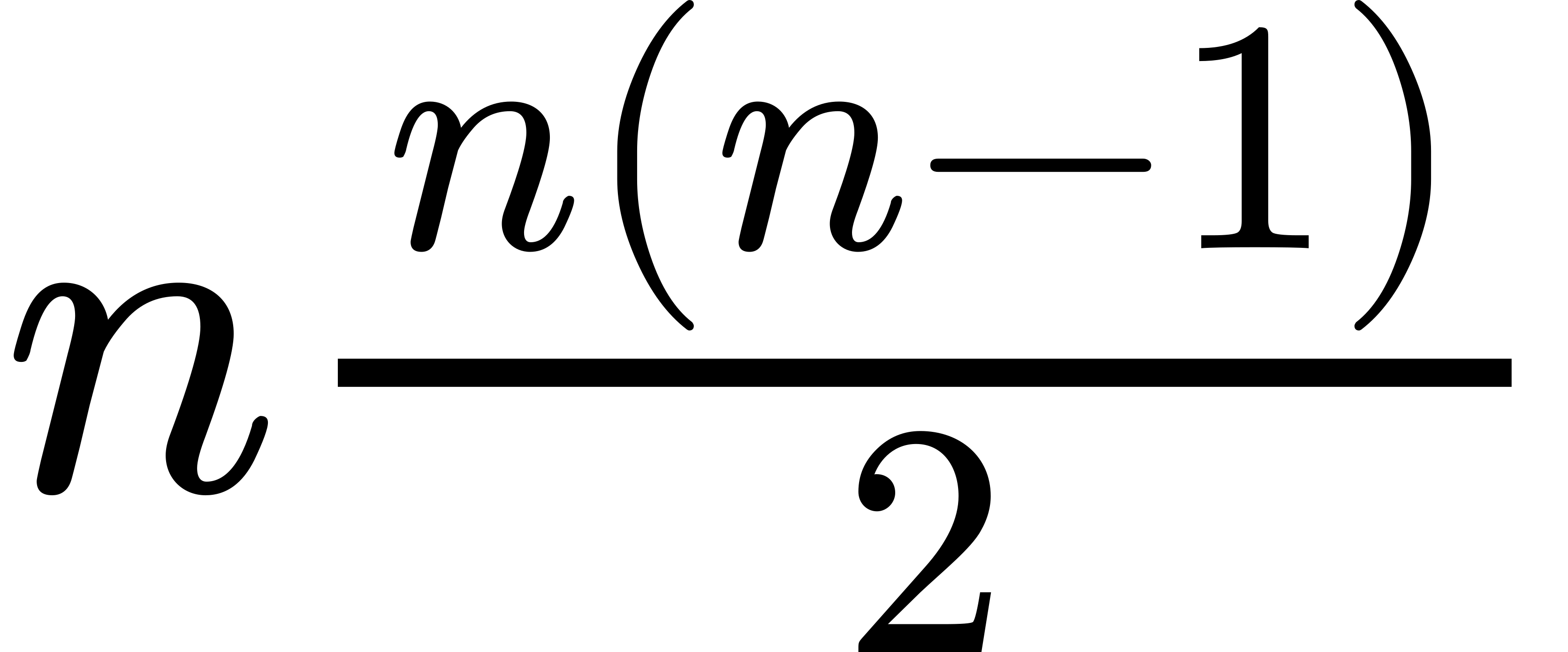 invariants
with respect to transformations of co-ordinates, which of course
essentially depend on the given -uplet and necessarily include
all its geometrical differential properties of the first order. With
respect to orthogonal transformations with constant coefficients
the quantities behave like a tensor of the third rank. In
order to emphasize the limitation to transformations with constant
coefficients I shall call such systems local -uplet
tensors. True -uplet tensors behave as invariants with respect
to all orthogonal transformations whose coefficients can vary in any
way with the quantities
invariants
with respect to transformations of co-ordinates, which of course
essentially depend on the given -uplet and necessarily include
all its geometrical differential properties of the first order. With
respect to orthogonal transformations with constant coefficients
the quantities behave like a tensor of the third rank. In
order to emphasize the limitation to transformations with constant
coefficients I shall call such systems local -uplet
tensors. True -uplet tensors behave as invariants with respect
to all orthogonal transformations whose coefficients can vary in any
way with the quantities  .
.
Perhaps it is not superfluous to remark that the explicit expressions
for the coefficients of rotation, , can also be obtained
directly by ordinary differentiation without making use of the
covariant derivatives of the quantities .
In order to do this, we have to introduce either the Pfaffian
expressions
 or the operators
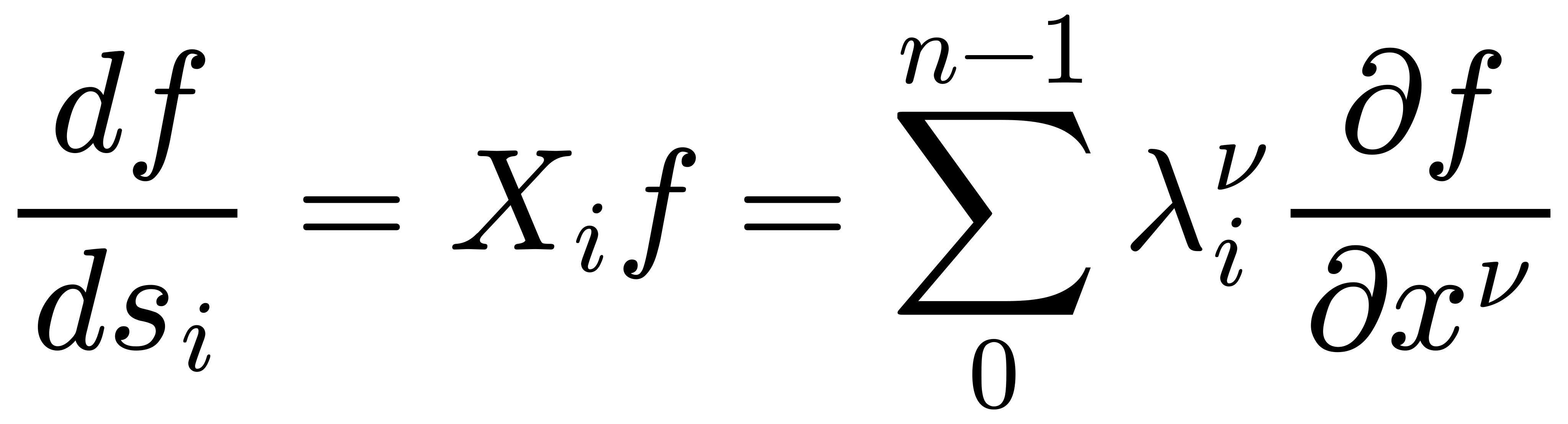 (derivatives of a function
  in
the direction of the lines of the congruences), and then to form the
corresponding bilinear covariants or Poisson brackets. We can, however,
attain the desired result even more rapidly by using (4) and noticing
that, according to the definition of covariant differentiation, we have
the identity
in
the direction of the lines of the congruences), and then to form the
corresponding bilinear covariants or Poisson brackets. We can, however,
attain the desired result even more rapidly by using (4) and noticing
that, according to the definition of covariant differentiation, we have
the identity
 We thus obtain
 and all the quantities are uniquely determined by these
equations together with (5).
and all the quantities are uniquely determined by these
equations together with (5).
Equations (4) can be solved for the quantities 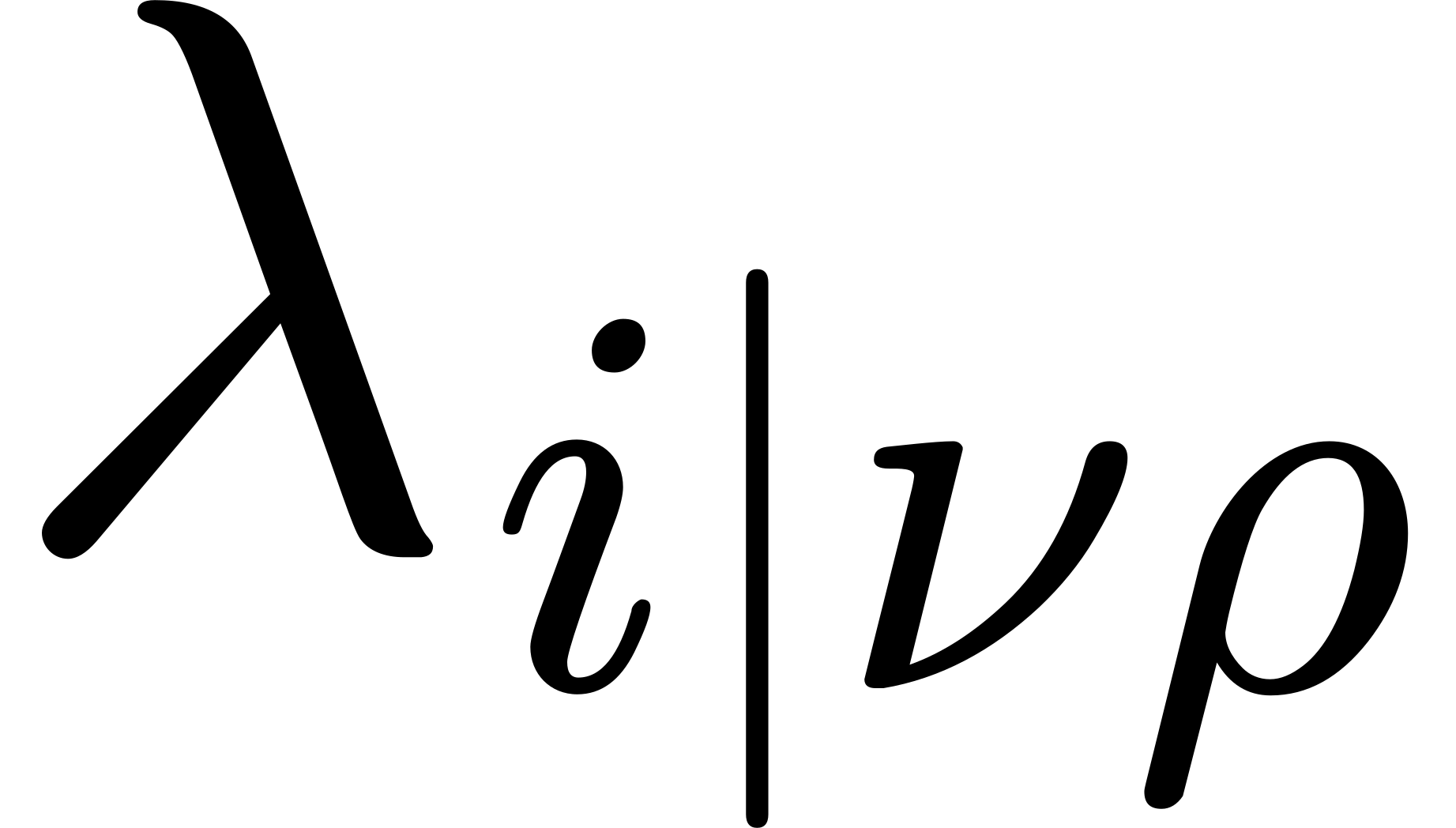 ,
giving
,
giving
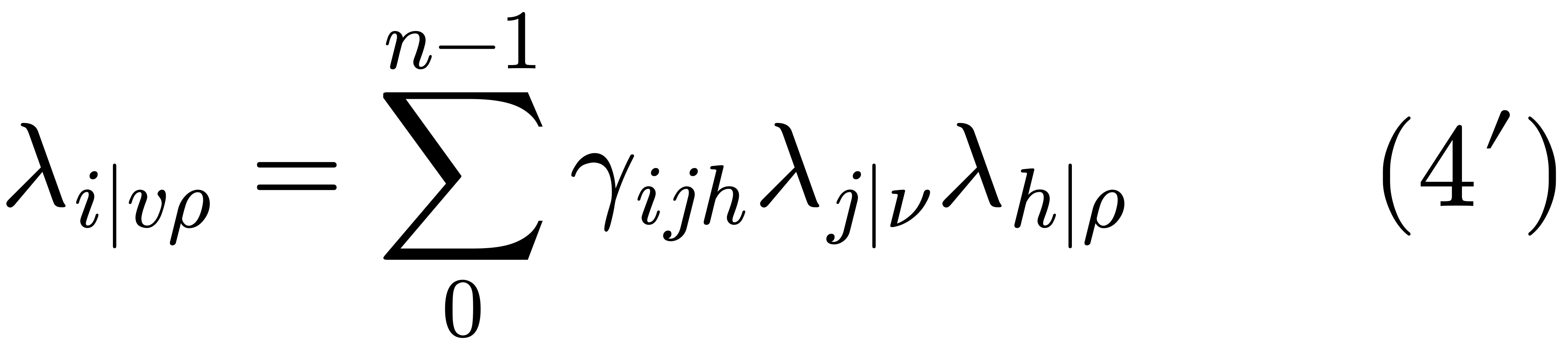 from which we obtain the conditions of integrability of
  by
repeated covariant differentiation and formation of differences. For
this we require the commutation-formula
by
repeated covariant differentiation and formation of differences. For
this we require the commutation-formula
 where
where 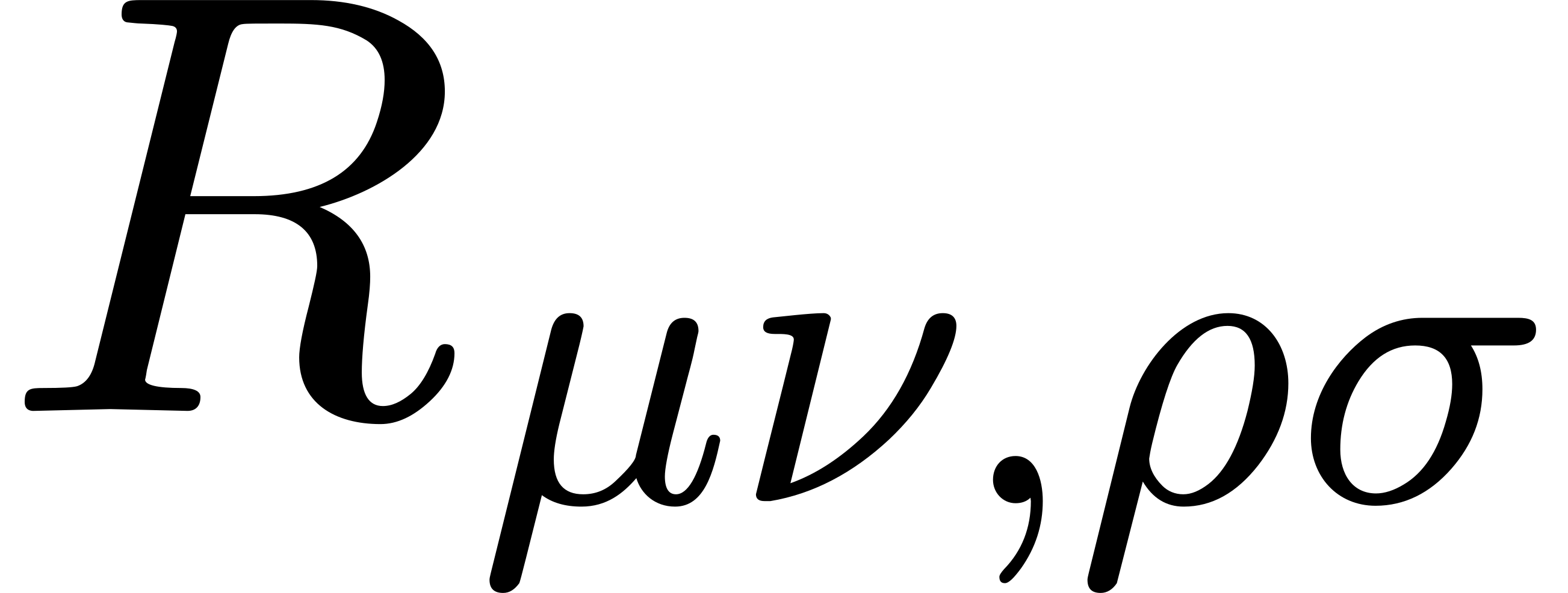 denotes the Riemannian tensor. In
this way we obtain
denotes the Riemannian tensor. In
this way we obtain
 where for brevity we write
 From (7) we conclude that the 4-index symbols, , form a
(true) -uplet tensor. In virtue of the well-known identities
satisfied by the Riemannian symbols the formulæ (7) lead to similar
identities for the 4-index symbols, , namely
From (7) we conclude that the 4-index symbols, , form a
(true) -uplet tensor. In virtue of the well-known identities
satisfied by the Riemannian symbols the formulæ (7) lead to similar
identities for the 4-index symbols, , namely

Now for the Einstein tensor

Its components 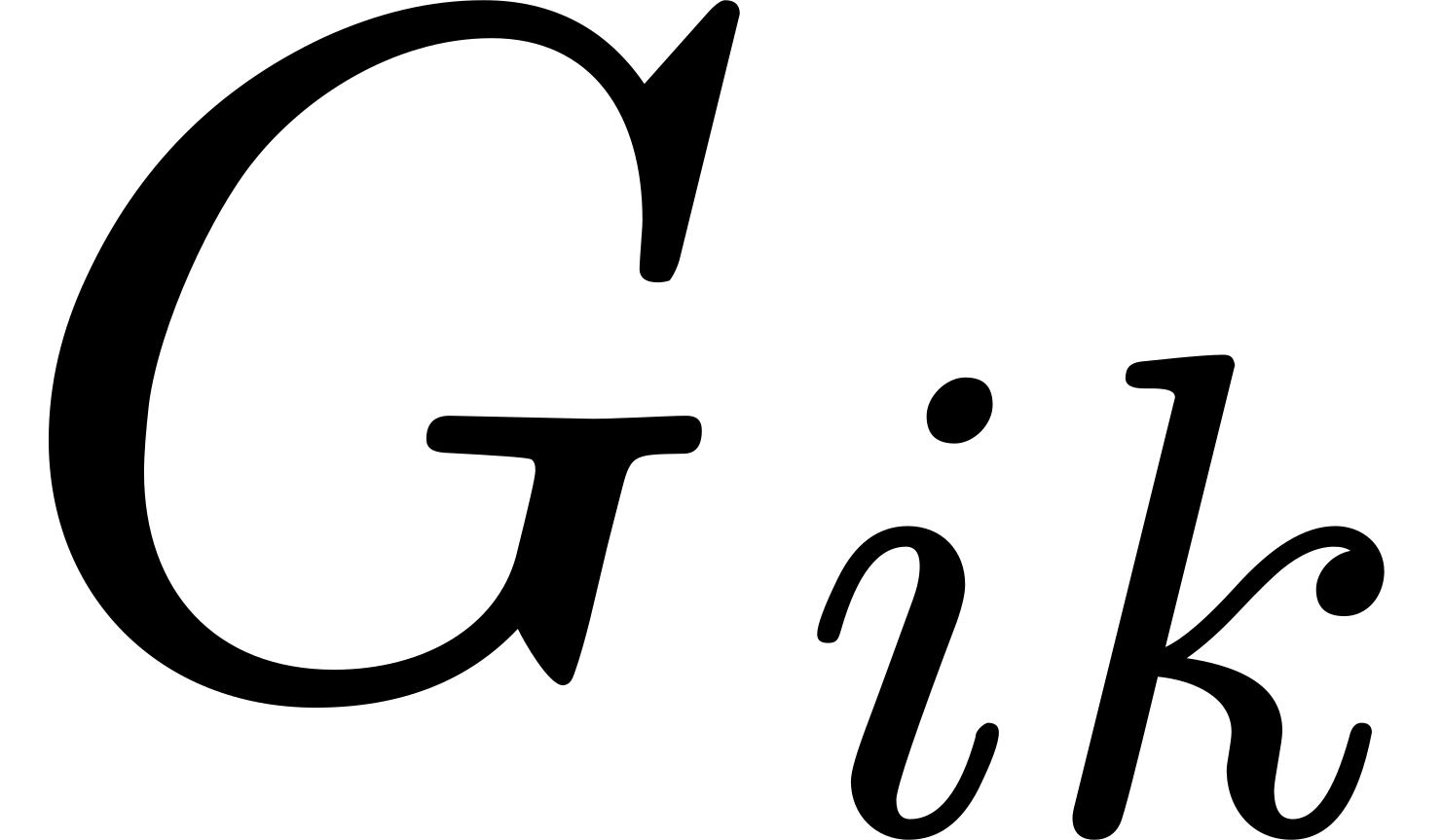 , with respect to the two members ,
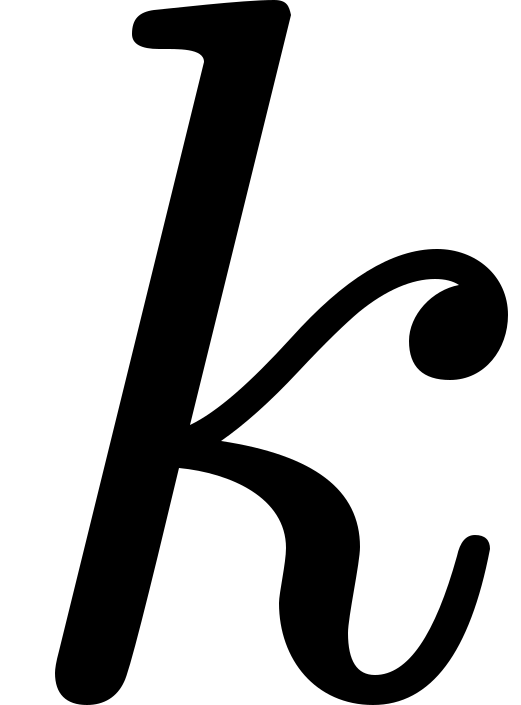 of the -uplet are expressed, by (1), by
 whence, by (7),
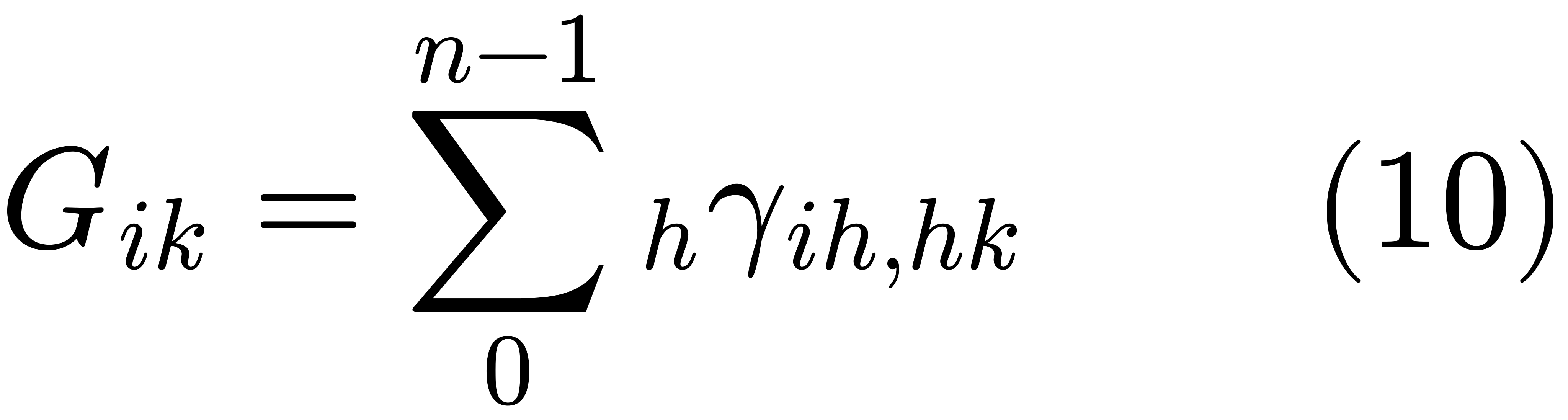
The linear (co-ordinate and -uplet) invariant
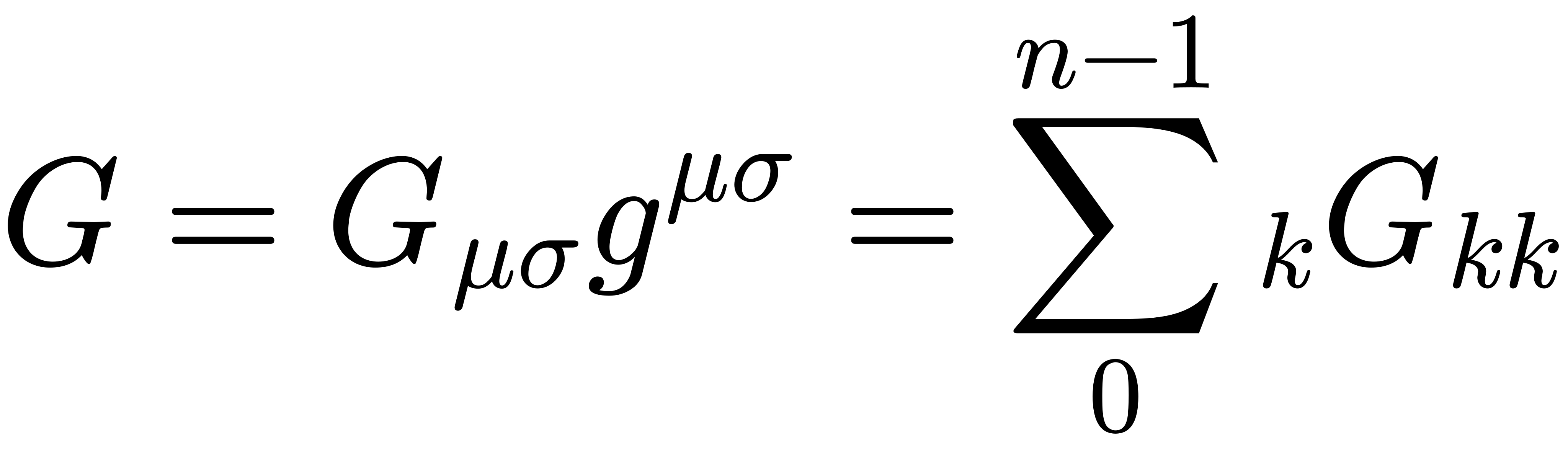 consequently takes the form
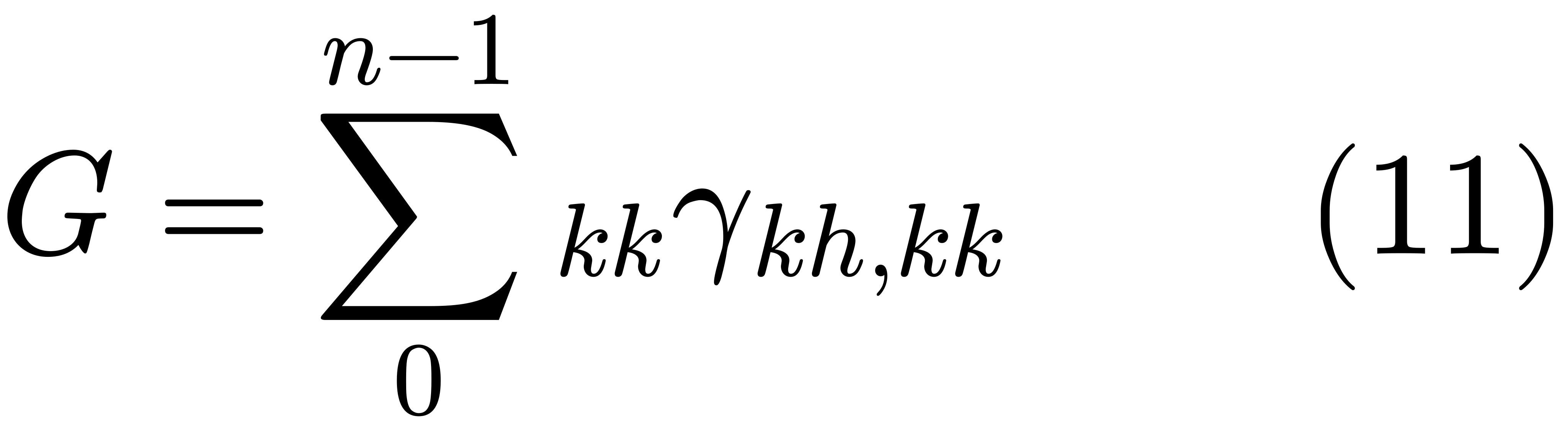
In conclusion, I shall emphasize one other fact, namely that
contraction of two indices in an -uplet tensor leads to a reduced
tensor—of the 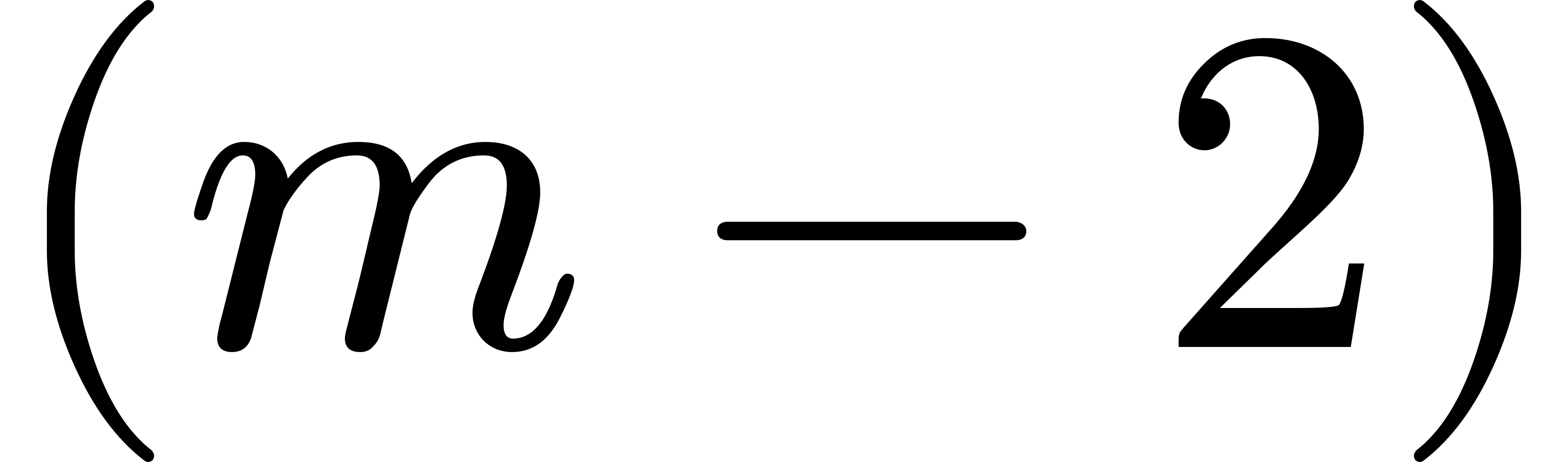 th rank if the original tensor is of the
 th rank.
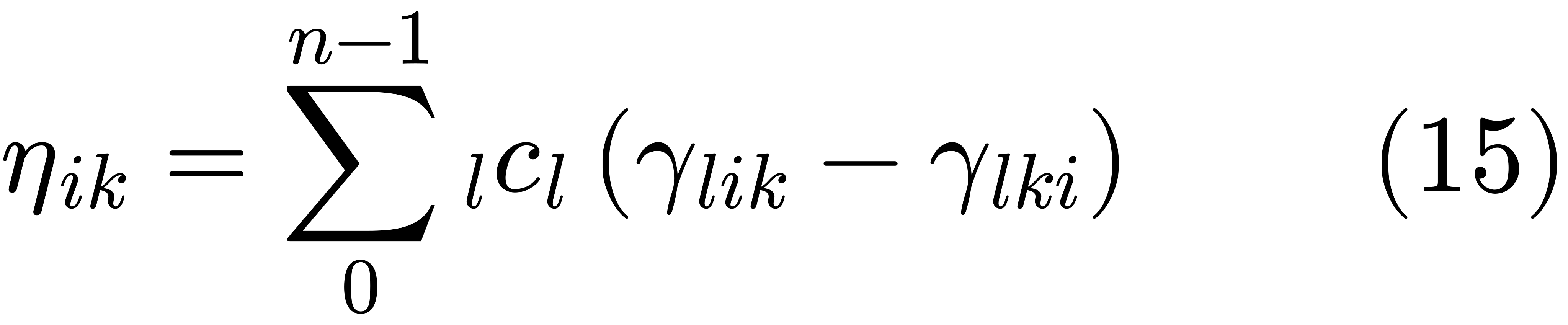
As we have already seen, the quantities 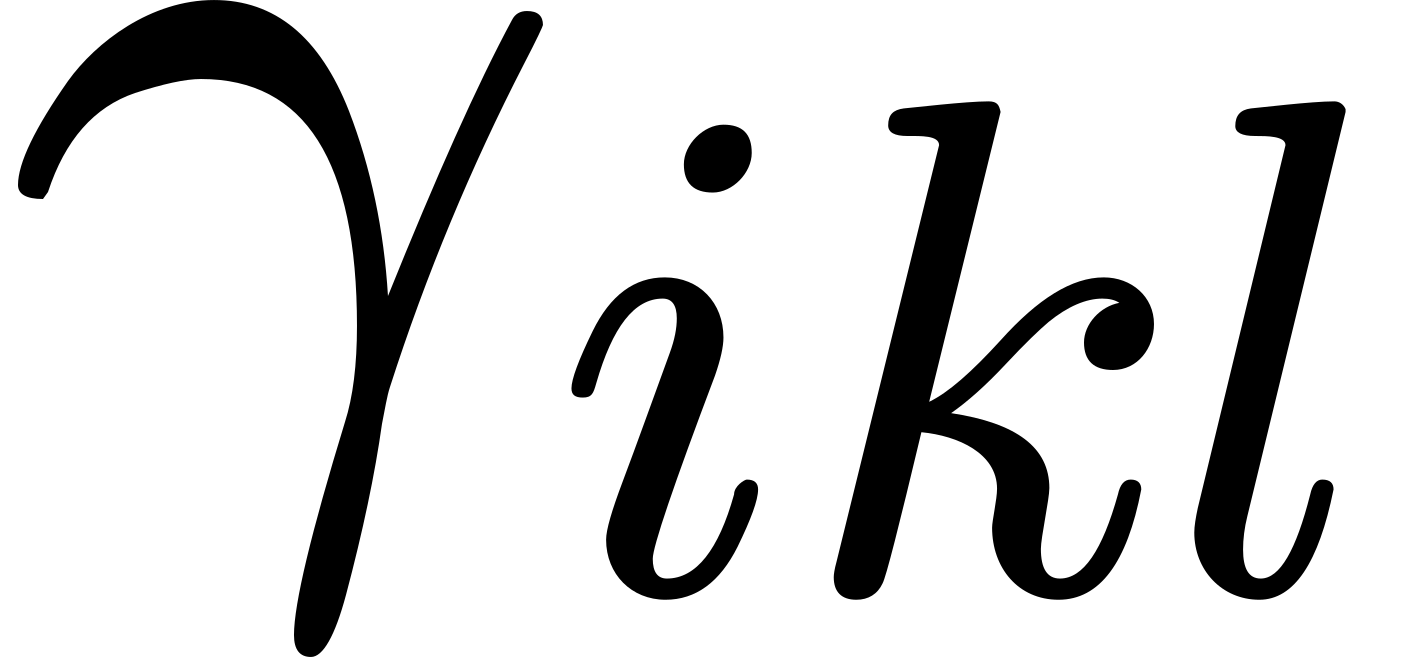 form a
local -uplet tensor of the third rank, which in virtue of (5) is
skew-symmetrical with respect to the two first indices , .
The same is true for the differences
form a
local -uplet tensor of the third rank, which in virtue of (5) is
skew-symmetrical with respect to the two first indices , .
The same is true for the differences  ,
which for
,
which for 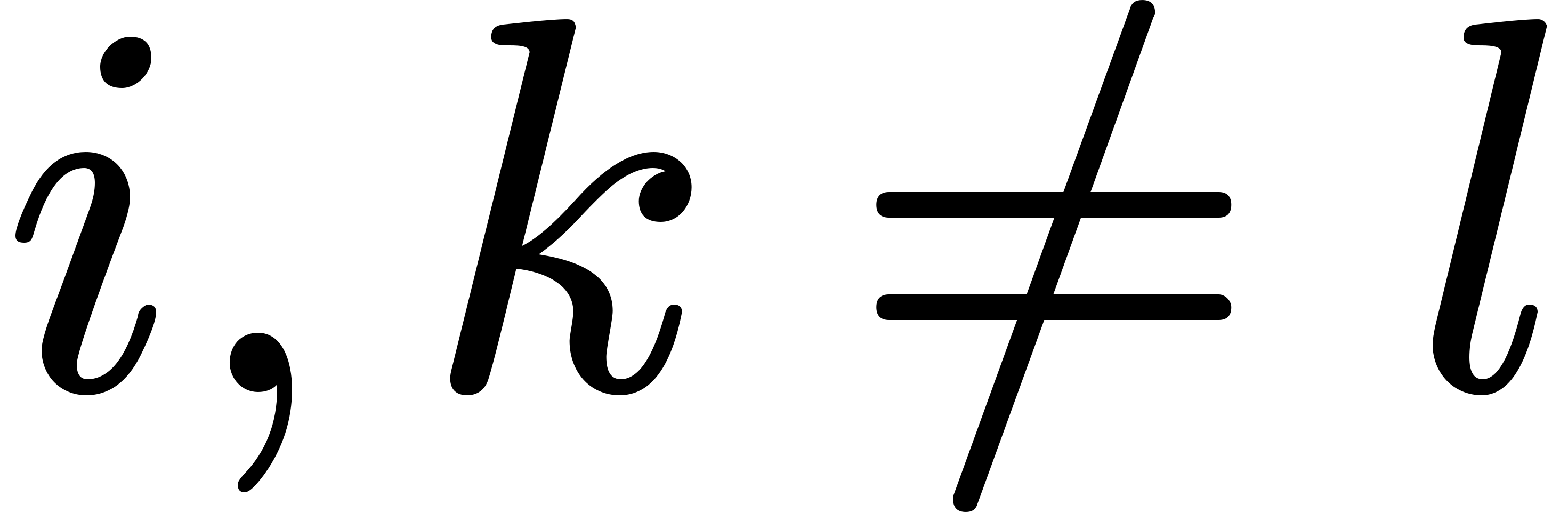 are called anormalities (i.e.
quantities which vanish when the
are called anormalities (i.e.
quantities which vanish when the  th congruence of the -uplet
is normal).
th congruence of the -uplet
is normal).
If we apply the differential operator 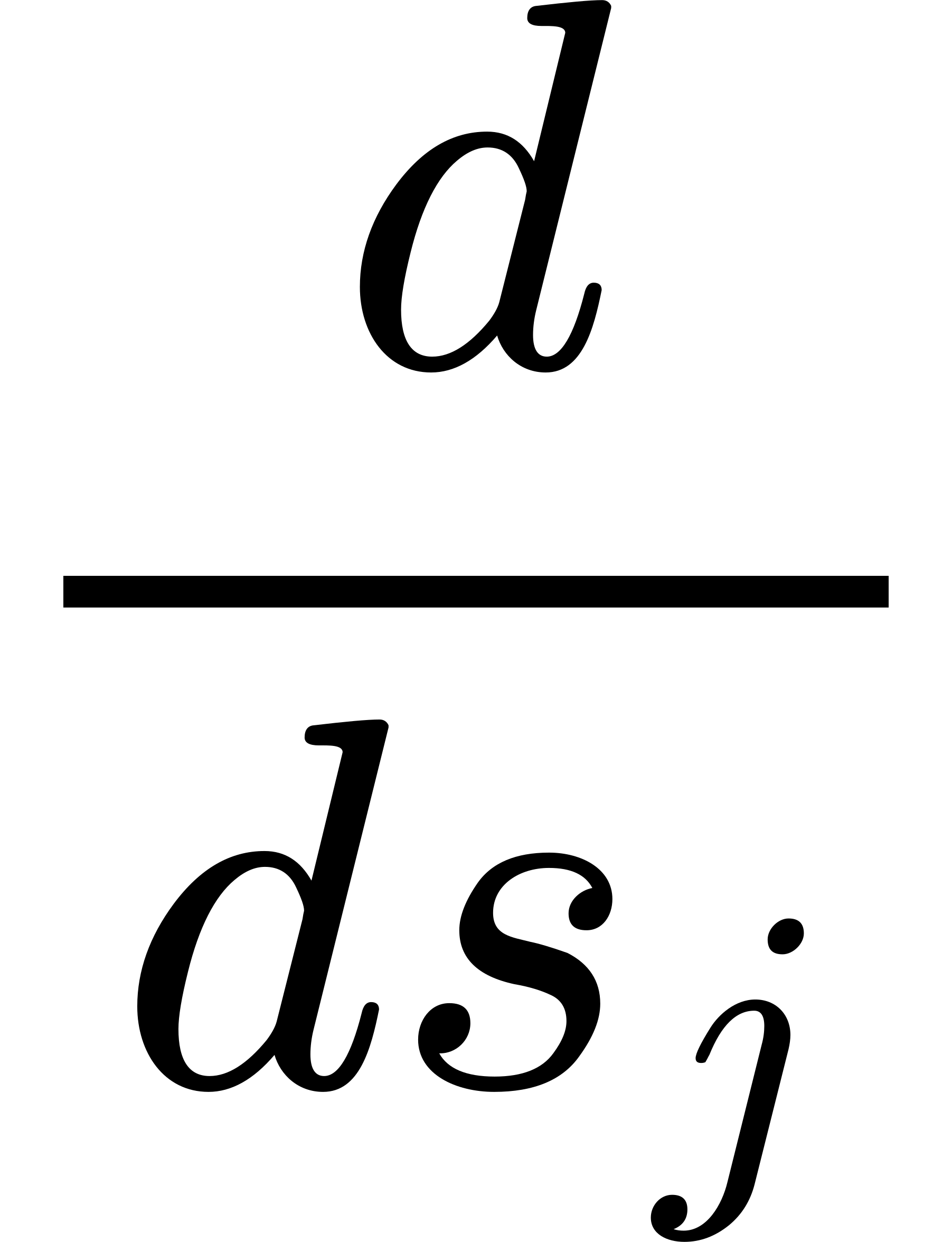 to the
elements
to the
elements 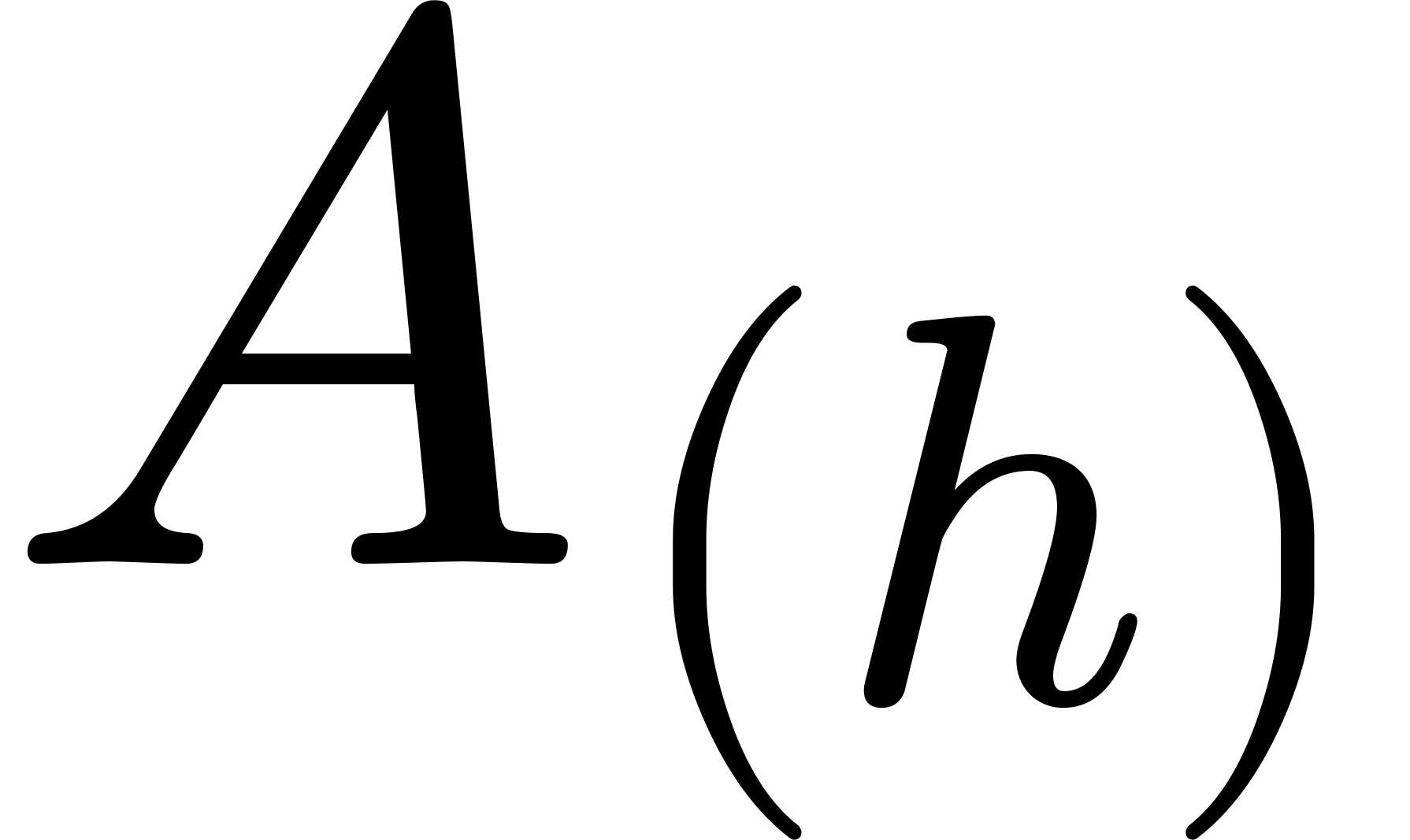 (where
 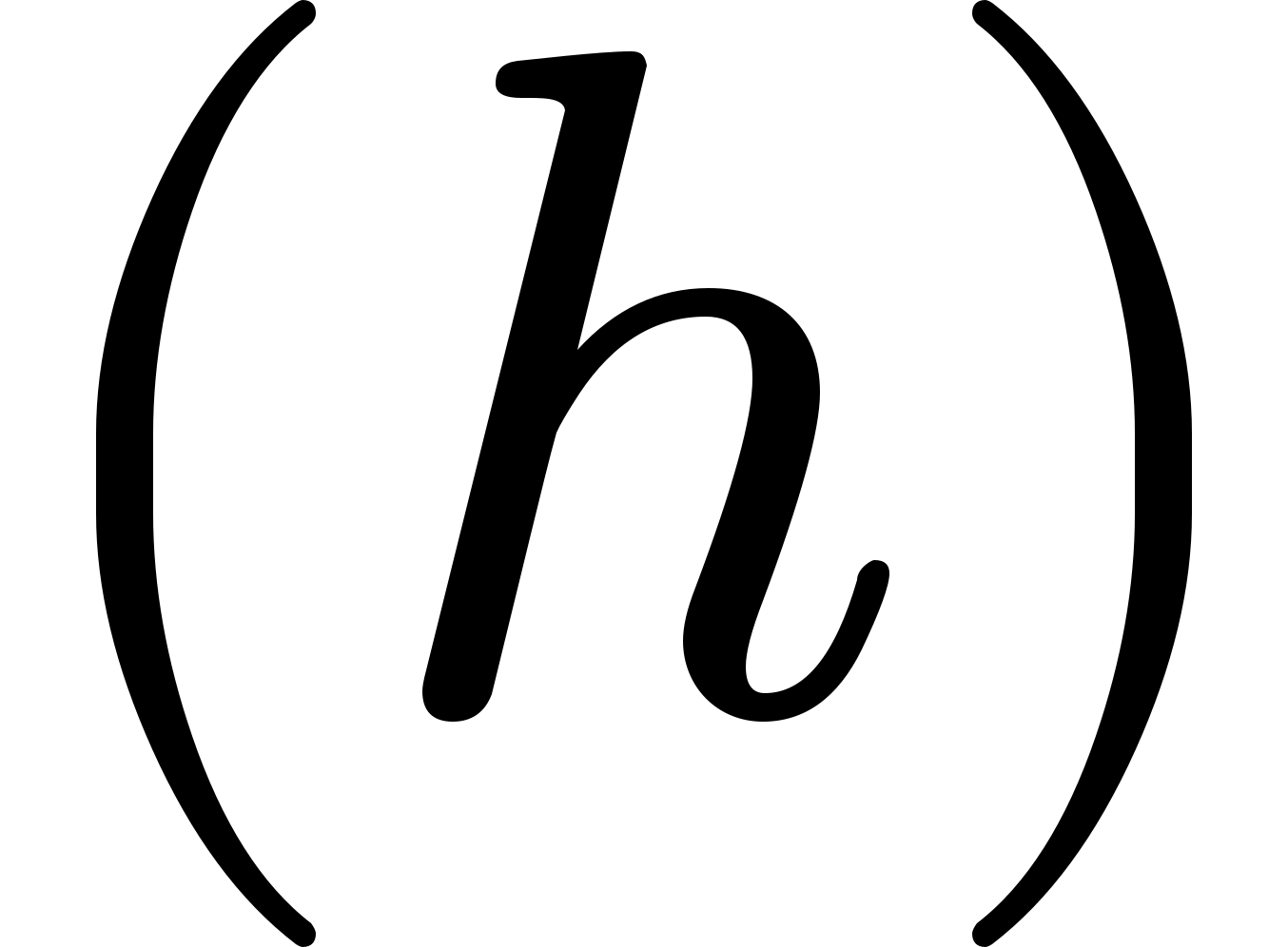 stands for
  )
of a local or true -uplet tensor, we obtain a new local
-uplet tensor
)
of a local or true -uplet tensor, we obtain a new local
-uplet tensor 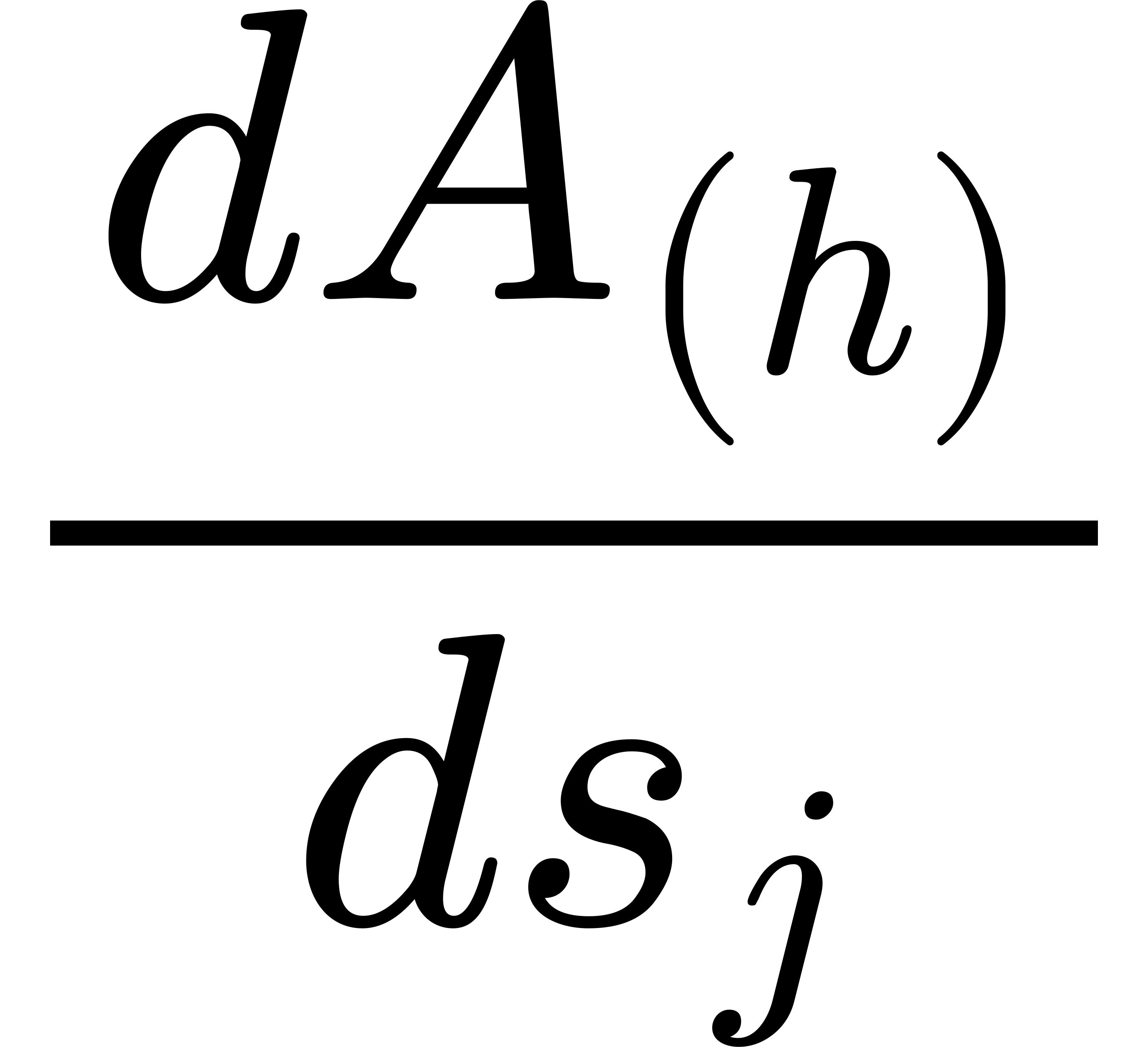 , the rank of which
exceeds that of the original tensor by unity. In particular, we obtain
in this way the local -uplet tensor of the fourth rank
, the rank of which
exceeds that of the original tensor by unity. In particular, we obtain
in this way the local -uplet tensor of the fourth rank
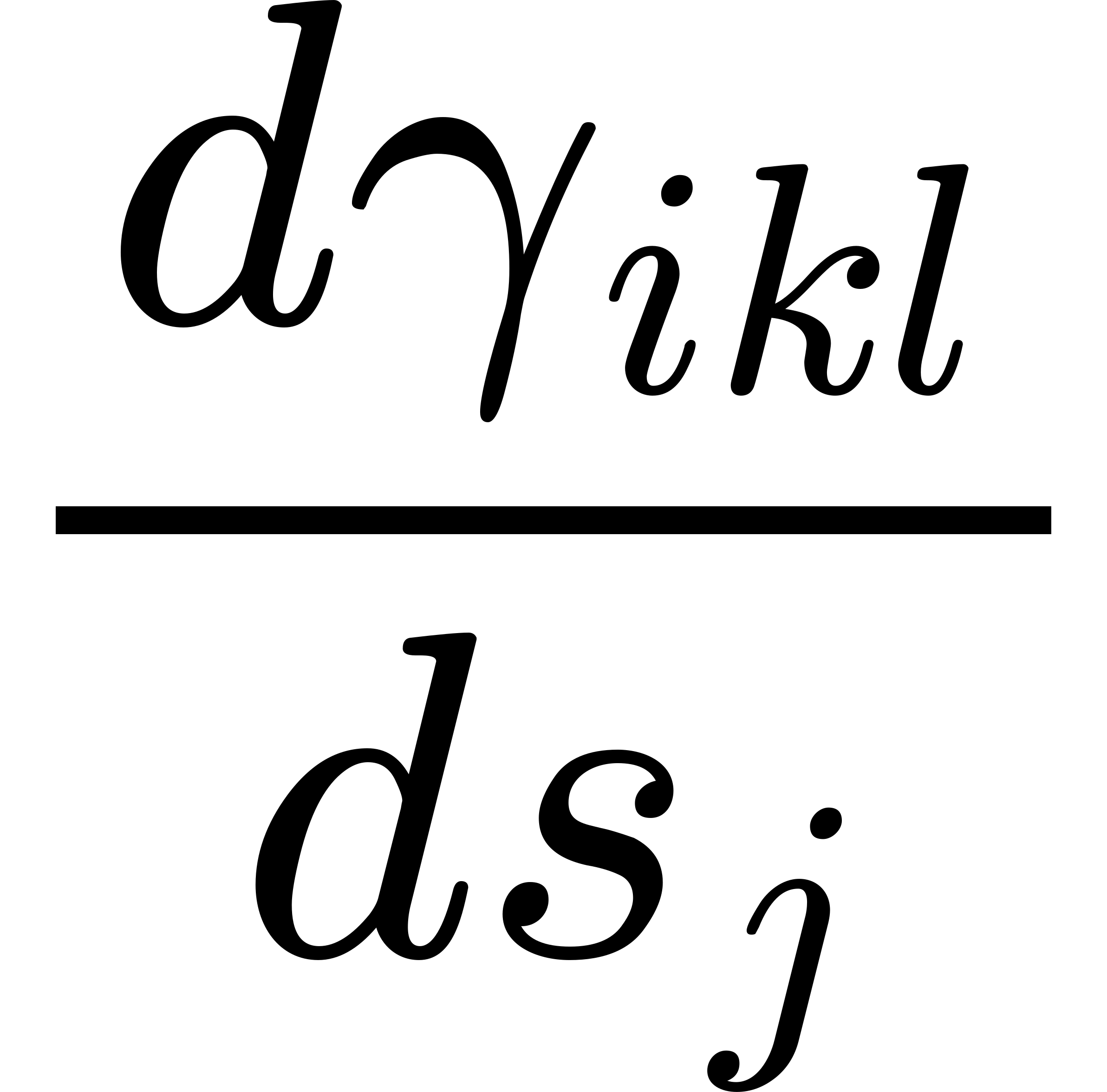 which is skew-symmetrical with respect to and . By
contraction we obtain
which is skew-symmetrical with respect to and . By
contraction we obtain
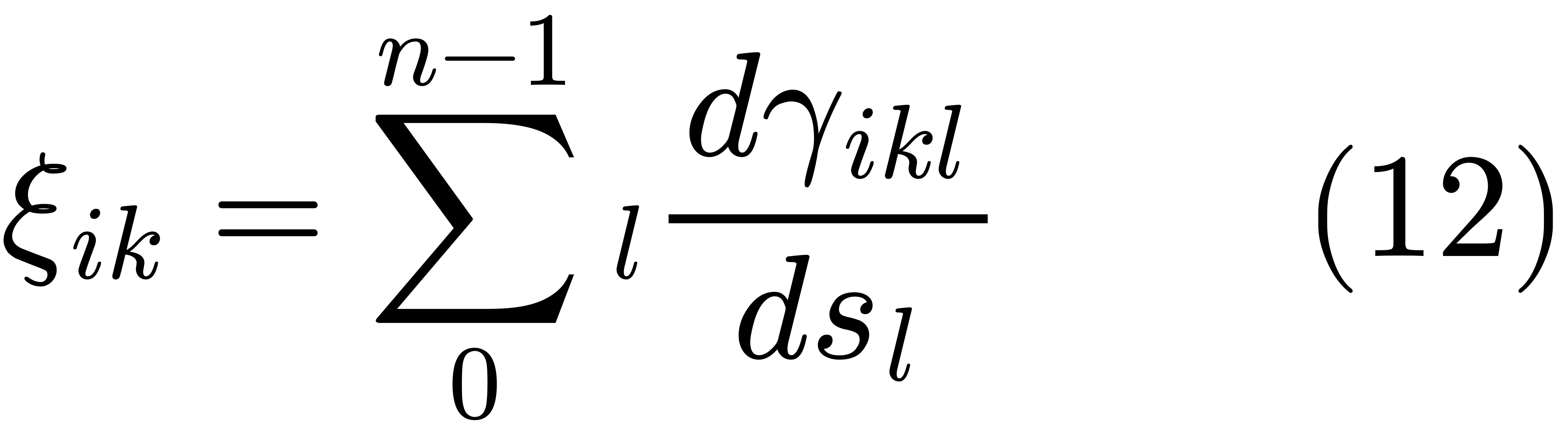 so that we have obviously formed a skew-symmetrical local -uplet
tensor
so that we have obviously formed a skew-symmetrical local -uplet
tensor  of the second rank. Its covariant and contravariant
components are respectively
of the second rank. Its covariant and contravariant
components are respectively

We may mention in addition that the quantities
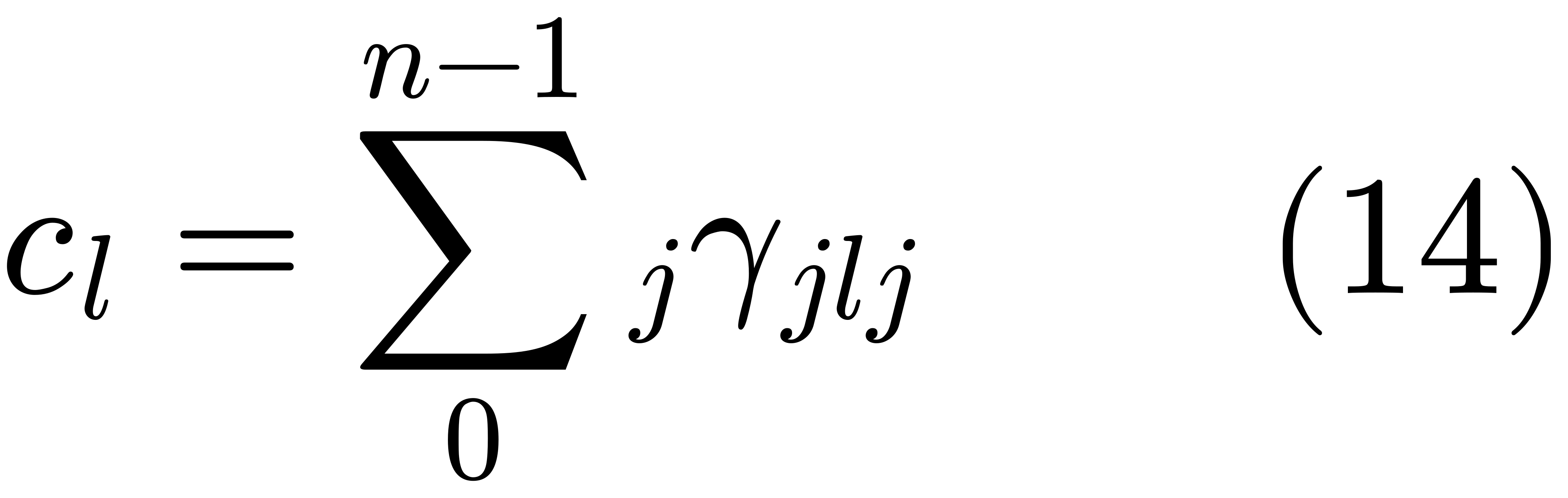 may be interpreted as mean curvatures of the
 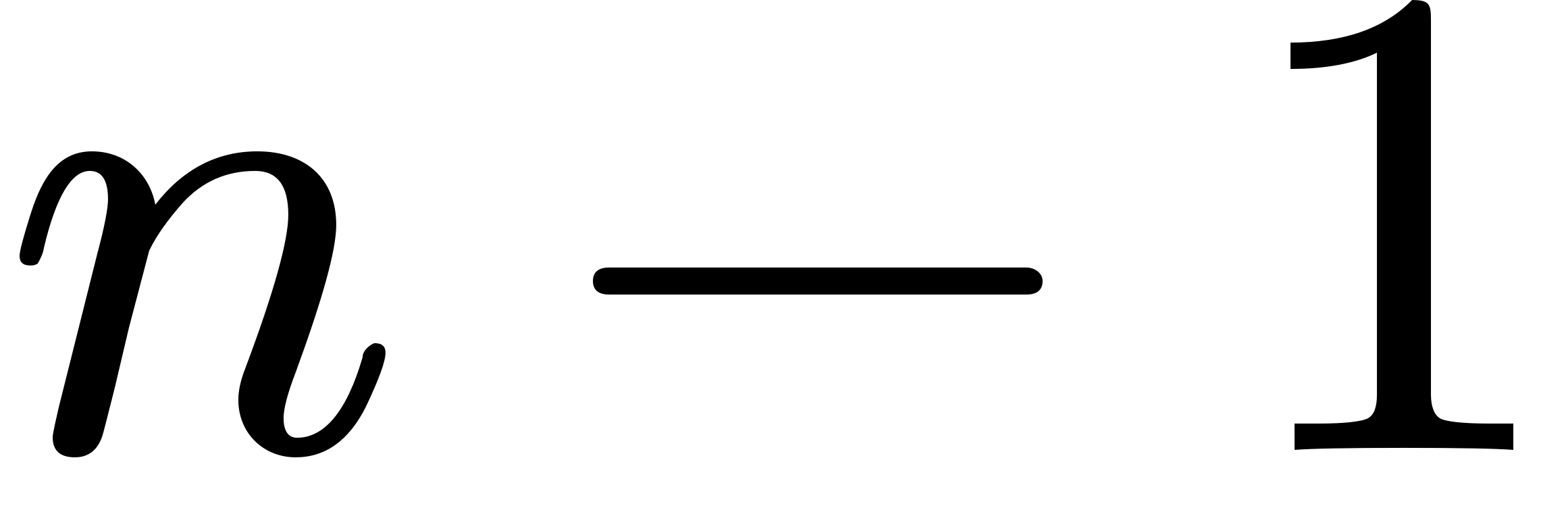 -fold sections,
drawn orthogonally to the lines of the -uplet. By what we have
said above, they are line-components of a local -uplet vector.
From the tensor of the third rank, ,
and this vector we obtain by contraction a new local -uplet tensor
of the second rank, namely
-fold sections,
drawn orthogonally to the lines of the -uplet. By what we have
said above, they are line-components of a local -uplet vector.
From the tensor of the third rank, ,
and this vector we obtain by contraction a new local -uplet tensor
of the second rank, namely
 which is also skew-symmetrical.
2. Formation of divergences. The special case 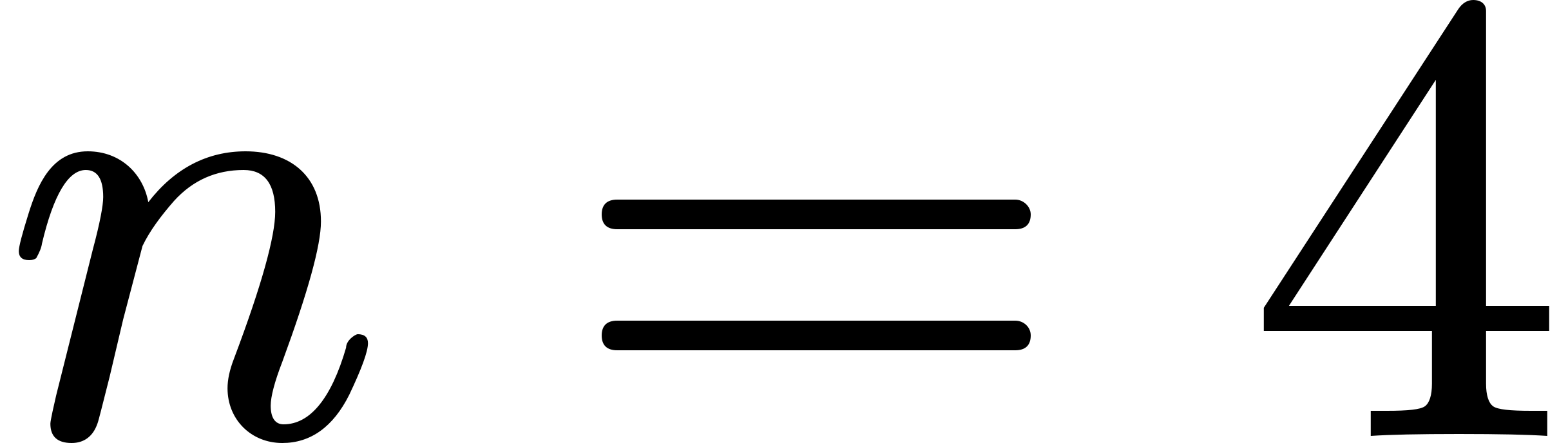 .
.
If 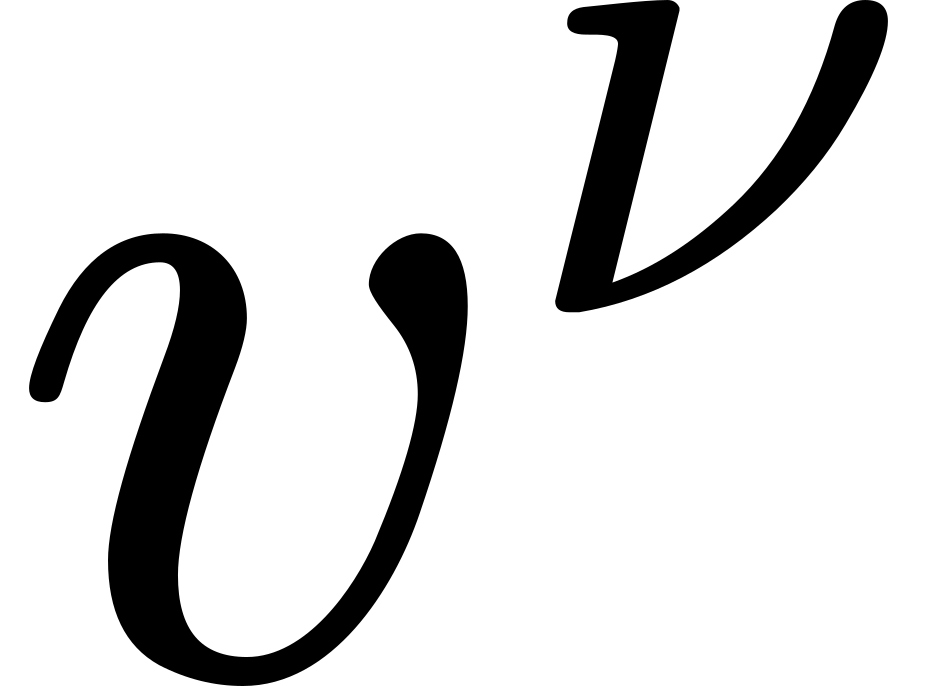 are the contravariant components of a vector
 , its divergence is defined by the invariant
 where, as usual,
 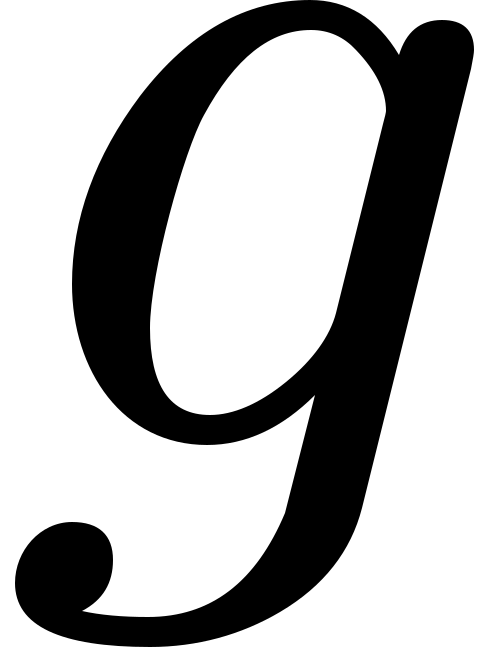 denotes the determinant
 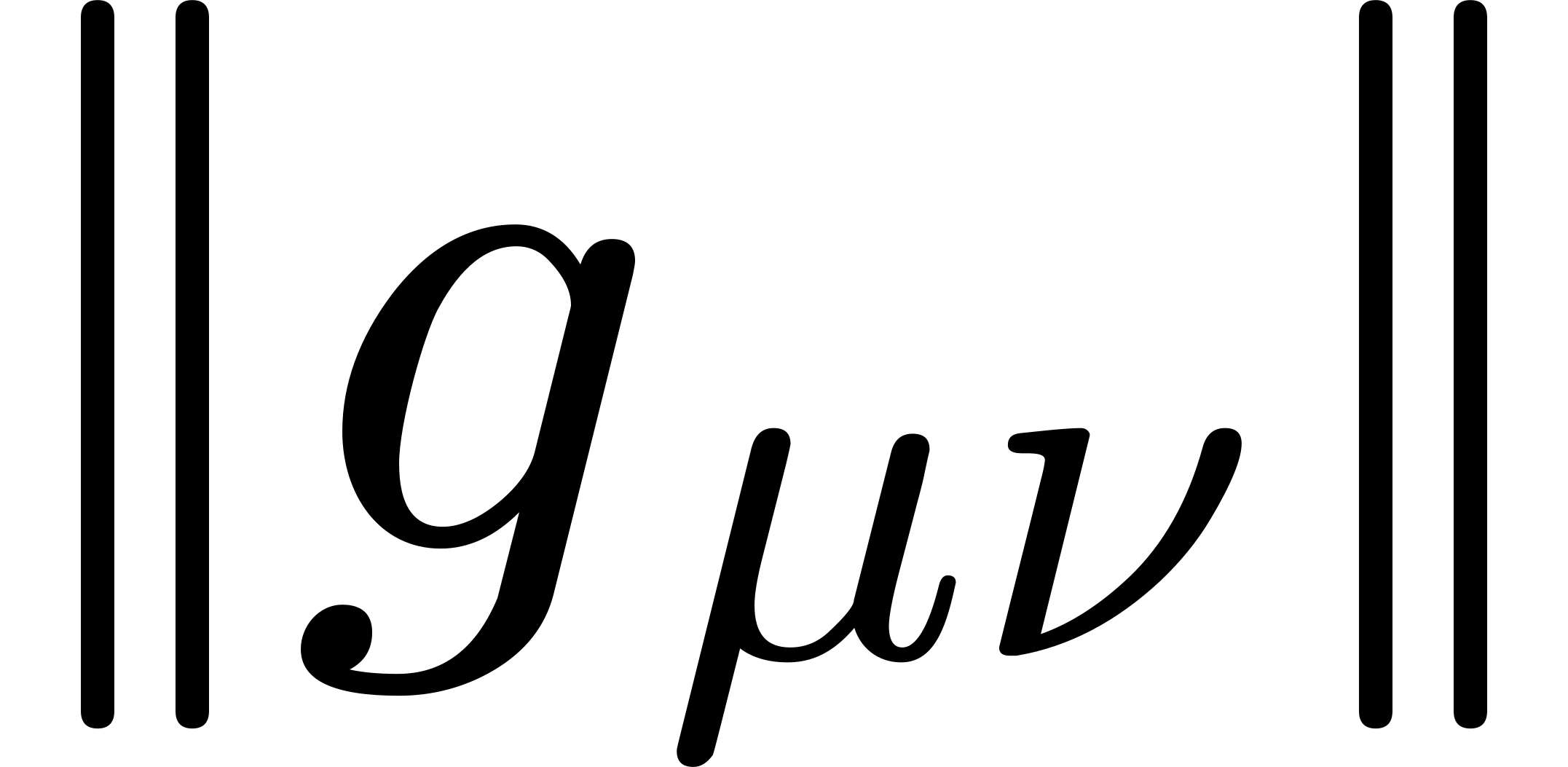 and
and 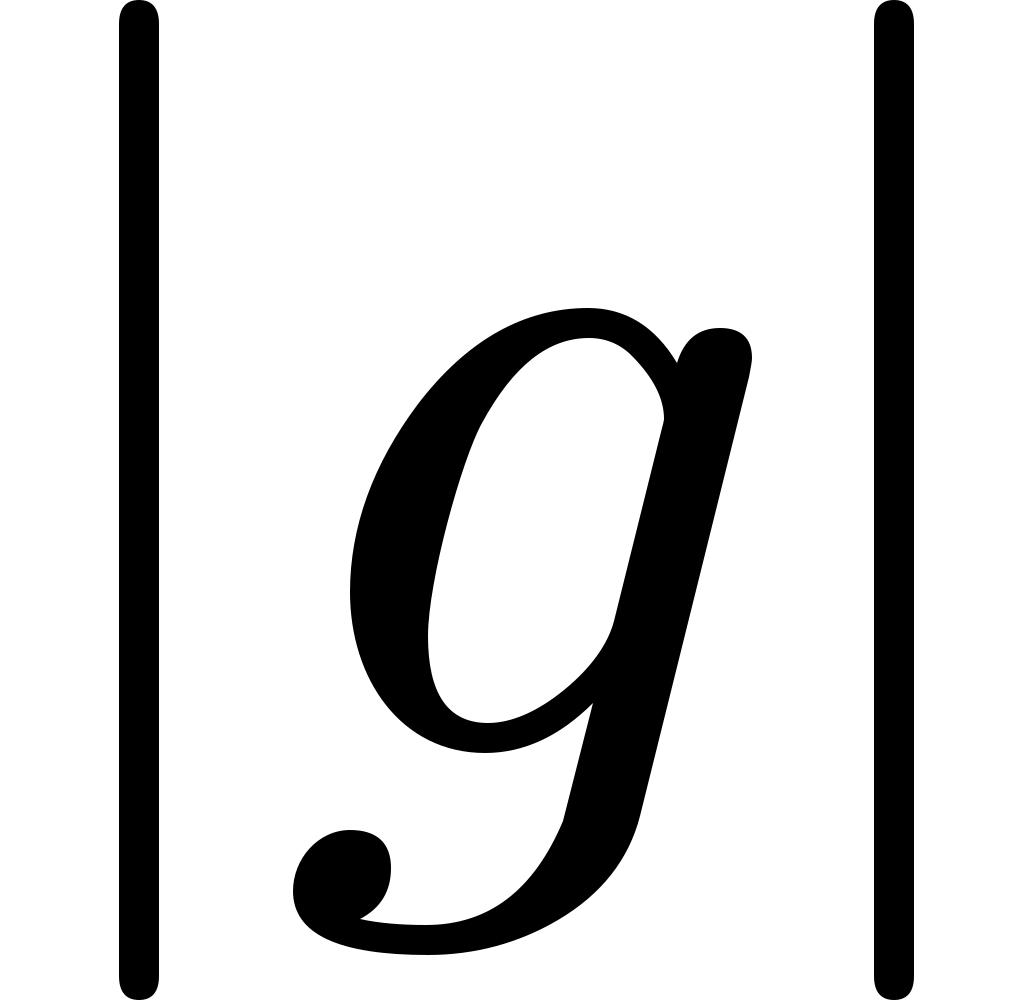 is written (instead of simply ) because
the formula is then valid as it stands even for an indefinite
is written (instead of simply ) because
the formula is then valid as it stands even for an indefinite
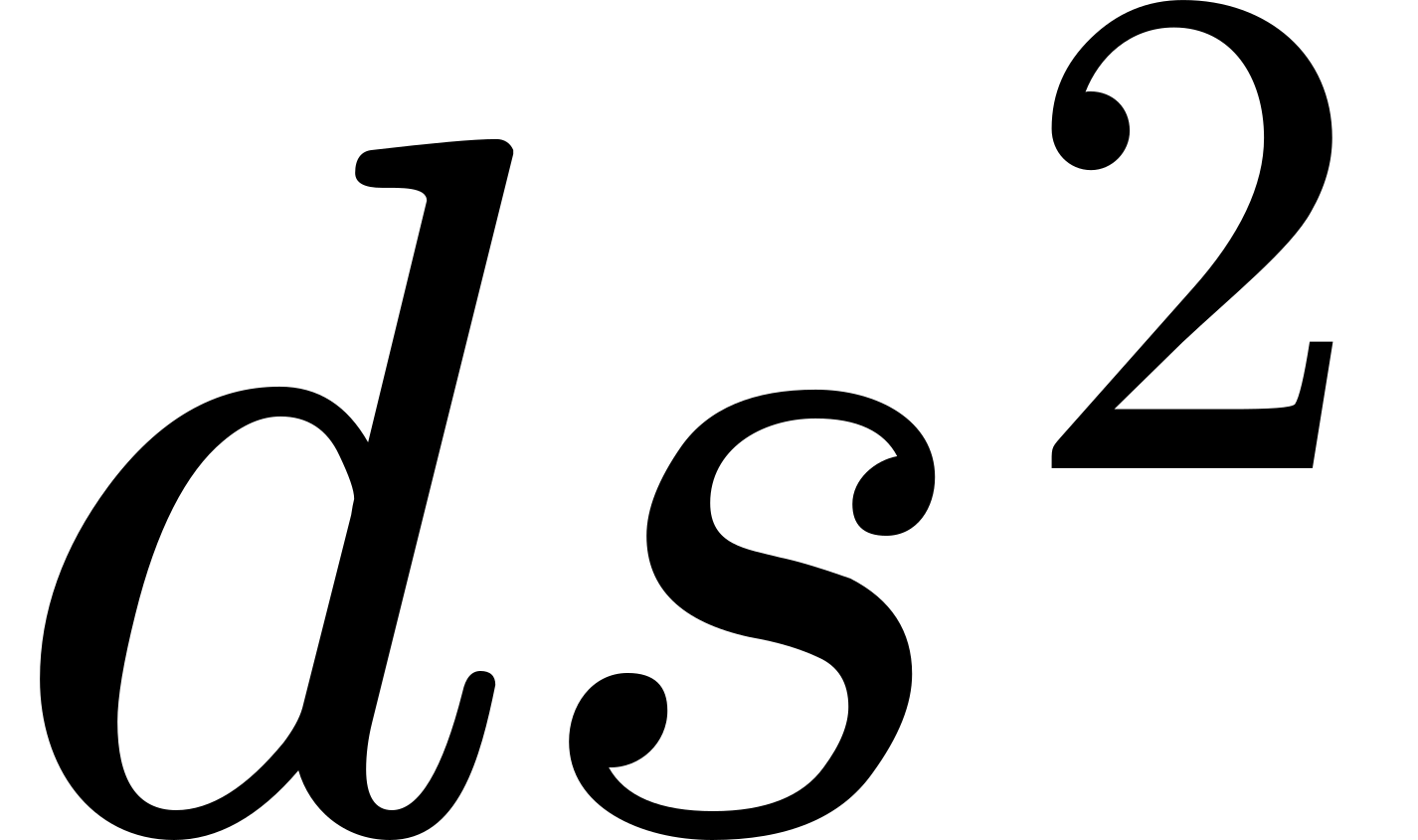 .
.
For the divergence of a tensor of the second rank
with the contravariant components 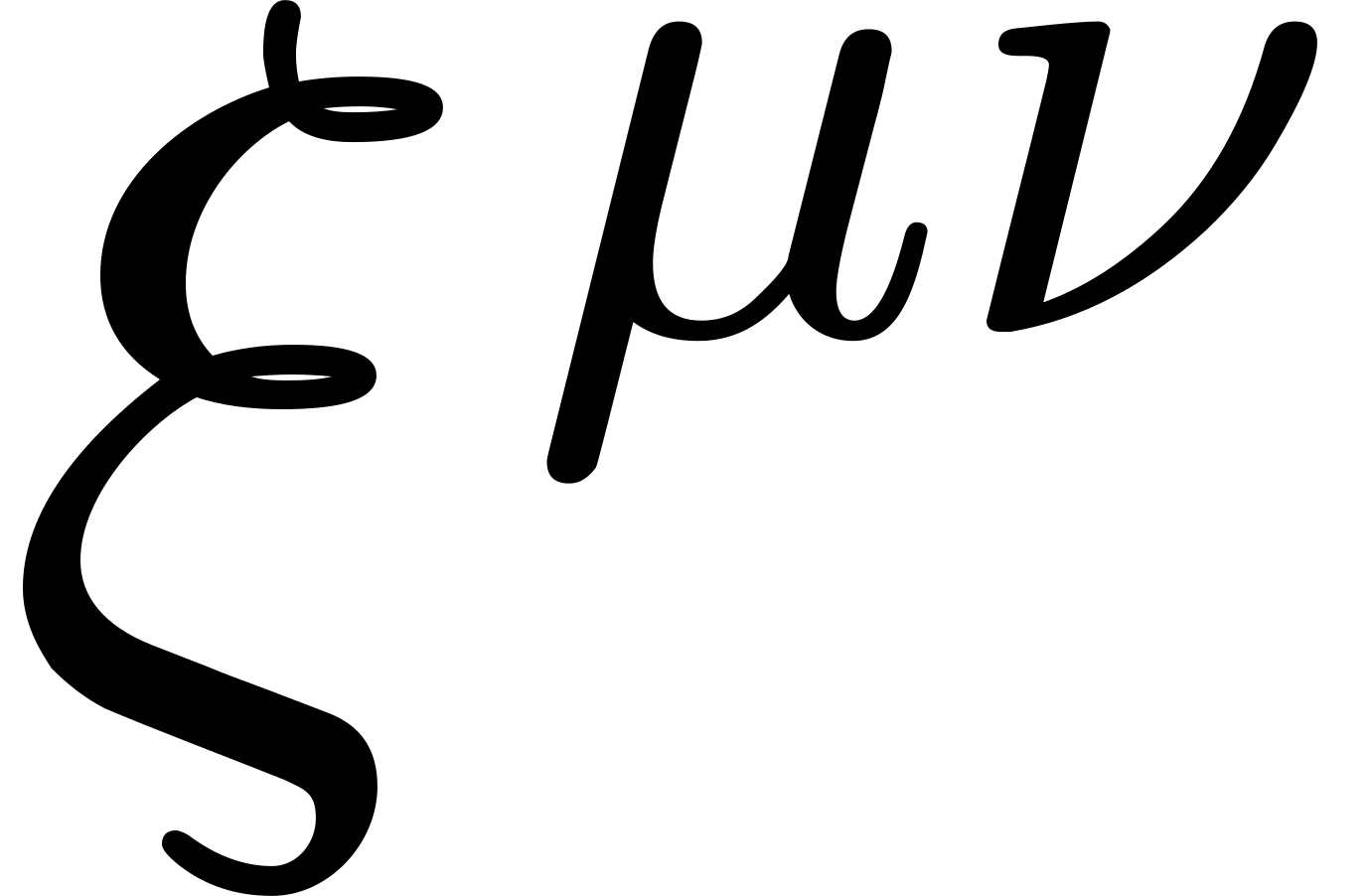 we obtain a vector
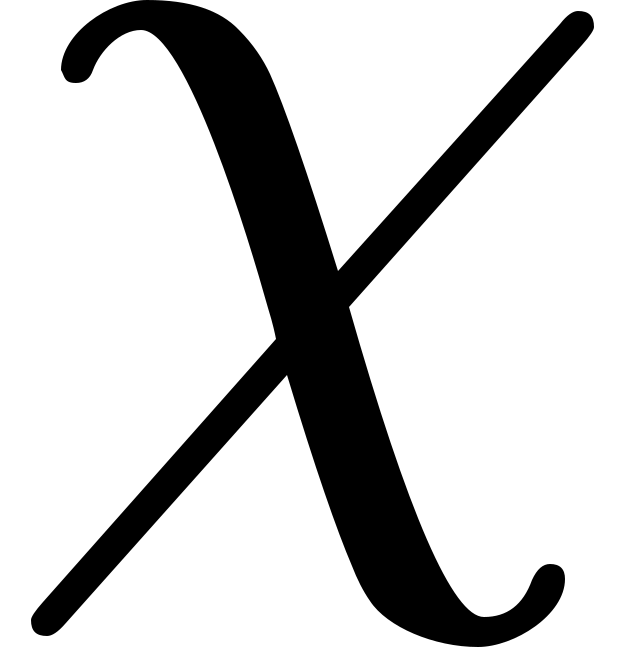 with the contravariant components

Following von Laue,[6] we shall write simply

If we here replace the covariant derivatives 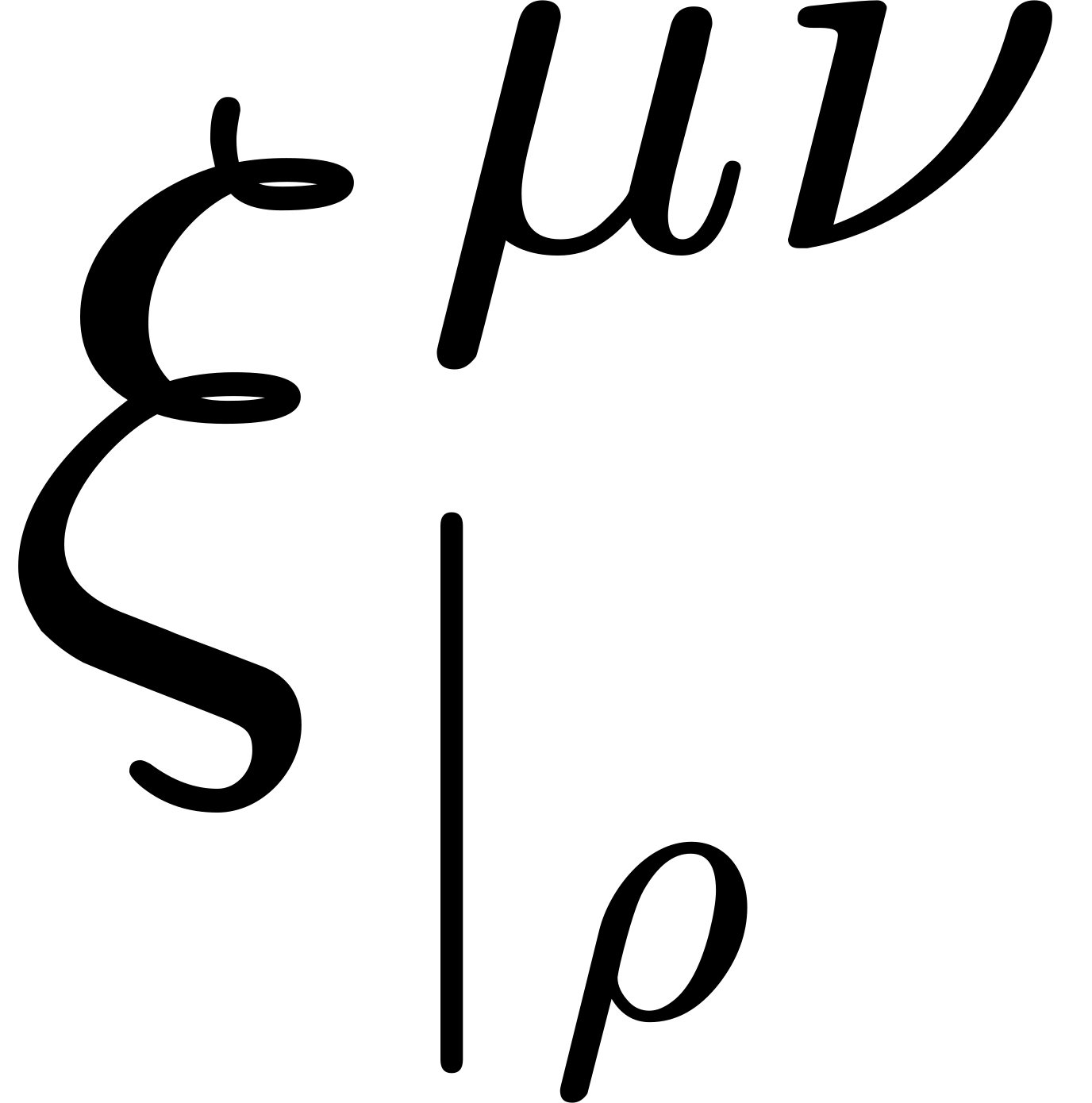 by their explicit values, we obtain
 in the case of a skew-symmetrical tensor
  ; hence, by (16),

Owing to the skew-symmetry of the quantities , the
right-hand side vanishes identically.
Thus if we again make use of covariant derivatives, we obtain the
identity
 or finally, in tensor notation,

That is, in an arbitrary Riemannian space the divergence of the divergence of a skew-symmetrical tensor of the second rank is identically zero.
In order to express the right-hand sides of (16) and (17) in
-uplet tensor components, it is sufficient to apply the operator
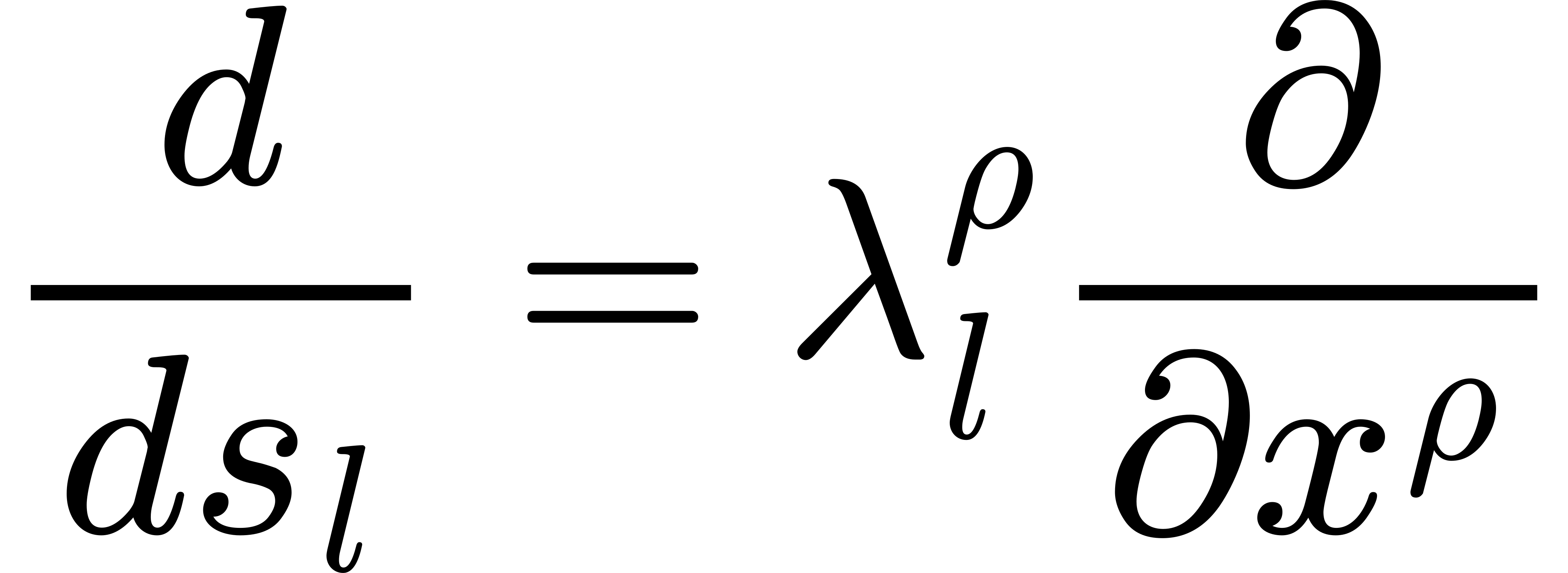 to the formulæ of definition
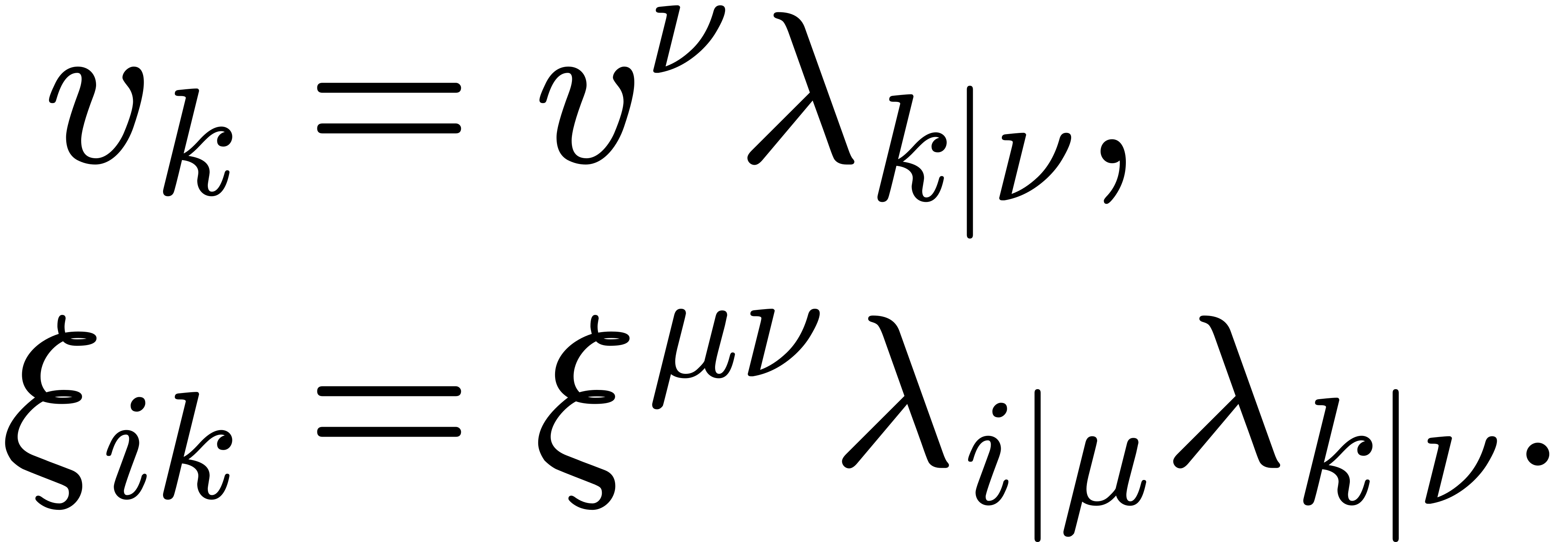
By replacing ordinary differentiation by covariant differentiation
on the right-hand side (which is permissible, as we are dealing with
invariants), we obtain
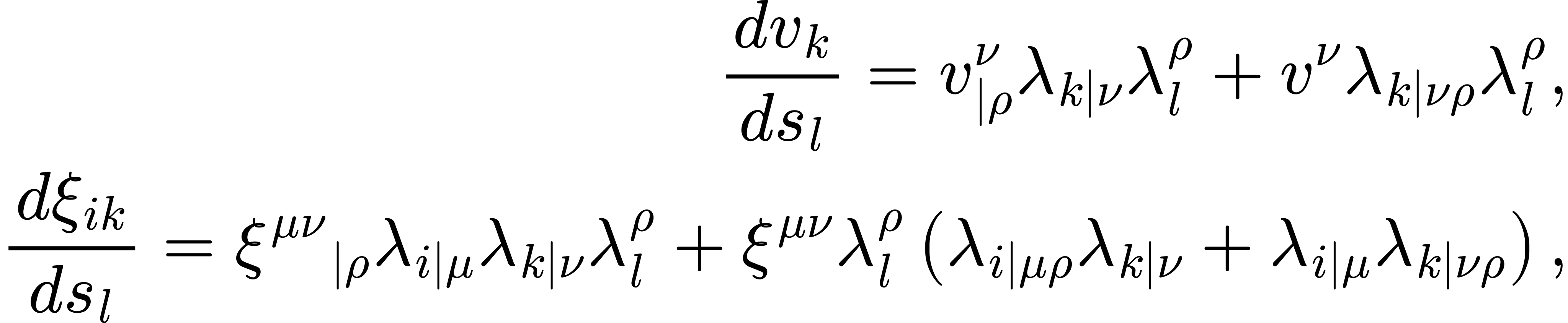 whence, by , (16), and (17),
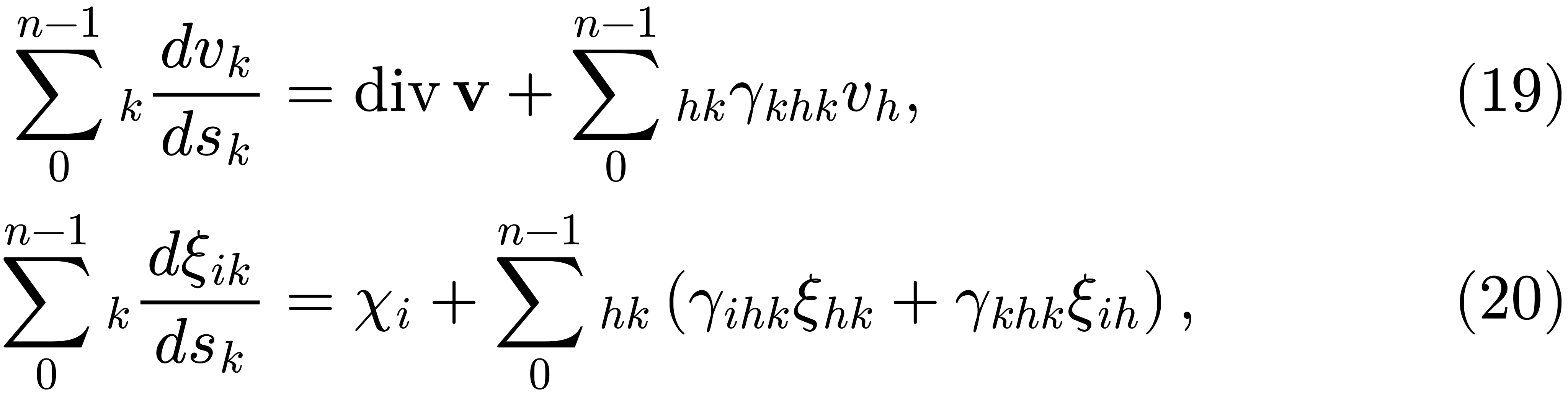 which give the divergences
  and
and
 of -uplet tensors (of the
first or second rank) directly by means of -uplet components and
-uplet operations.
of -uplet tensors (of the
first or second rank) directly by means of -uplet components and
-uplet operations.
For we have an elementary tensor of the fourth rank at our
disposal, namely the well-known Riccian 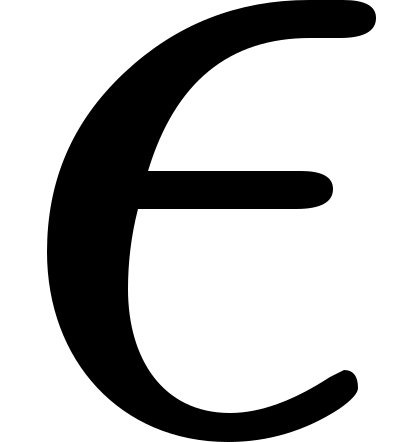 -system, the
covariant and contravariant components of which,
-system, the
covariant and contravariant components of which, 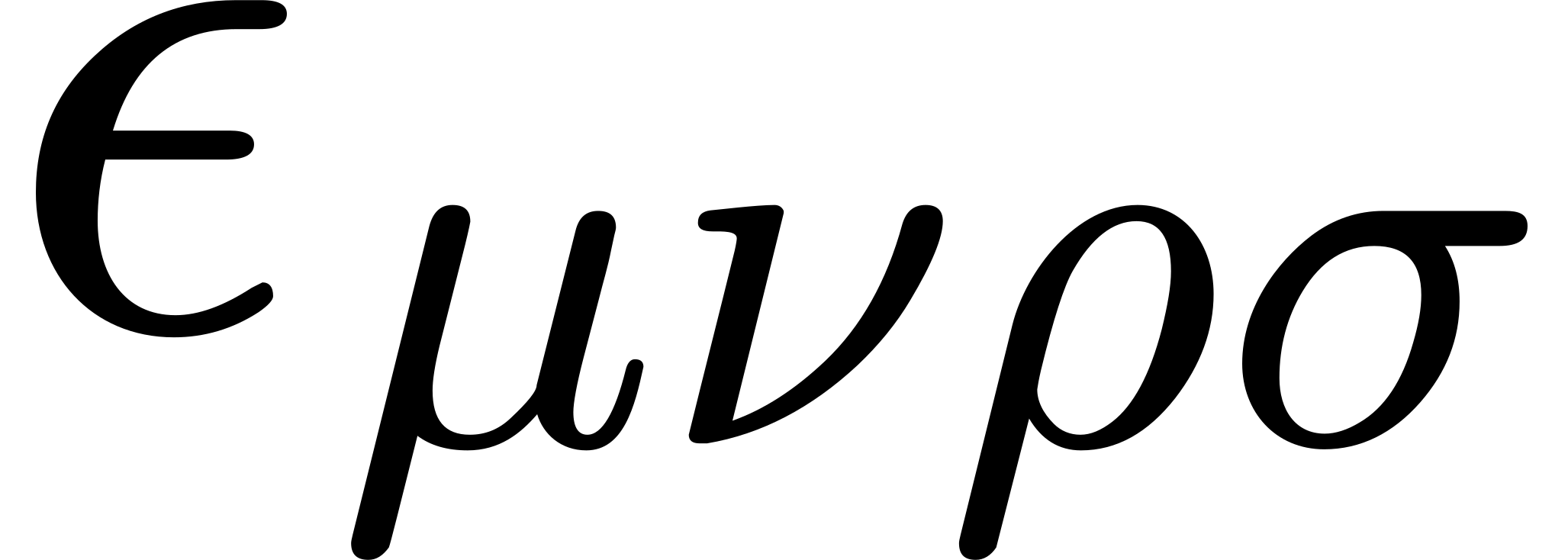 ,
,
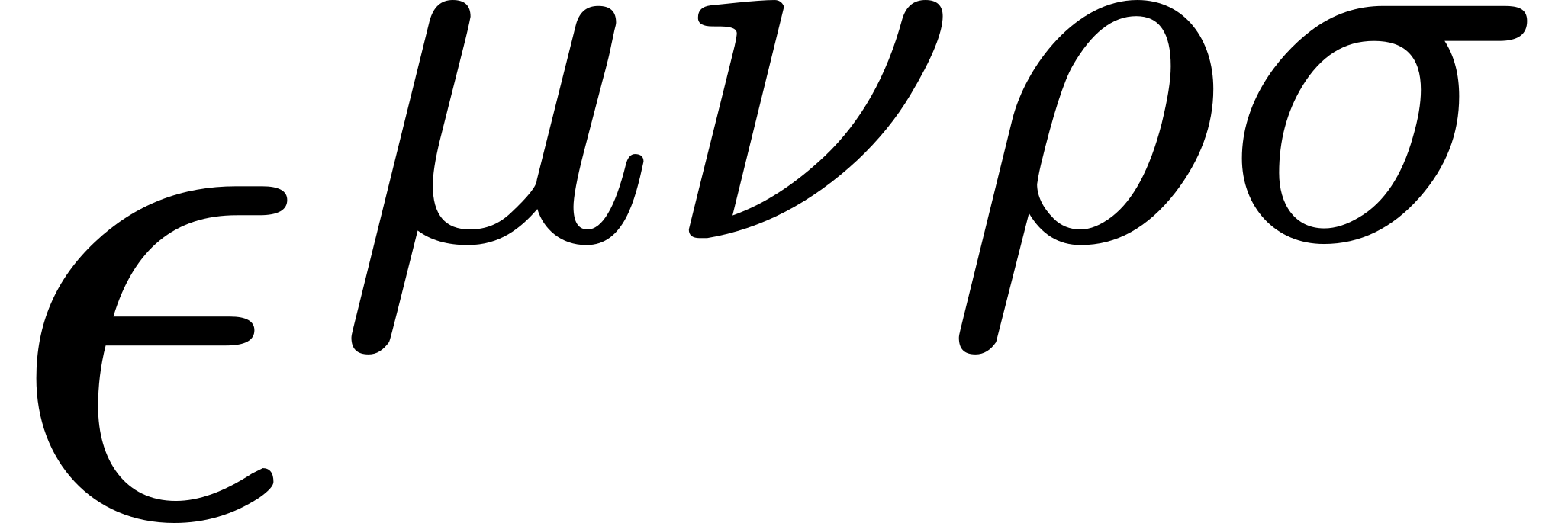 respectively, are
equal to zero if the four indices are not all different. The other
components have the respective values
respectively, are
equal to zero if the four indices are not all different. The other
components have the respective values 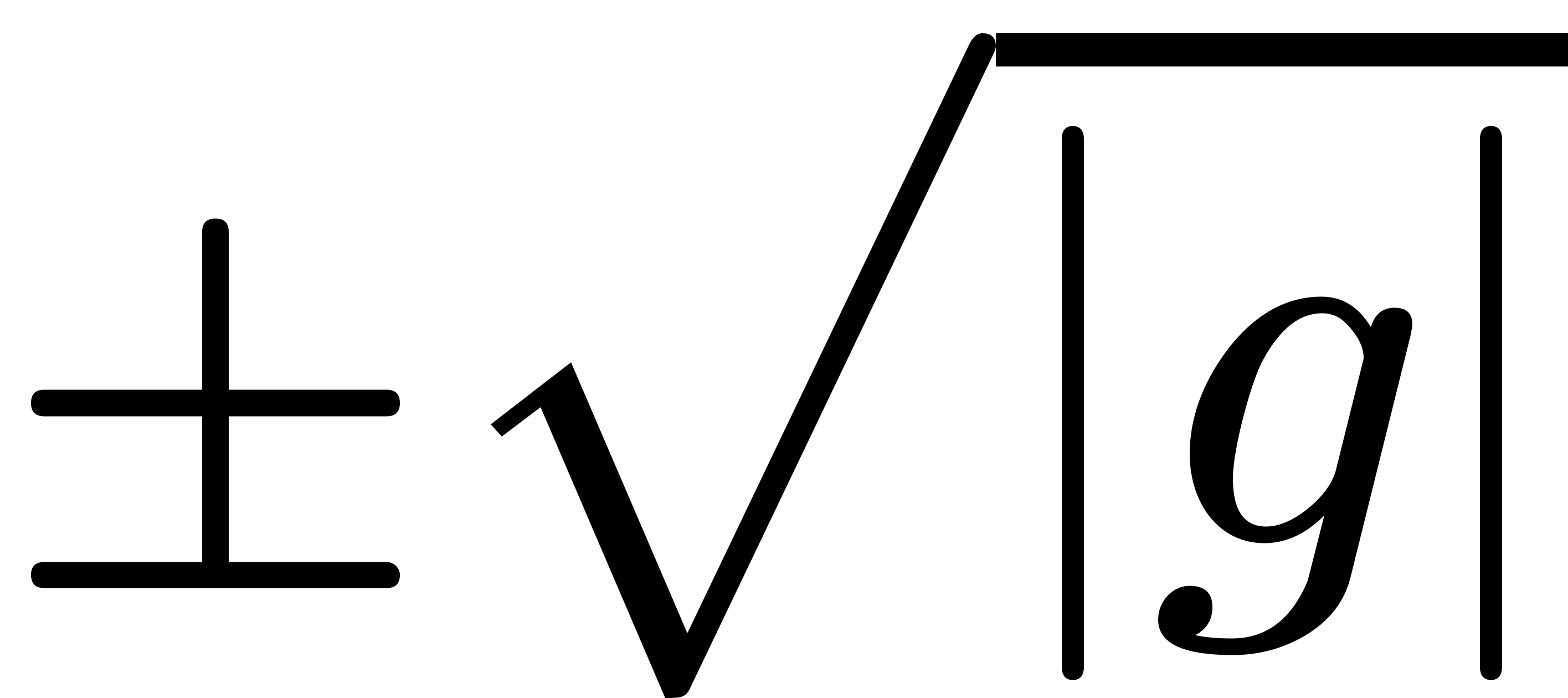 ,
,
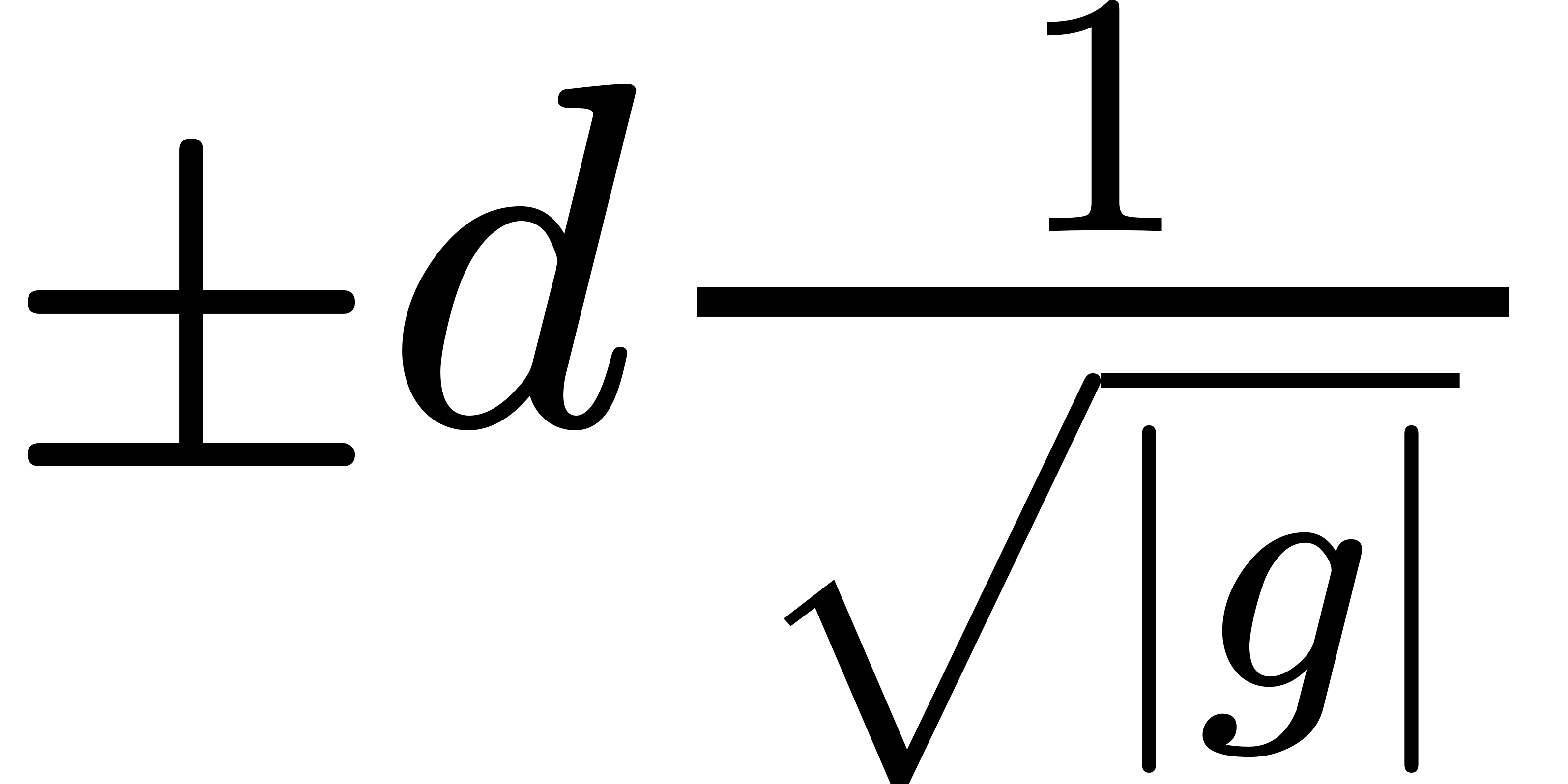 , the upper or lower sign being taken
according as the permutation
, the upper or lower sign being taken
according as the permutation 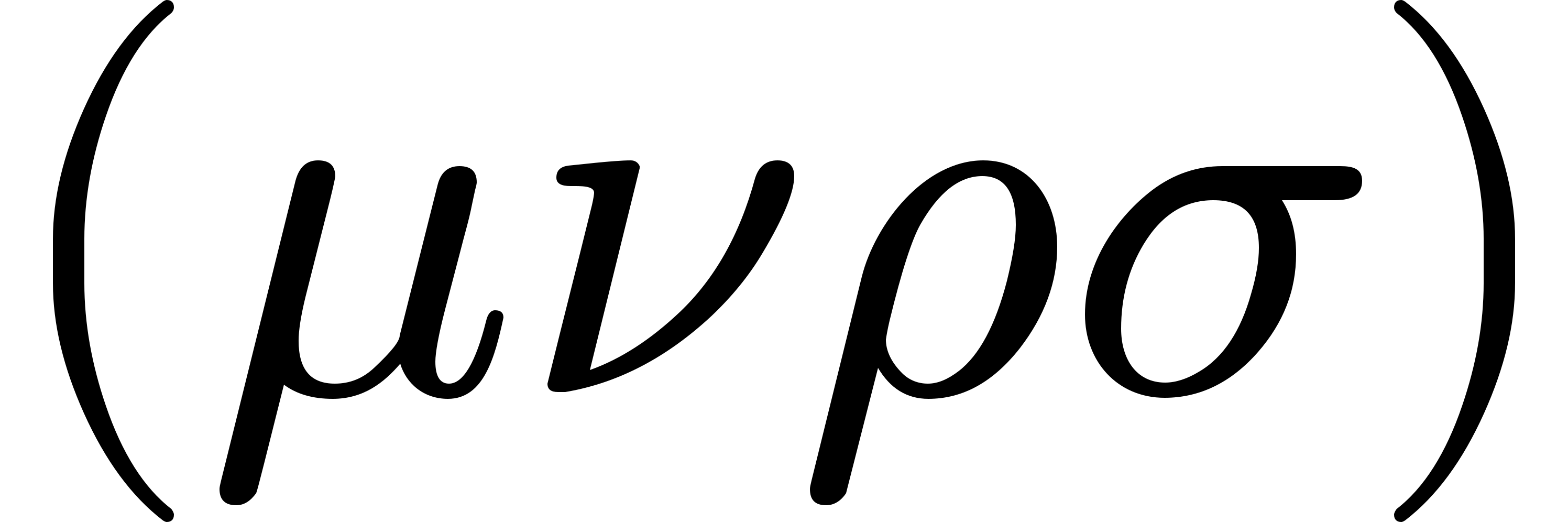 is even or odd
with respect to (0123).
is even or odd
with respect to (0123).
Let again be a skew-symmetrical tensor of the
second rank with the contravariant components 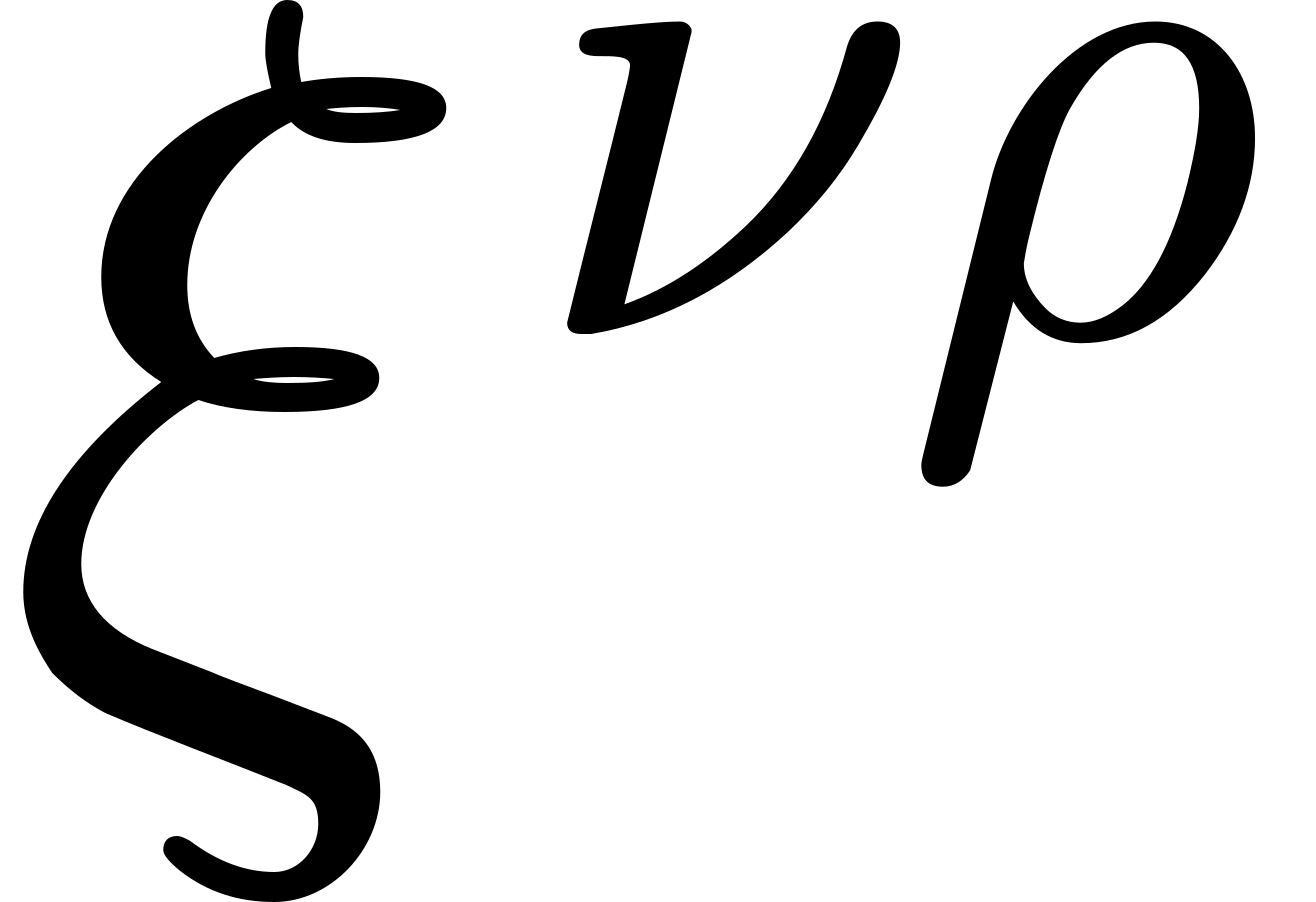 . If we
put
. If we
put
 which means the same as
 in von Laue's notation, we are justified in calling the vector
 with the above covariant and contravariant components
the Pfaffian divergence of
with the above covariant and contravariant components
the Pfaffian divergence of  , because the
 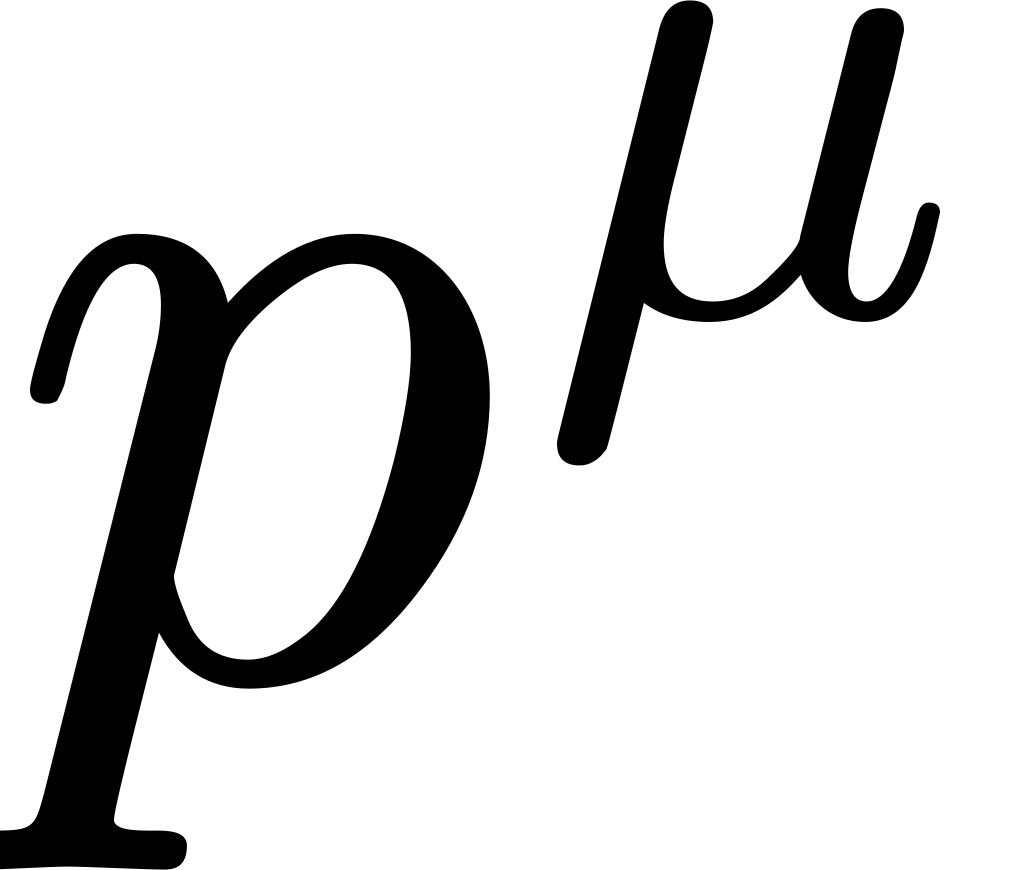 's vanish
identically if, and only if, the
's vanish
identically if, and only if, the 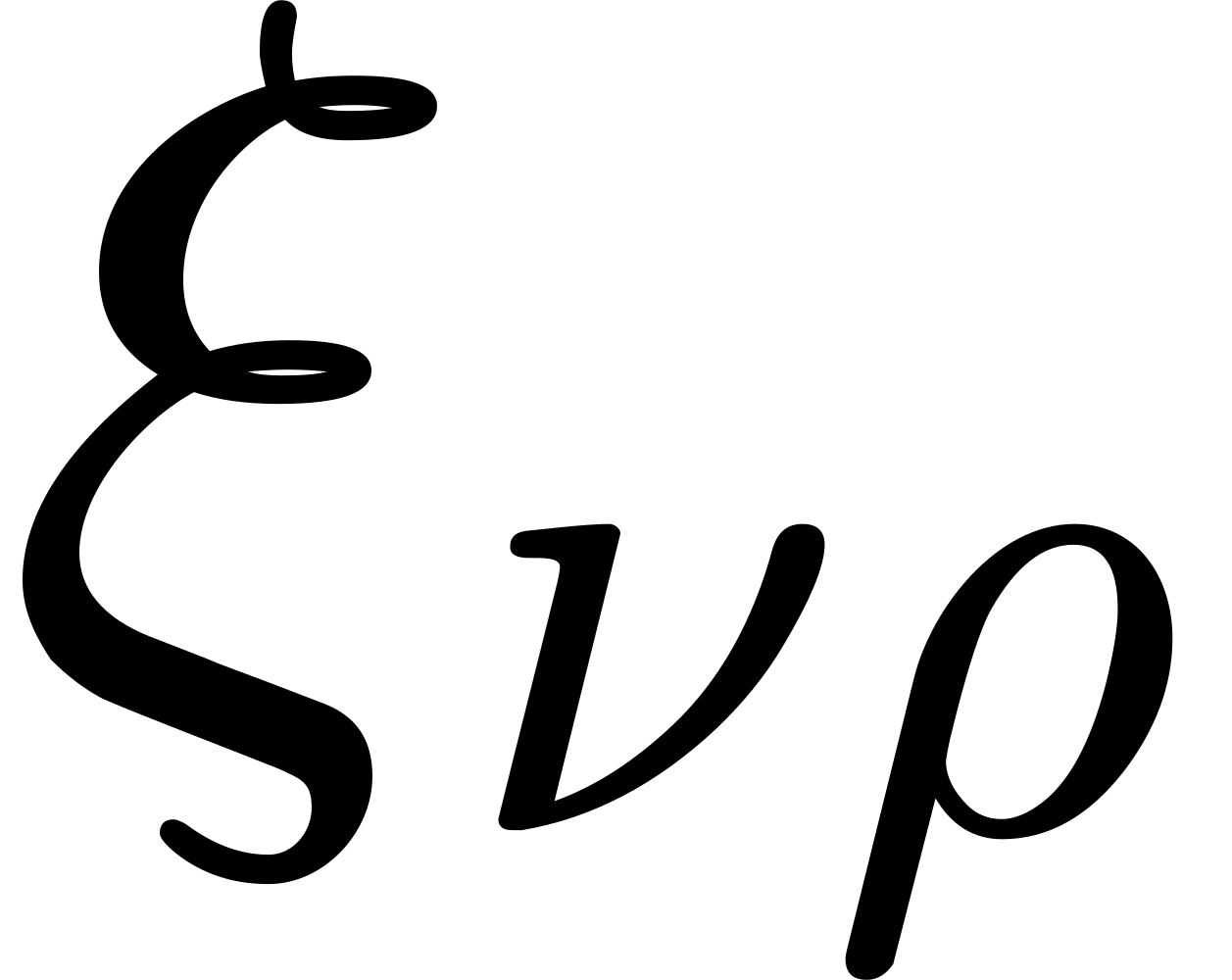 's coincide with
the coefficients of the bilinear covariants of a Pfaffian expression
's coincide with
the coefficients of the bilinear covariants of a Pfaffian expression
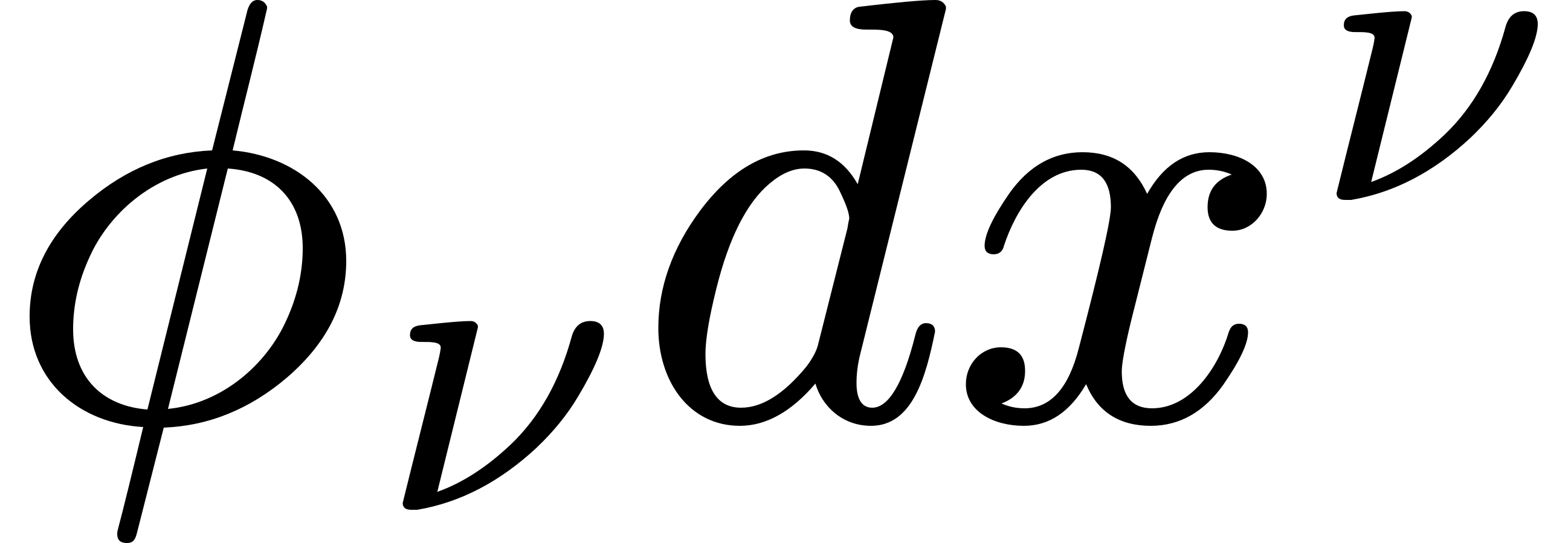 . This is most easily proved by replacing the
covariant derivatives
. This is most easily proved by replacing the
covariant derivatives 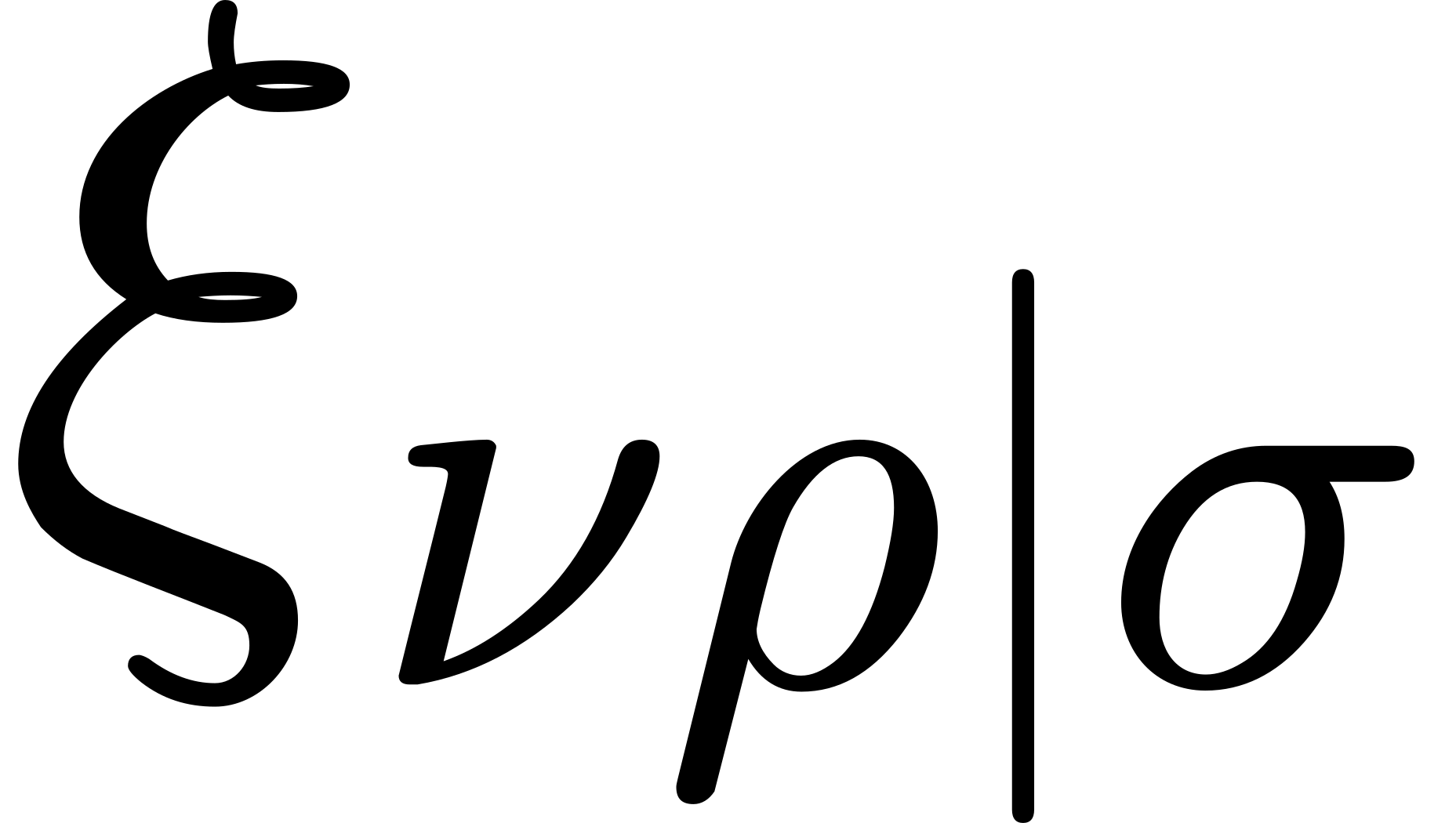 in
in  by their
explicit values and noting that, owing to the skew-symmetry of the
quantities , all that we have left is
by their
explicit values and noting that, owing to the skew-symmetry of the
quantities , all that we have left is
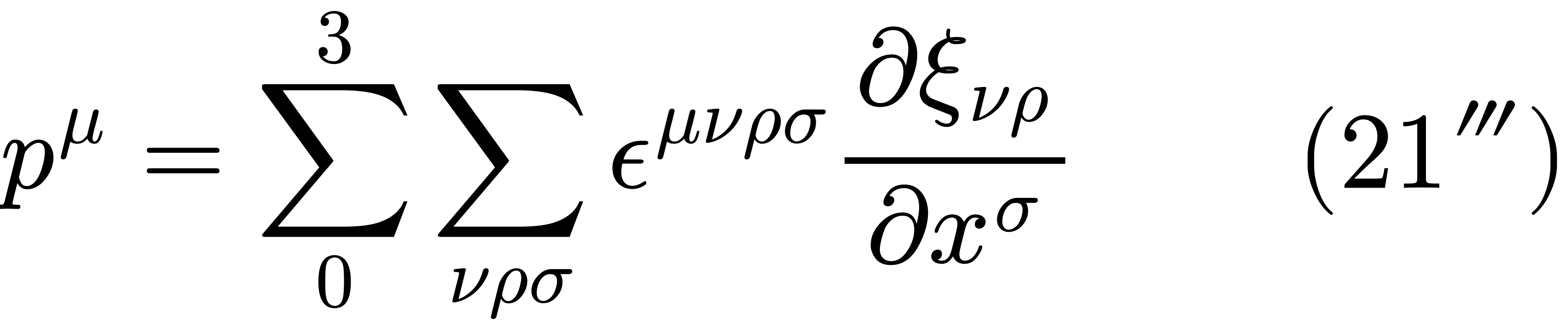 The right-hand sides obviously vanish if the quantities
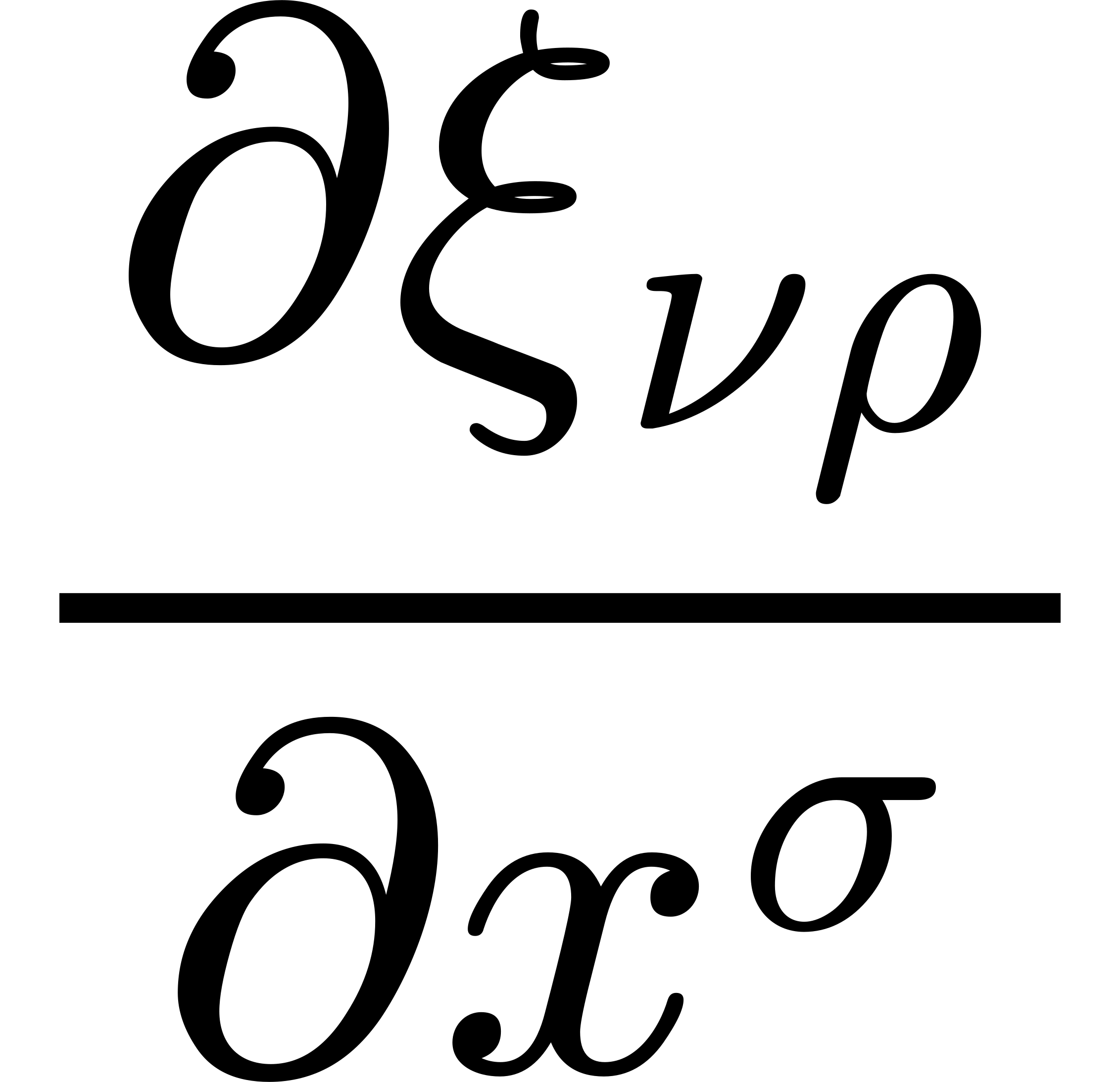 are replaced
by the differences
are replaced
by the differences 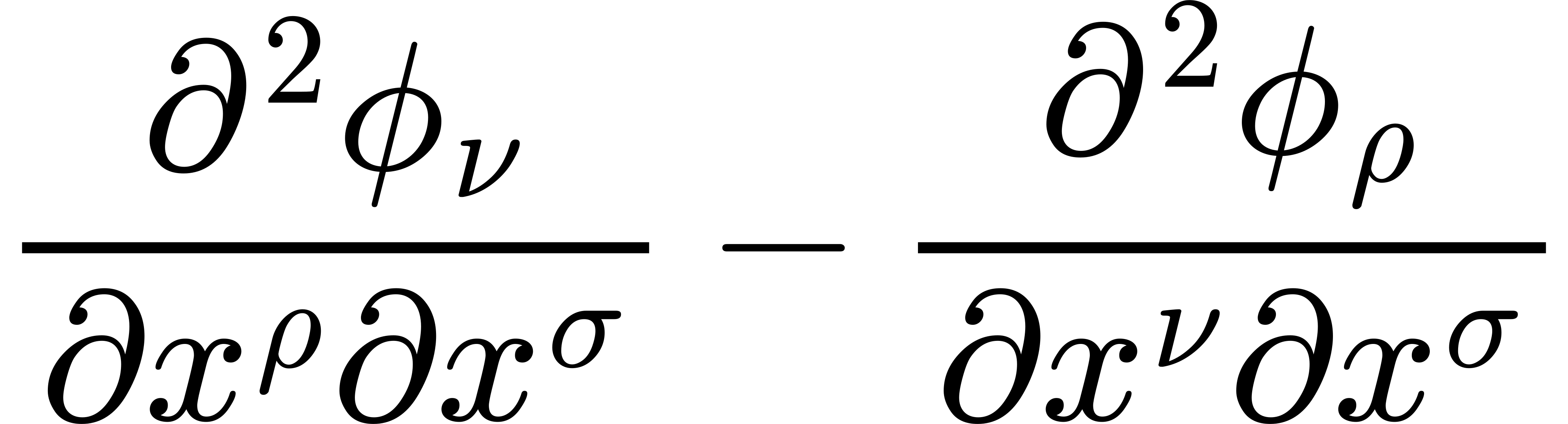 .
.
By substituting the expression  for the 's in the
second form (16) of the divergence of a vector we immediately obtain
for the 's in the
second form (16) of the divergence of a vector we immediately obtain
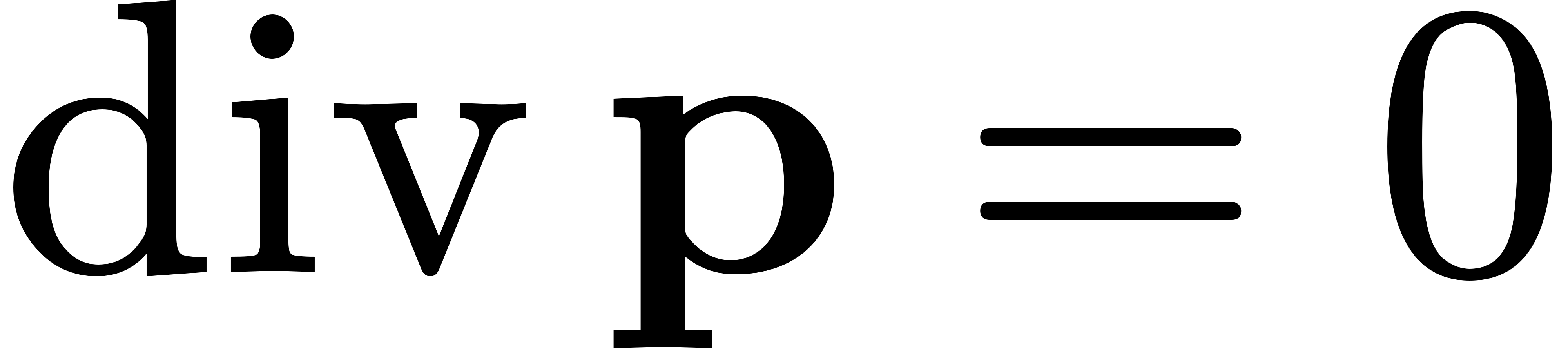 , which, bearing
 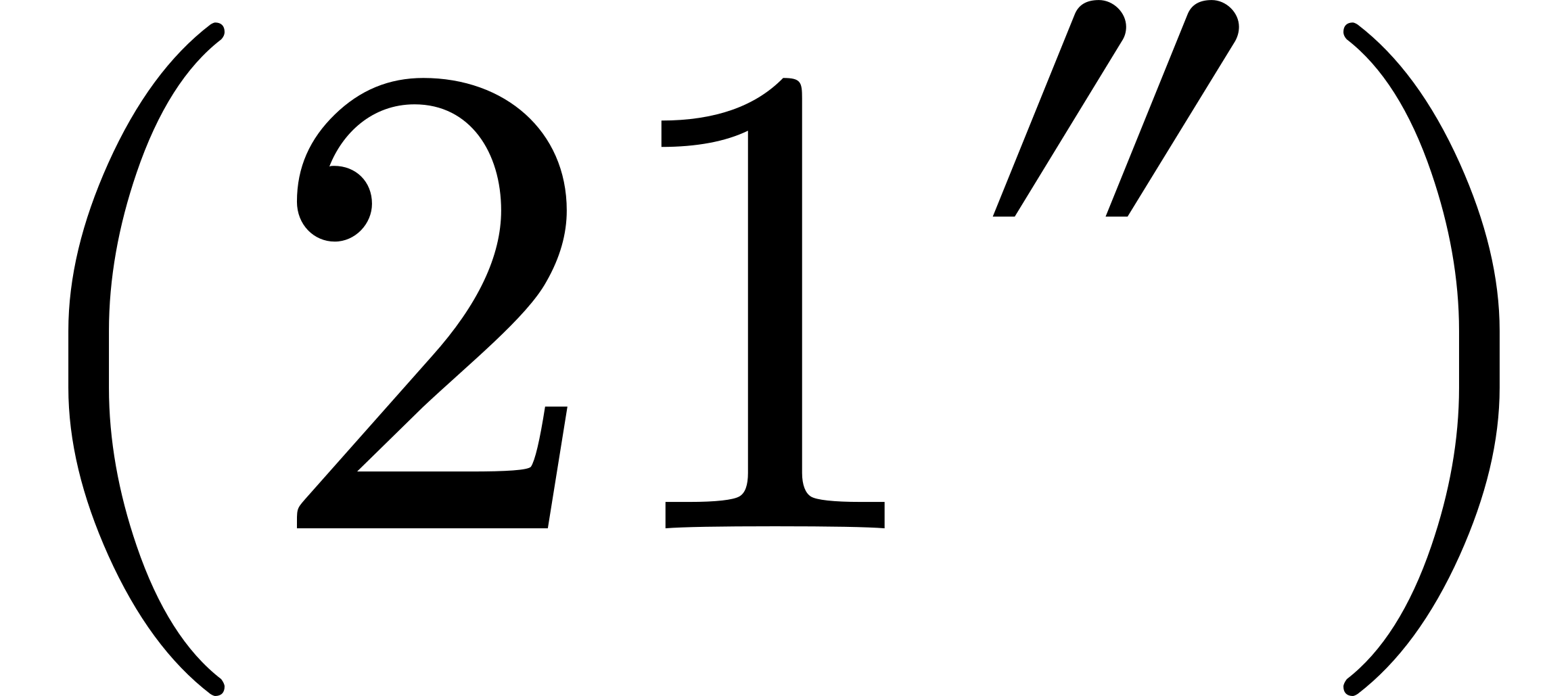 in mind, may be written
 that is, the divergence of the Pfaffian divergence of a
skew-symmetrical tensor of the second rank in
that is, the divergence of the Pfaffian divergence of a
skew-symmetrical tensor of the second rank in 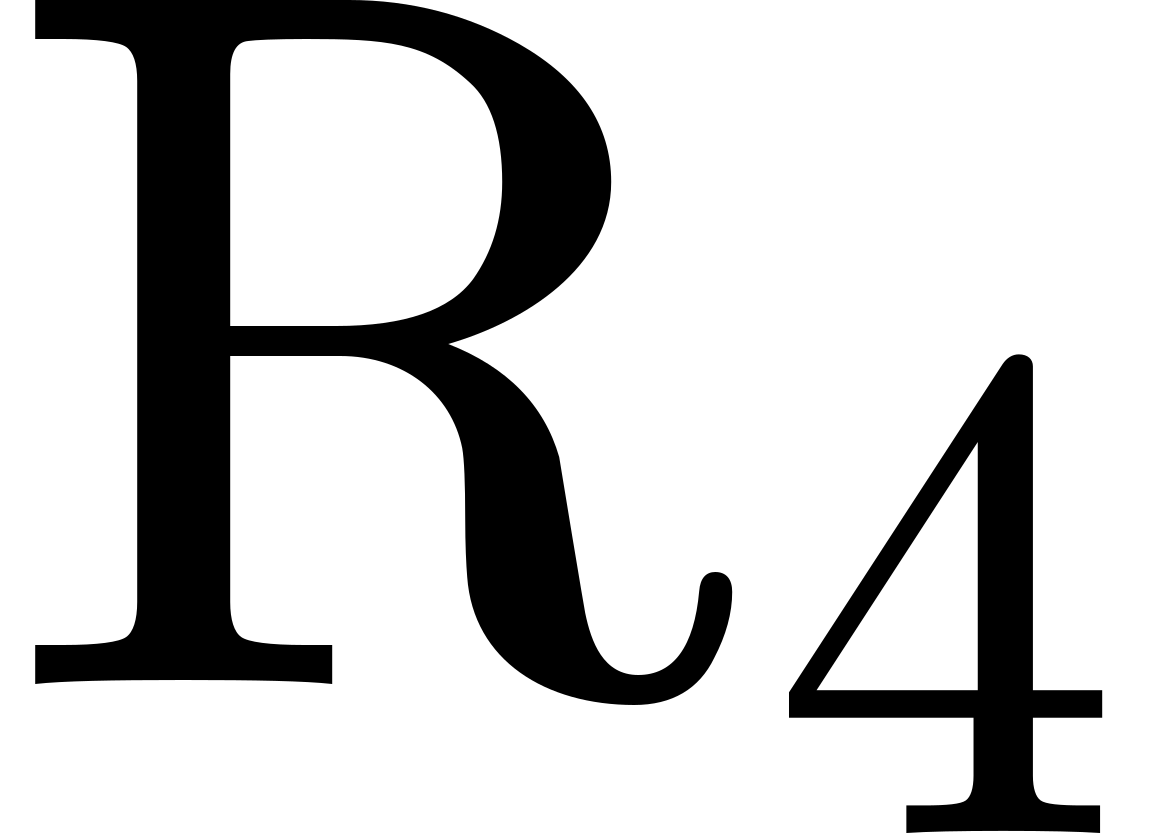 vanishes identically.
Further, we shall proceed to represent the vector (the
Pfaffian divergence) directly in terms of the -uplet components
 of the given tensor. Here it suggests itself to start from the solved
form of the equations which we have just written down, namely
of the given tensor. Here it suggests itself to start from the solved
form of the equations which we have just written down, namely
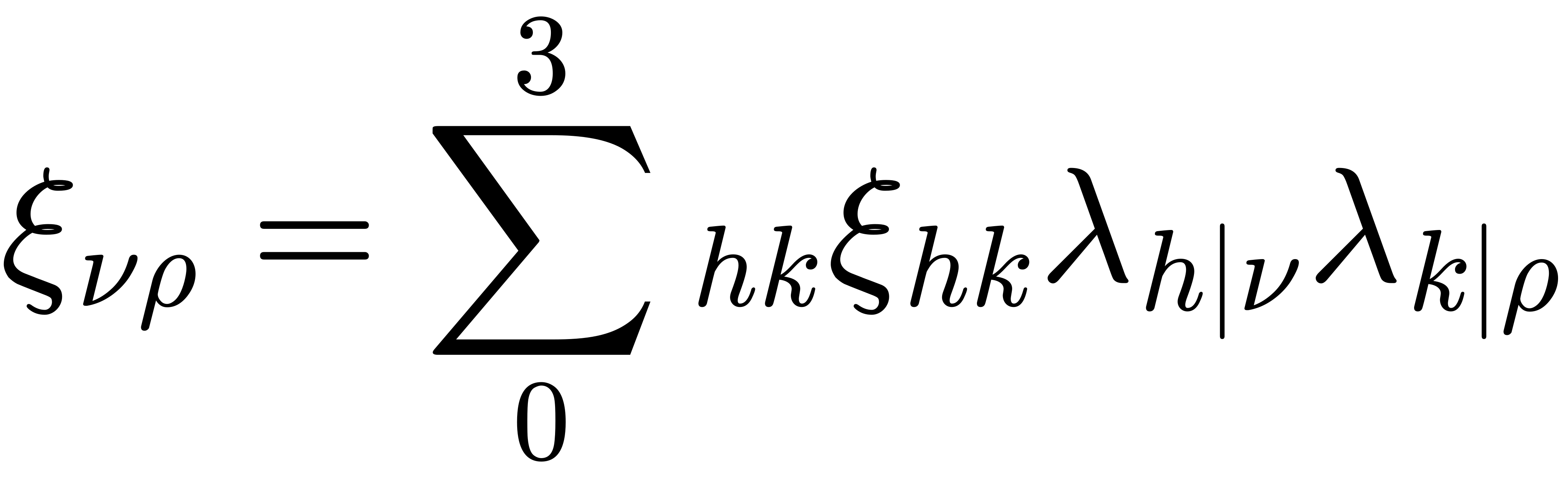 and to calculate the quantities by
covariant differentiation of the right-hand side.
and to calculate the quantities by
covariant differentiation of the right-hand side.
From
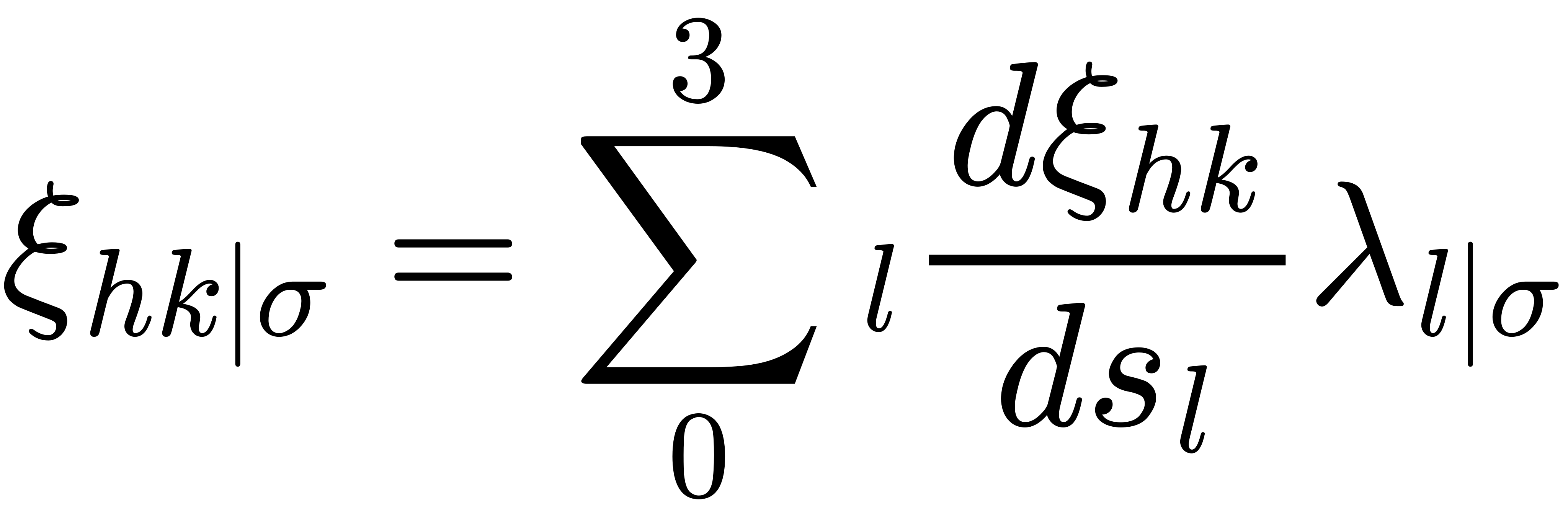 and we obtain
 hence, by ,
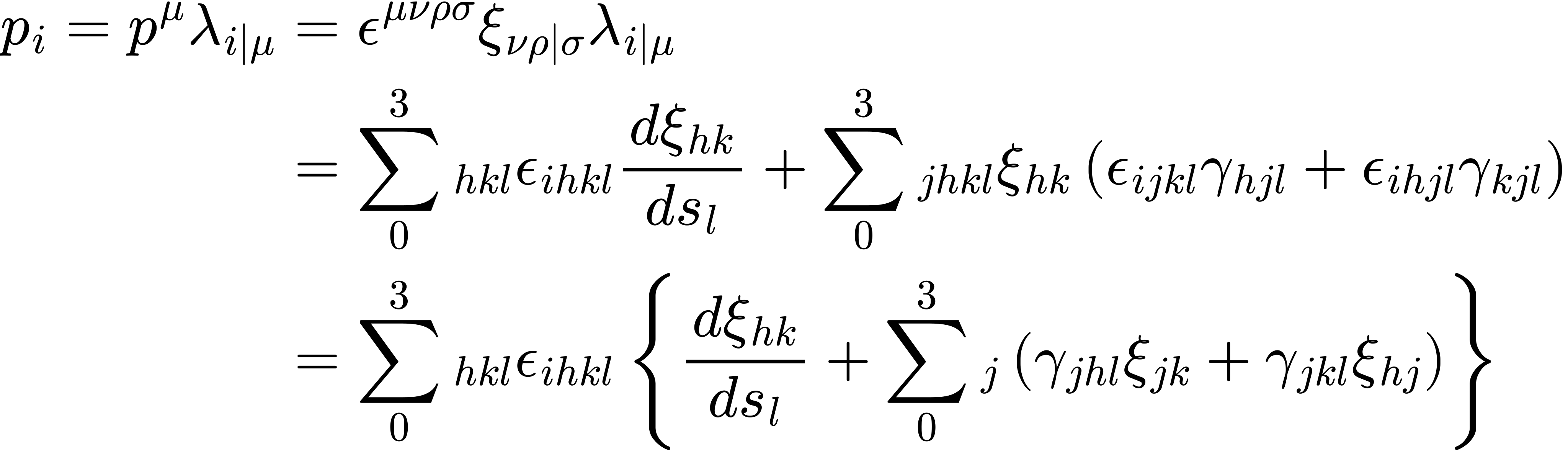 where for brevity we have put
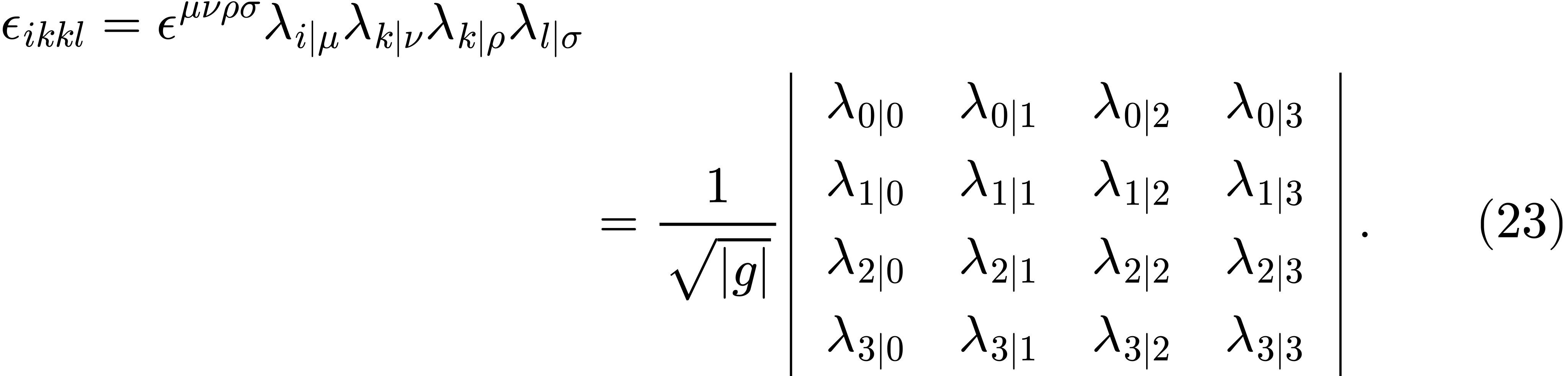 Thus these quantities
 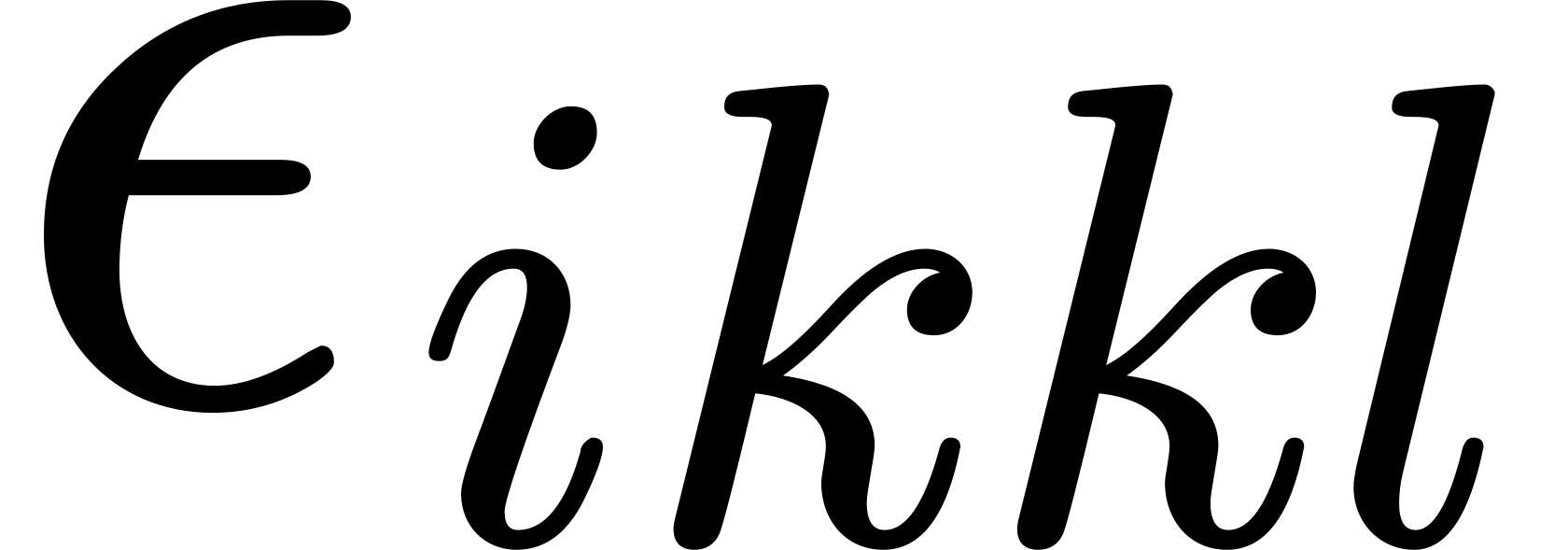 are equal to zero if
two of the four indices are equal. If, on the other hand,
are equal to zero if
two of the four indices are equal. If, on the other hand, 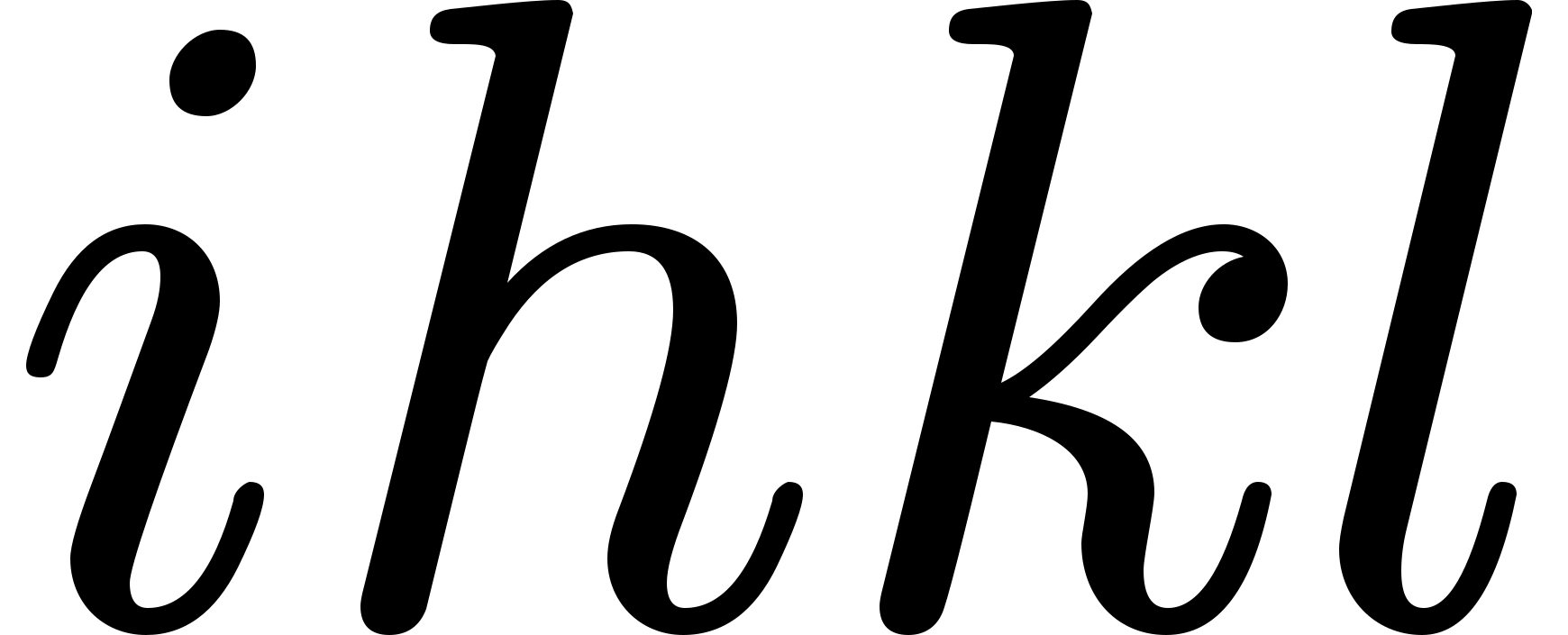 is a permutation of the numbers 0123,
  has the value
 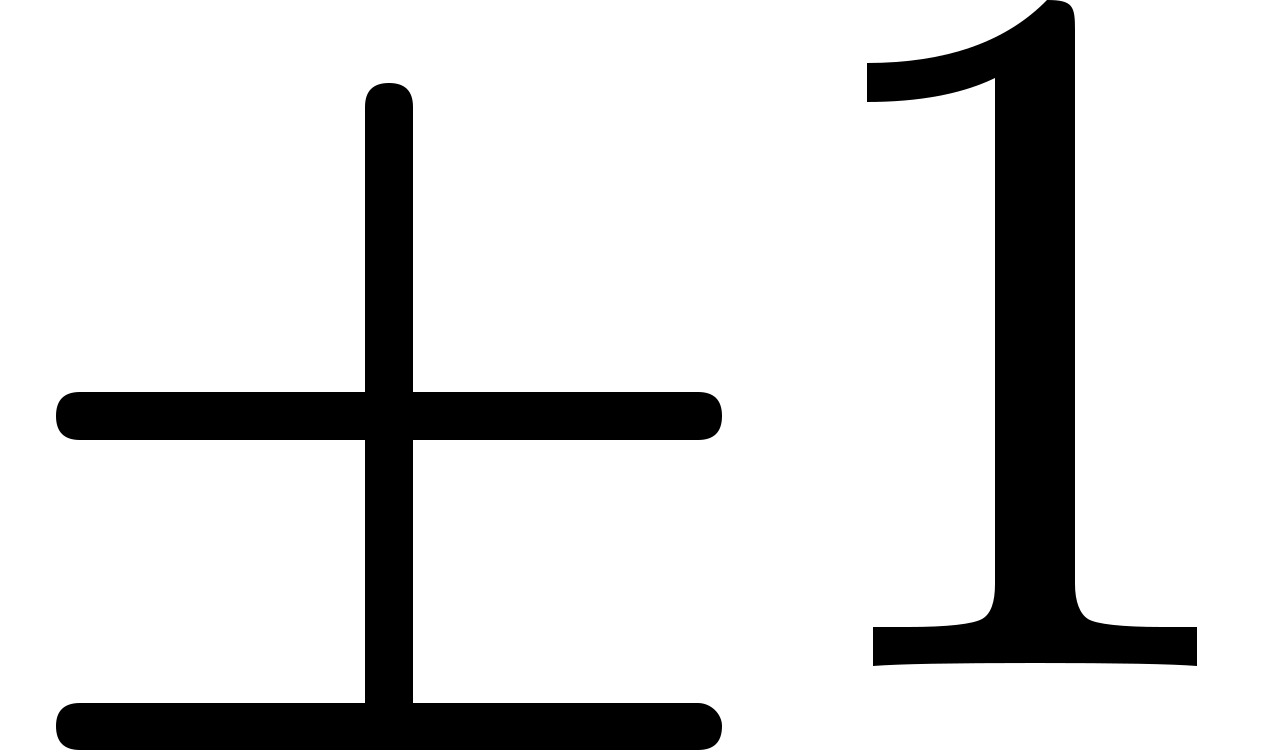 , according as the class of the substitution
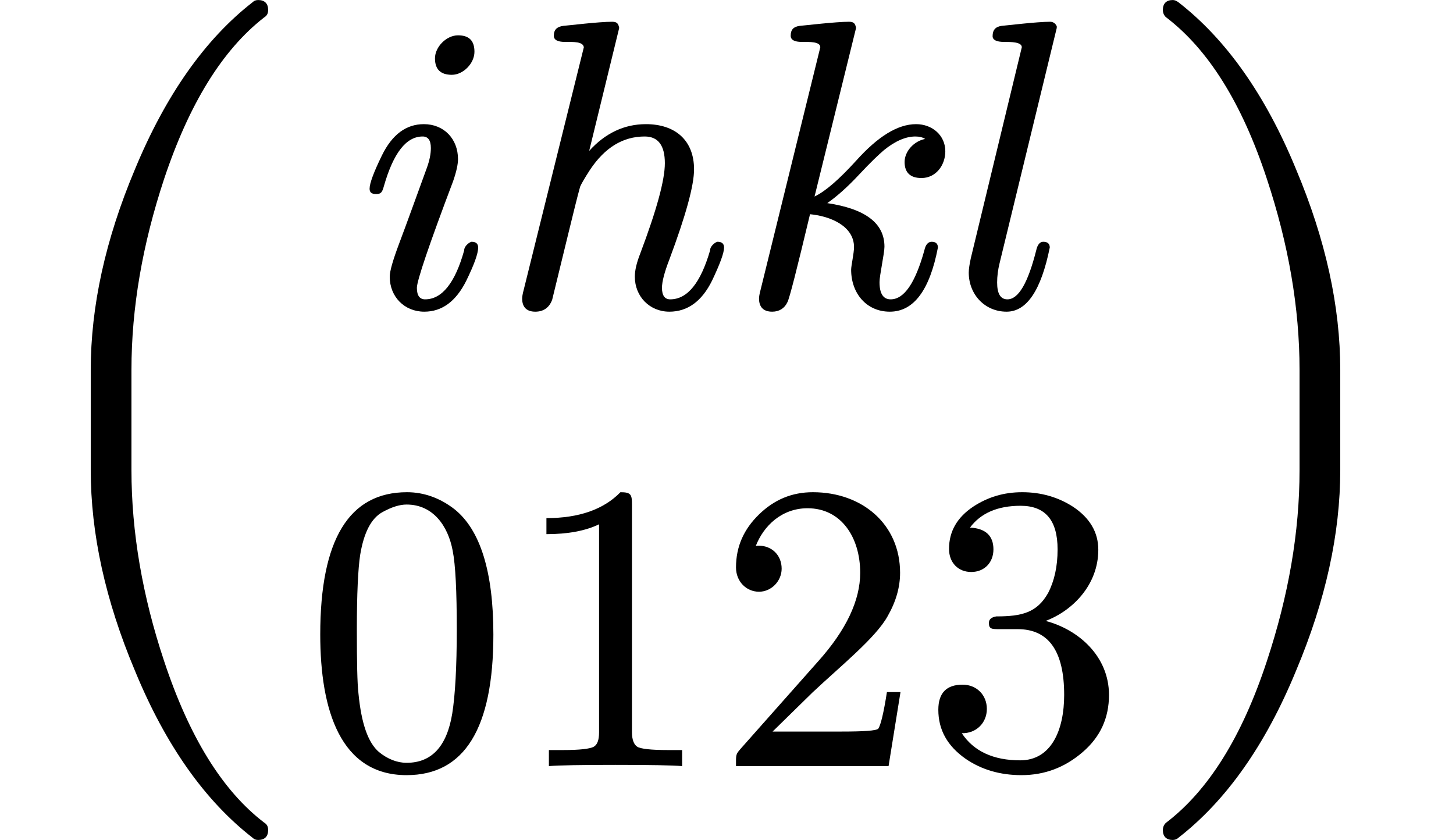 is even or odd. We accordingly see that in
the expression which we have just obtained for the
is even or odd. We accordingly see that in
the expression which we have just obtained for the 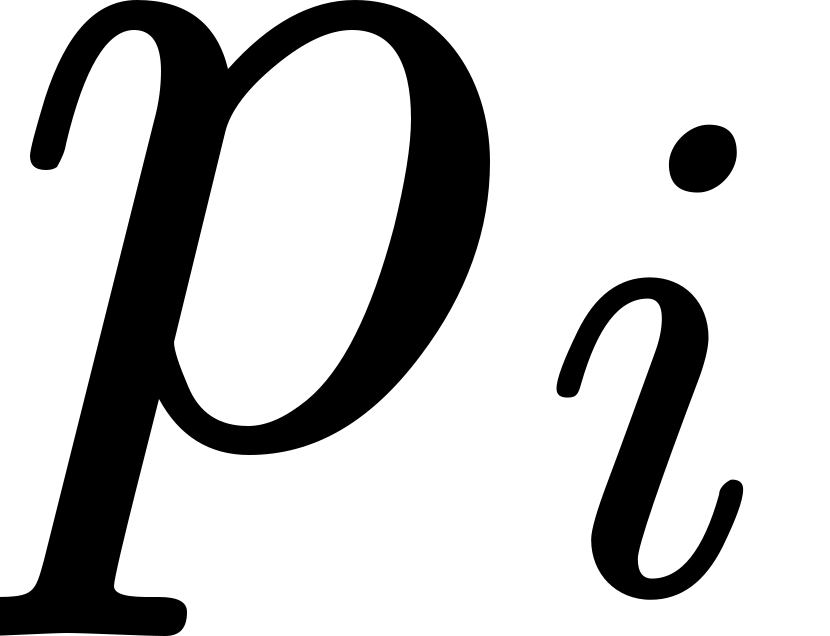 's the two
last terms are equal to each other, so that we finally obtain
's the two
last terms are equal to each other, so that we finally obtain

3. Transformations for an indefinite metric.
According to Eisenhart[7] all the formulæ of the -uplet theory can
be transferred in a readily intelligible way to indefinite metrics,
without leaving the real region even temporarily.
If we consider an indefinite
 we (as is well known) call a (real) direction
 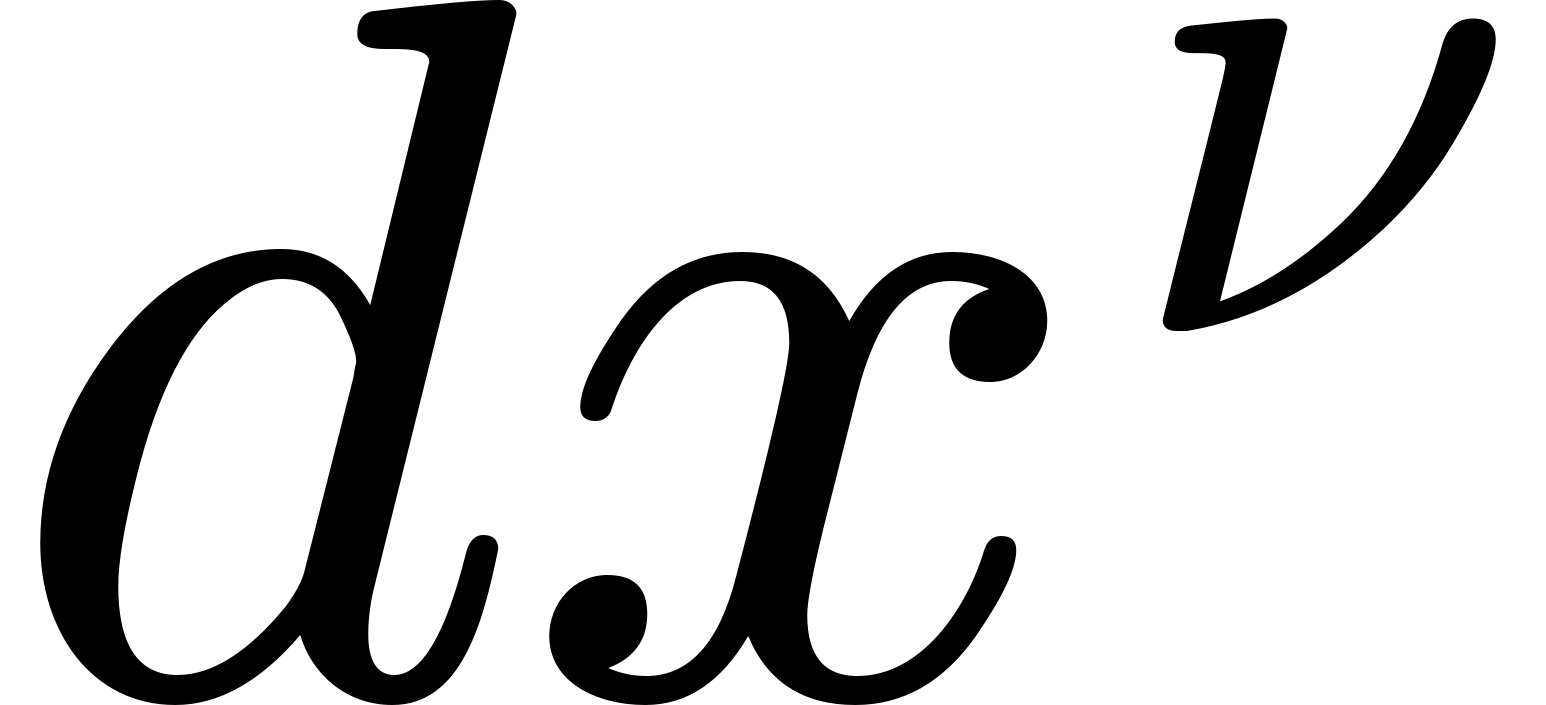 time-like or space-like, according as the corresponding
turns out greater or less than zero; null directions are
those directions,
time-like or space-like, according as the corresponding
turns out greater or less than zero; null directions are
those directions, 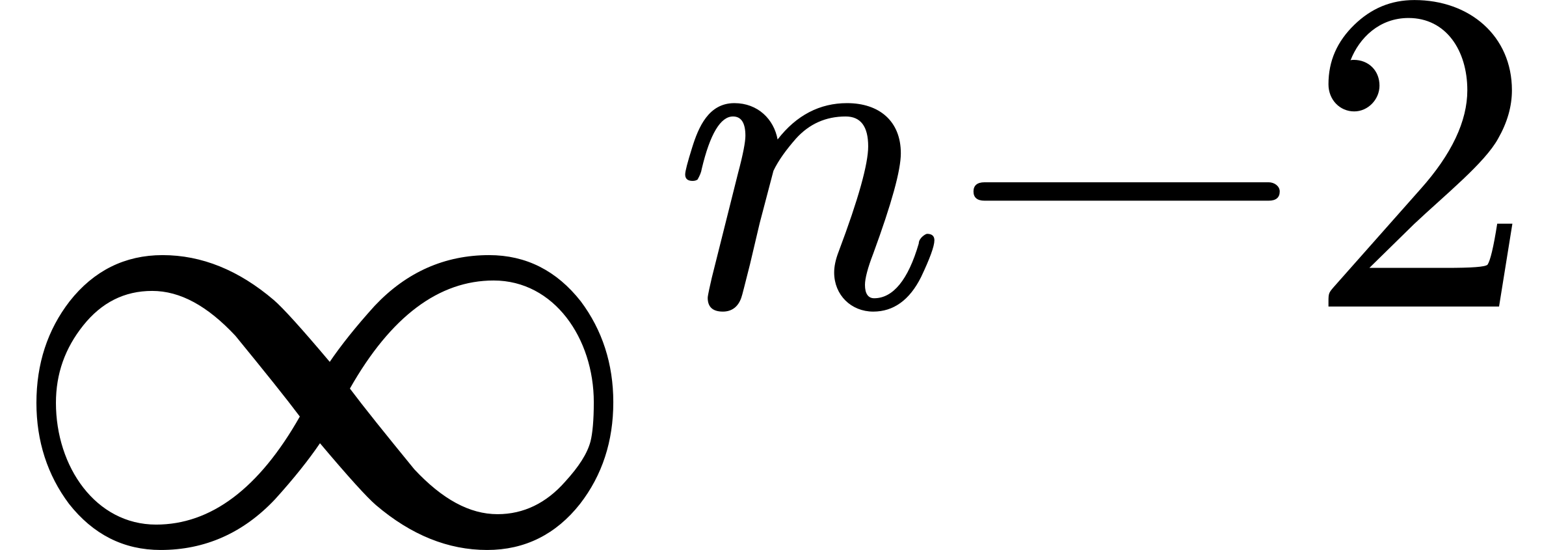 in number, for which
 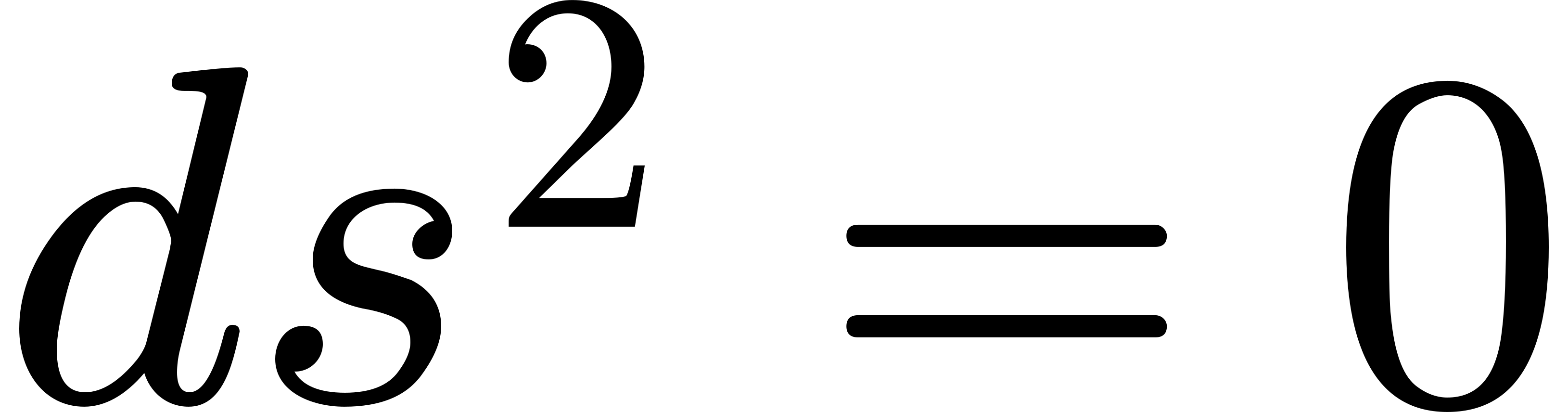 .
.
In any case we call the ratios
 parameters of a proper (i.e. non-null) direction.
Hence we have
 if we henceforth denote positive or negative unity by
 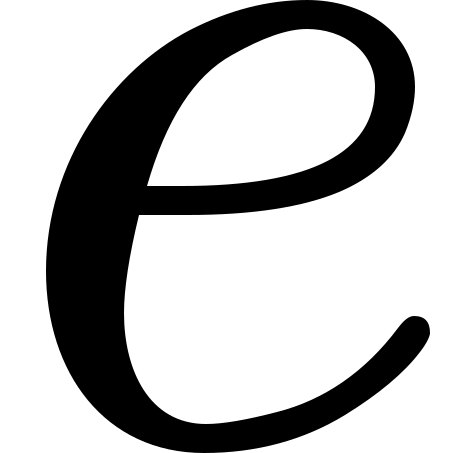 .
.
As in the definite case we introduce as moments of a given direction
the covariant quantities
 so that the quadratic identity (25) takes the form

If the quantities  are the
parameters of an orthogonal -uplet consisting of proper directions
only, we have
are the
parameters of an orthogonal -uplet consisting of proper directions
only, we have
 on account of the orthogonality of the -uplet, and also
 by (27).
The total number of negative (and consequently also of the remaining
positive) quantities 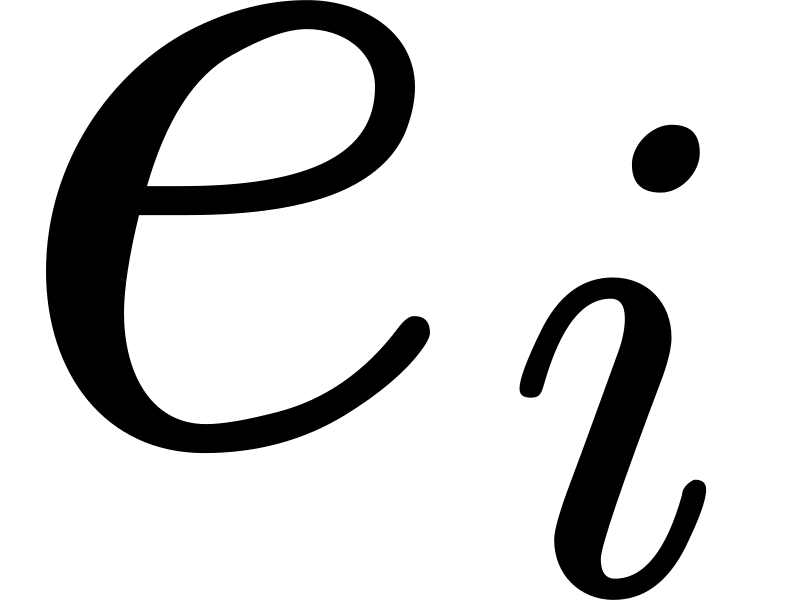 for a given is always equal
to its index of inertia, and hence is always the same no matter what
(proper) -uplet is considered.
for a given is always equal
to its index of inertia, and hence is always the same no matter what
(proper) -uplet is considered.
The two groups of relationships between parameters and moments of an
-uplet which we have just written down may be summarized in the
single formula
 where the symbols
 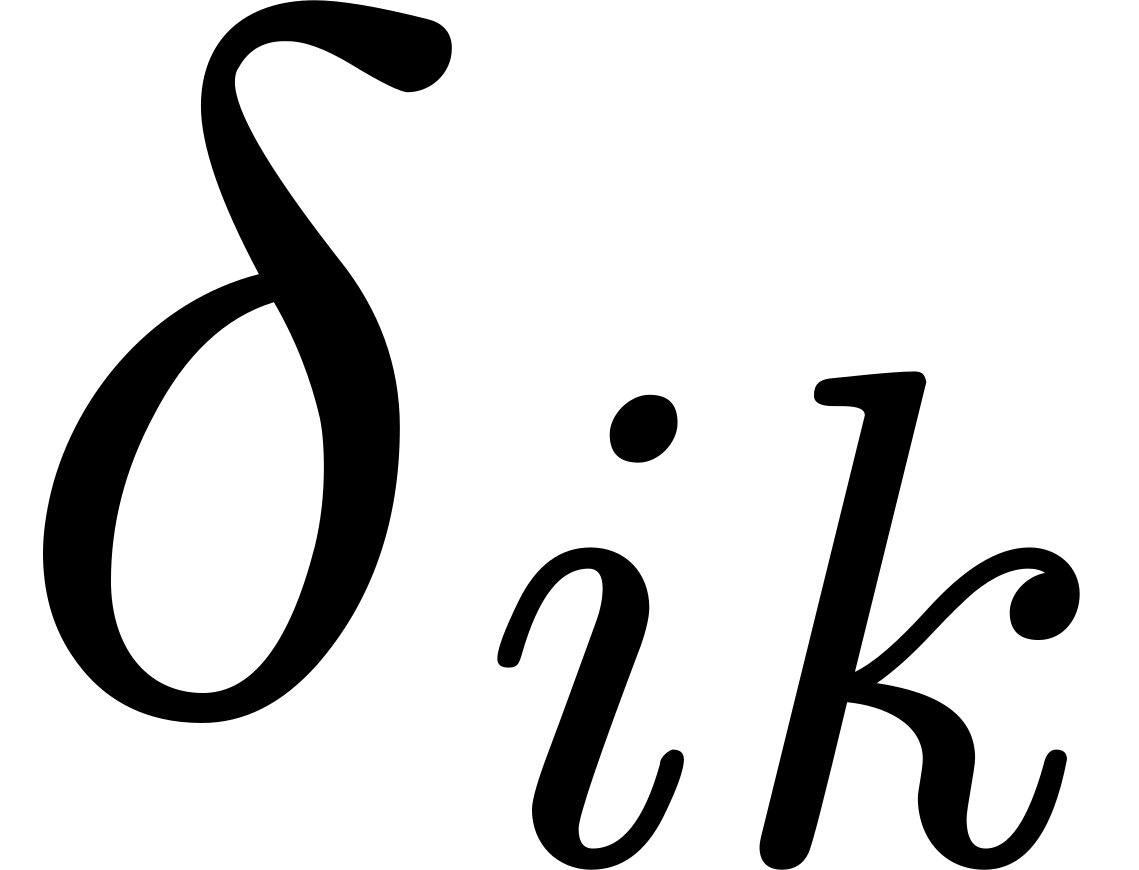 have their usual meaning; or, since
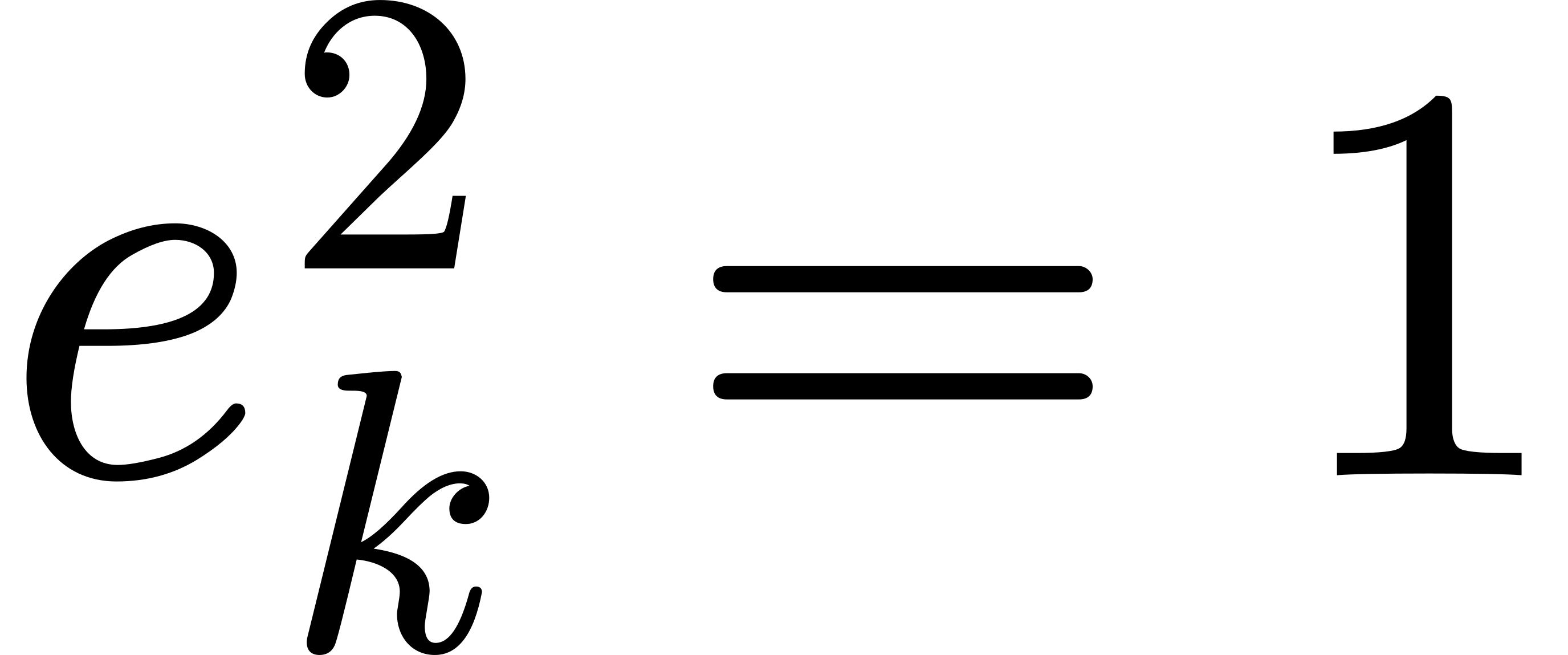 ,
,

From this we conclude that the elements reciprocal to the parameters
are not exactly equal to the moments 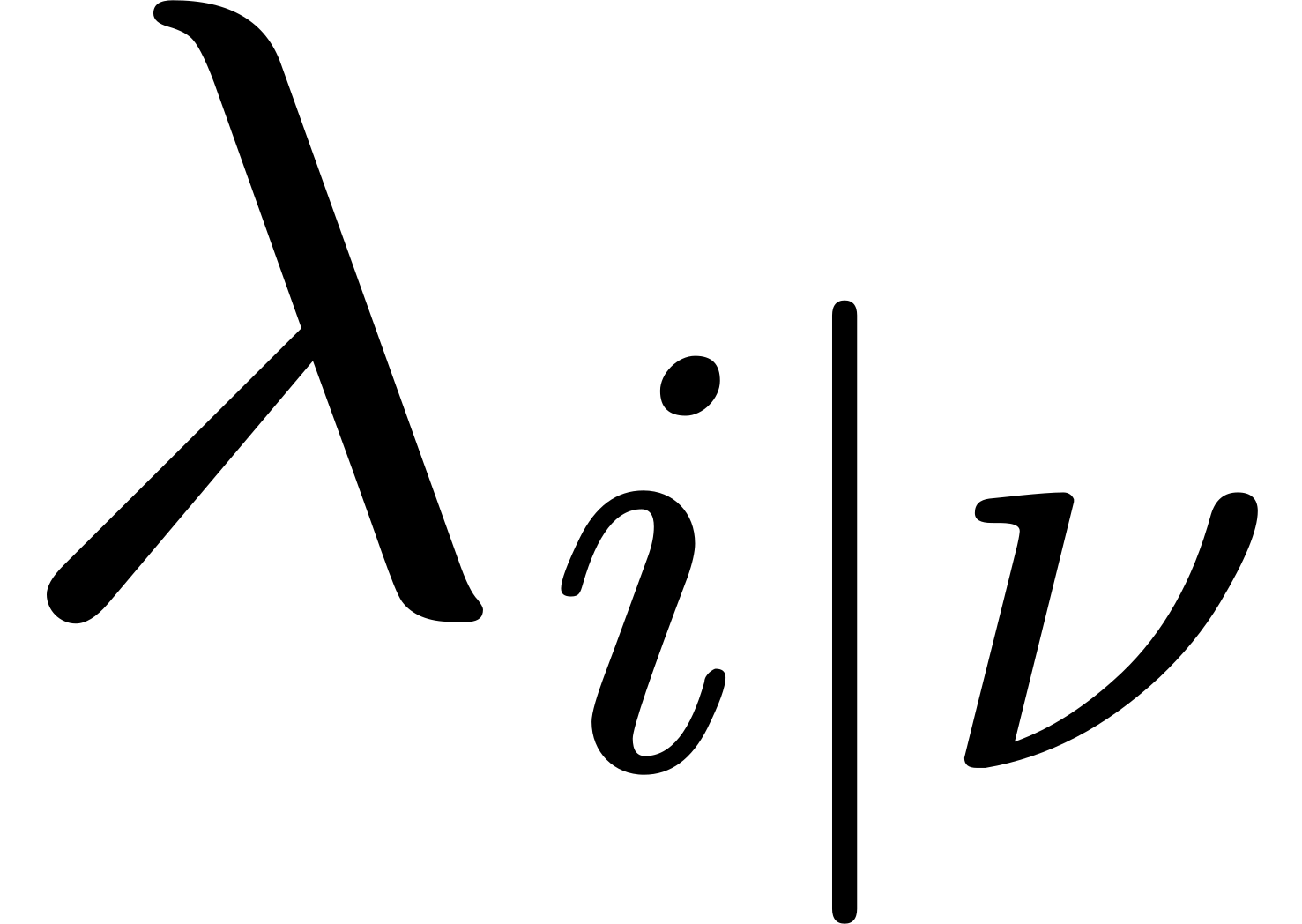 ,
but to
,
but to 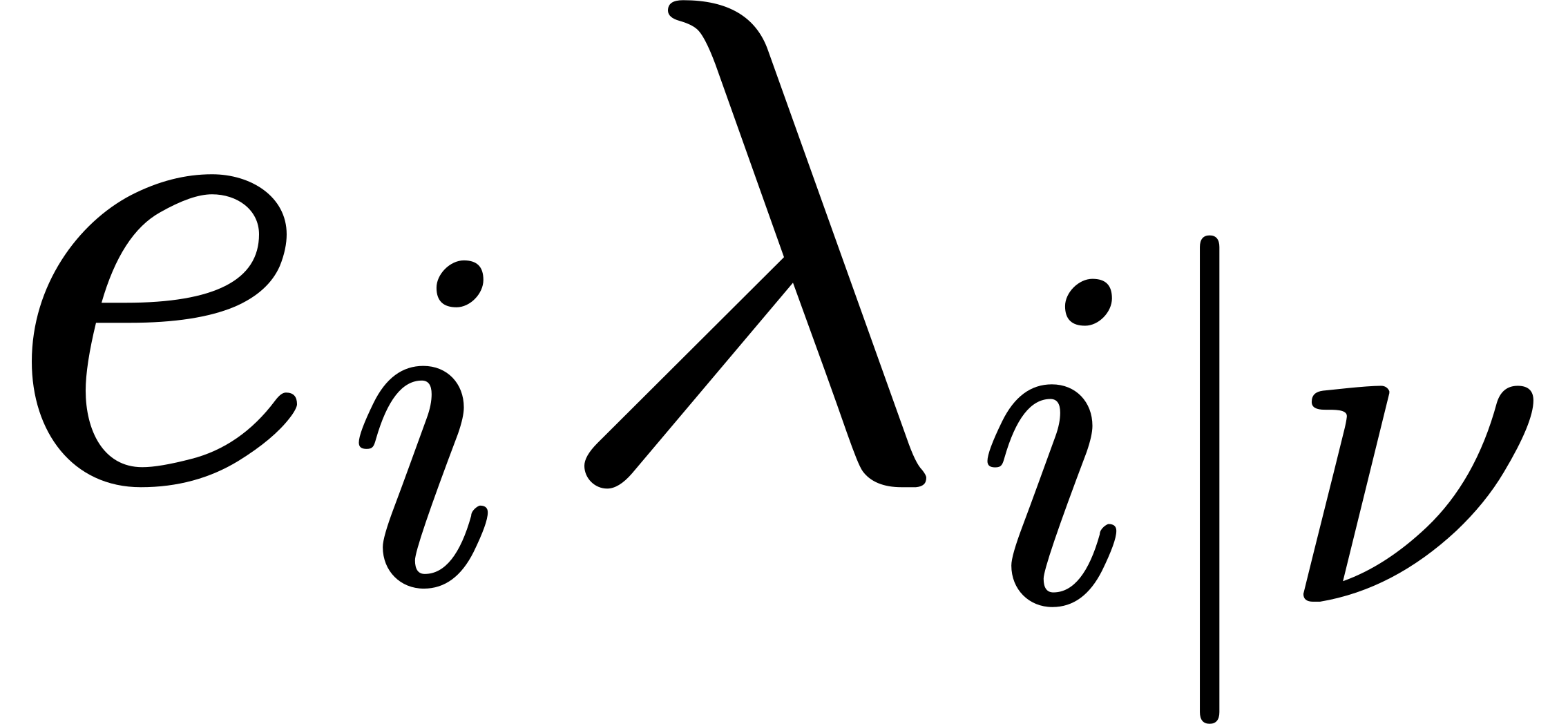 . Thus the quantities
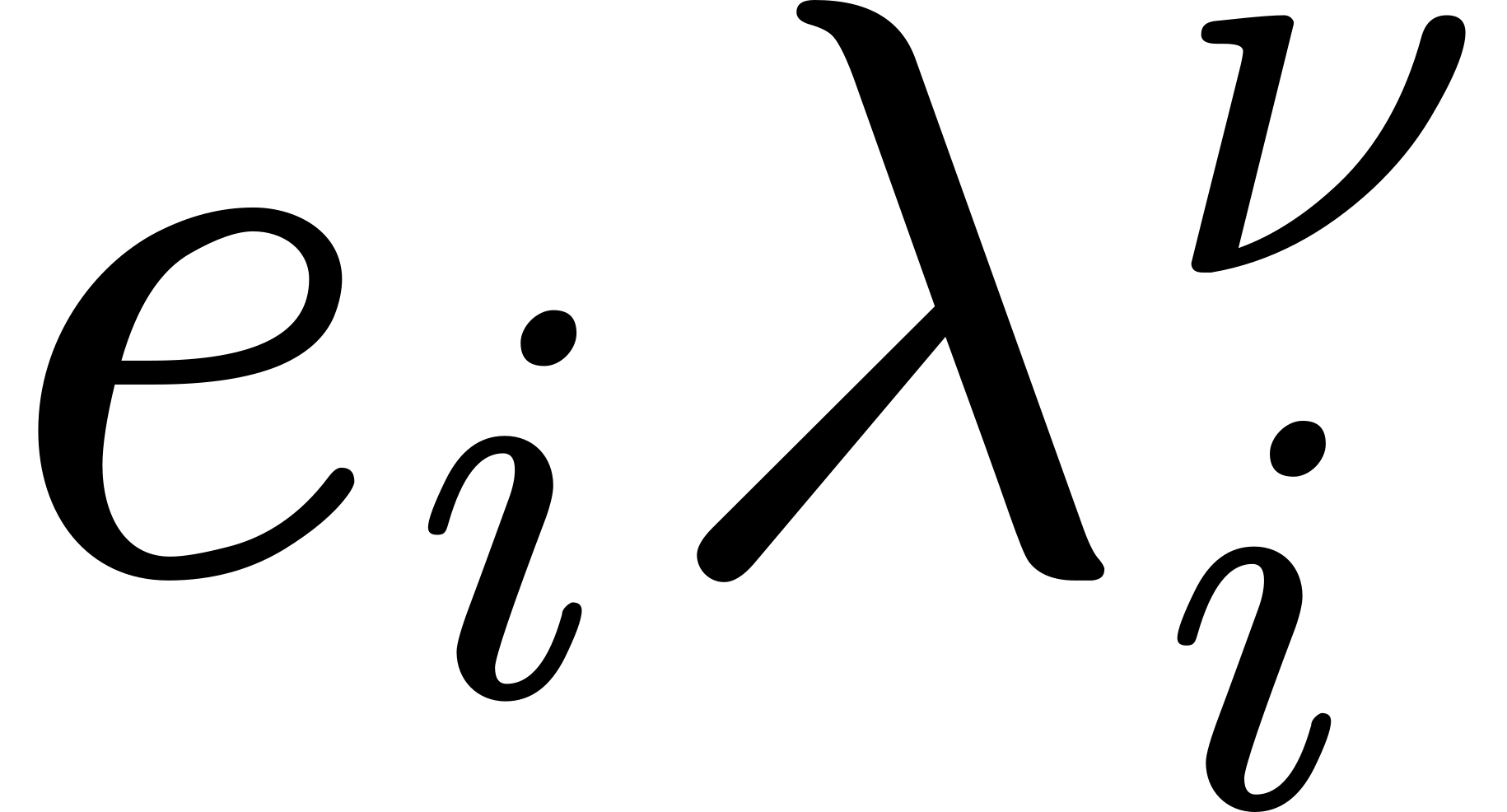 are the elements reciprocal to the moments
. If we imagine the equations (26) written down
for every -uplet, we have
are the elements reciprocal to the moments
. If we imagine the equations (26) written down
for every -uplet, we have
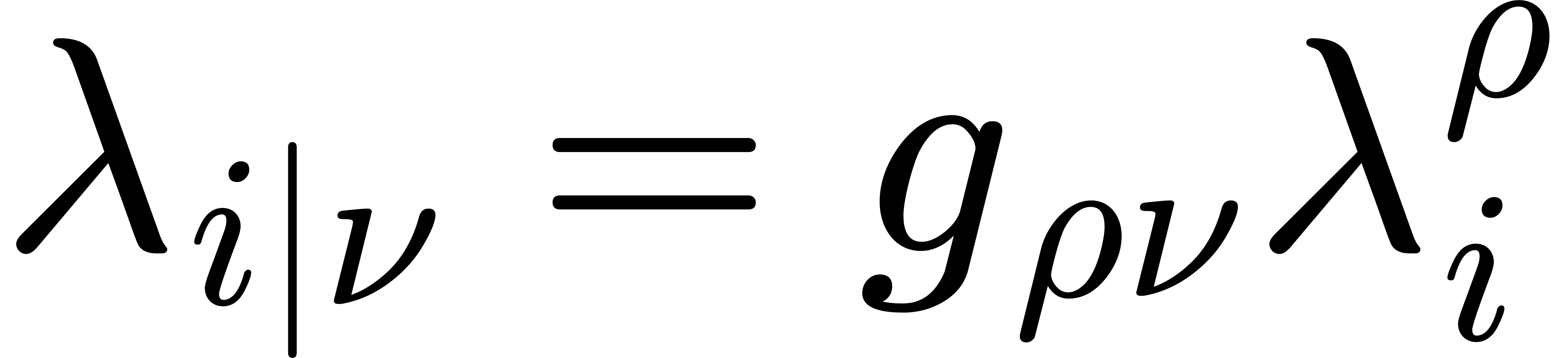 (denoting the index of summation by
  ). By multiplying by
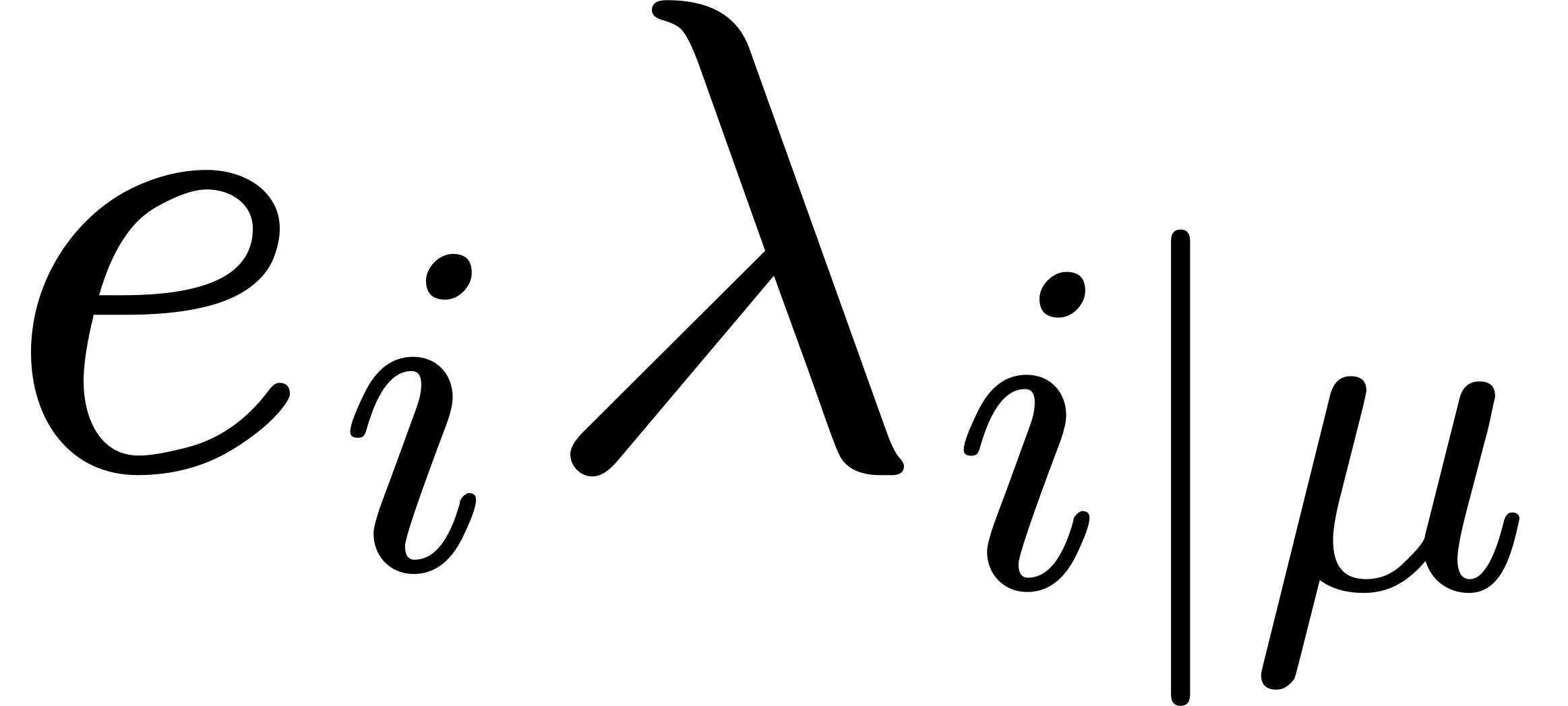 and summing with respect to we
obtain
and summing with respect to we
obtain
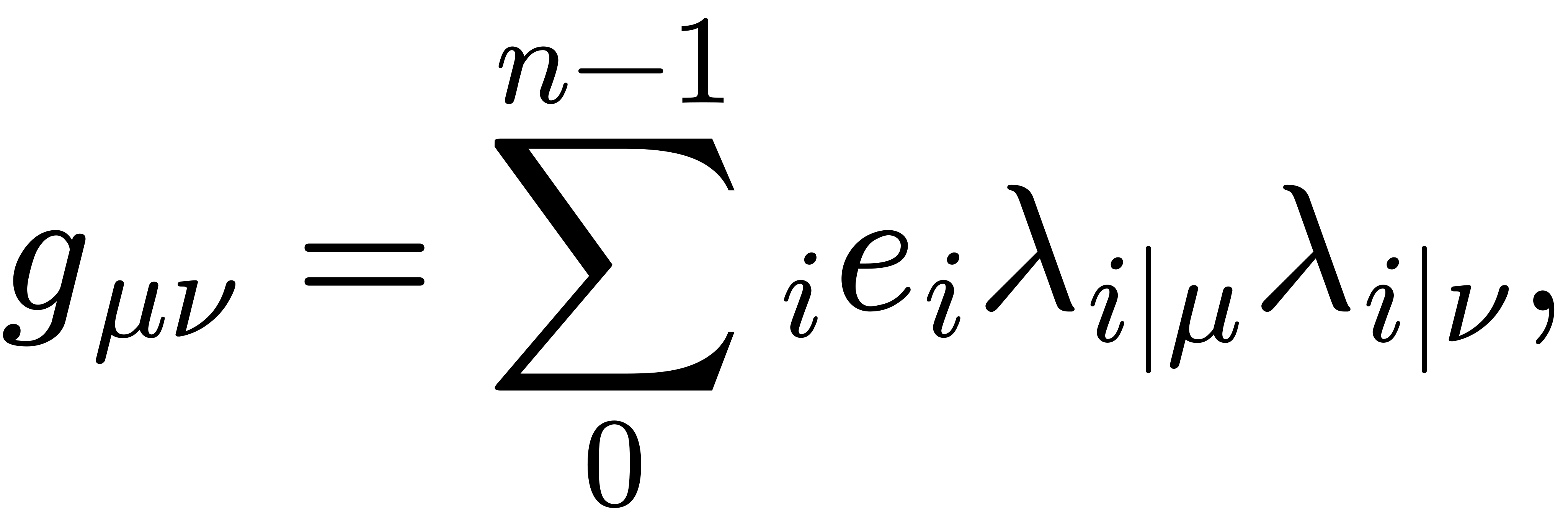 which replaces formula (2) for the definite case, and so on.
From this point it will suffice if I confine myself to quite brief hints, and I shall of course write down only those formulæ which do not remain unaltered throughout. These will be marked with an asterisk and given the same number as the corresponding formula referring to a definite metric.
In the first place, -uplet components of any given tensor
and coefficients of rotation must in any case be
introduced by the equations of definition (1) and (4); the solved
expressions for the quantities 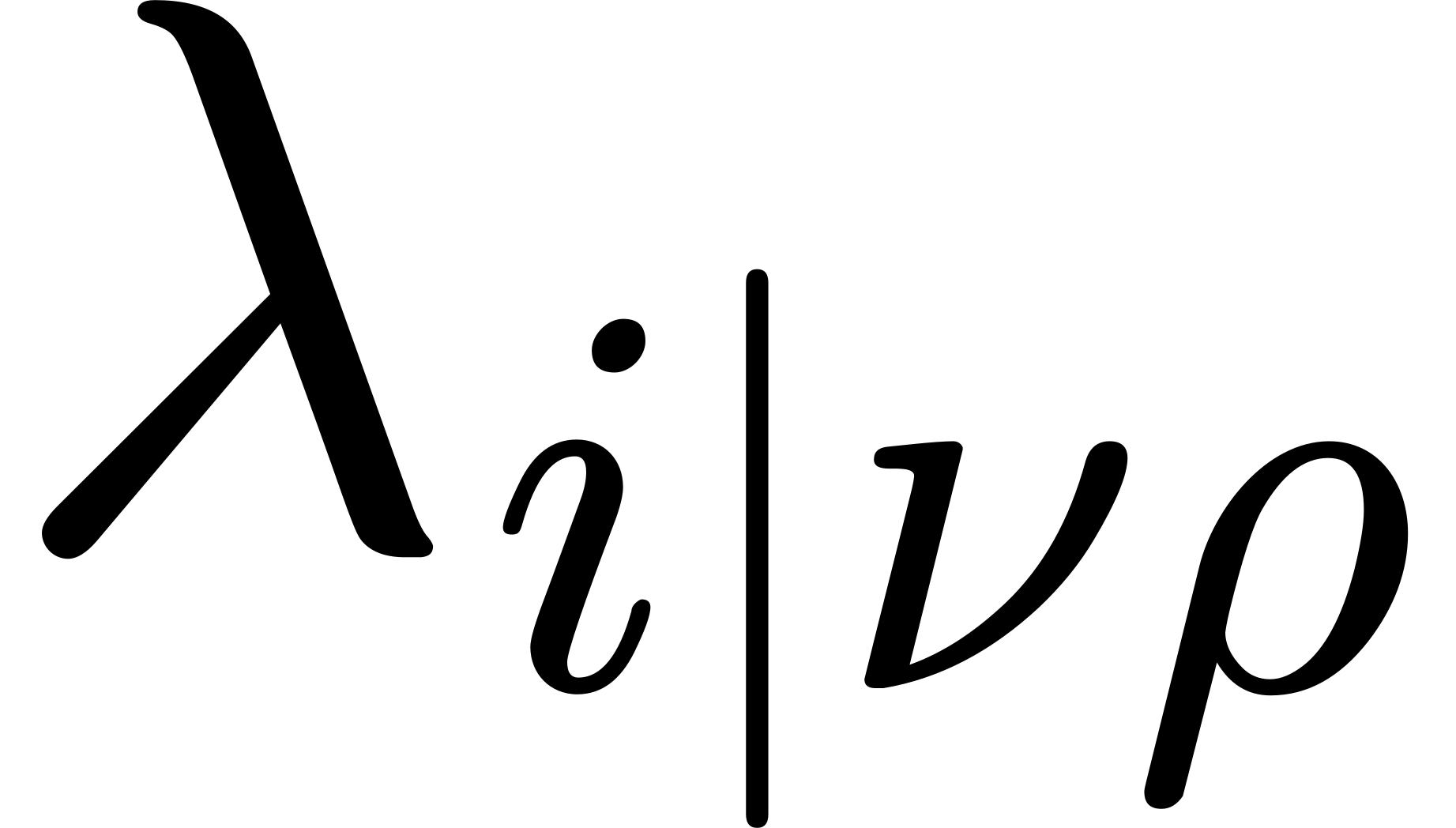 , on the
other hand, are in general
, on the
other hand, are in general

The covariant equations (6), and also the equations of definition of
the 4-index symbols (7) are true without restriction; but
the -uplet tensor expressions for the quantities 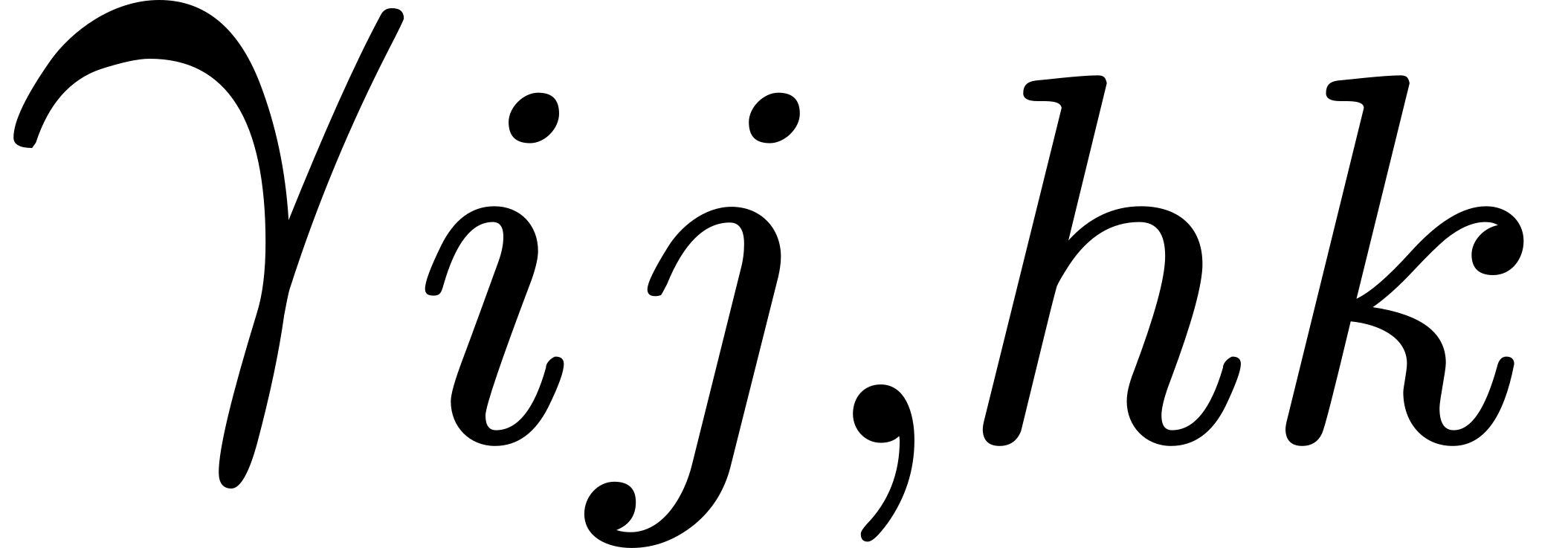 suffer a small modification. In fact we must in general put
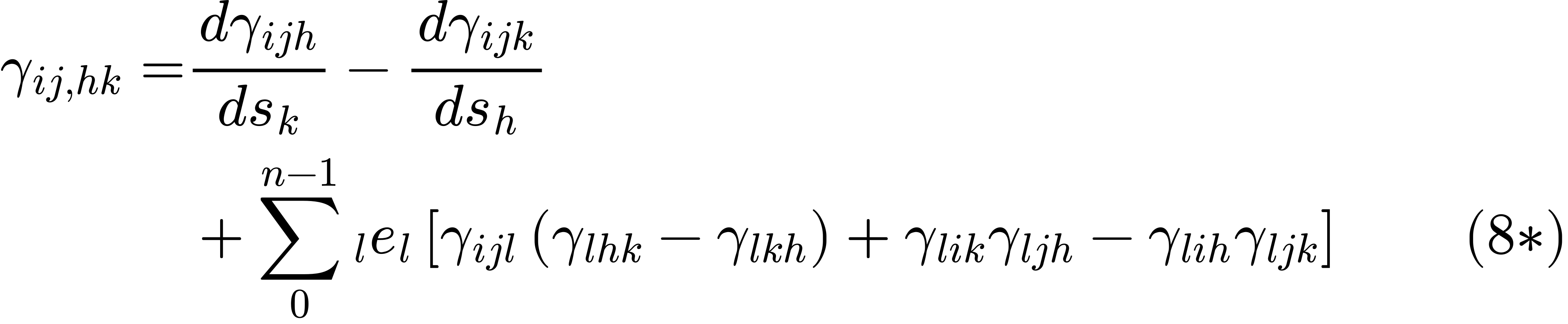
Of course these quantities are still connected by the relationships (9), in virtue of equations (7).
It is essential to note, however, that the local transference from
one -uplet to another does not correspond to any orthogonal
transformation, but to a pseudo-orthogonal transformation, i.e. to a
transformation which leaves the quadratic form
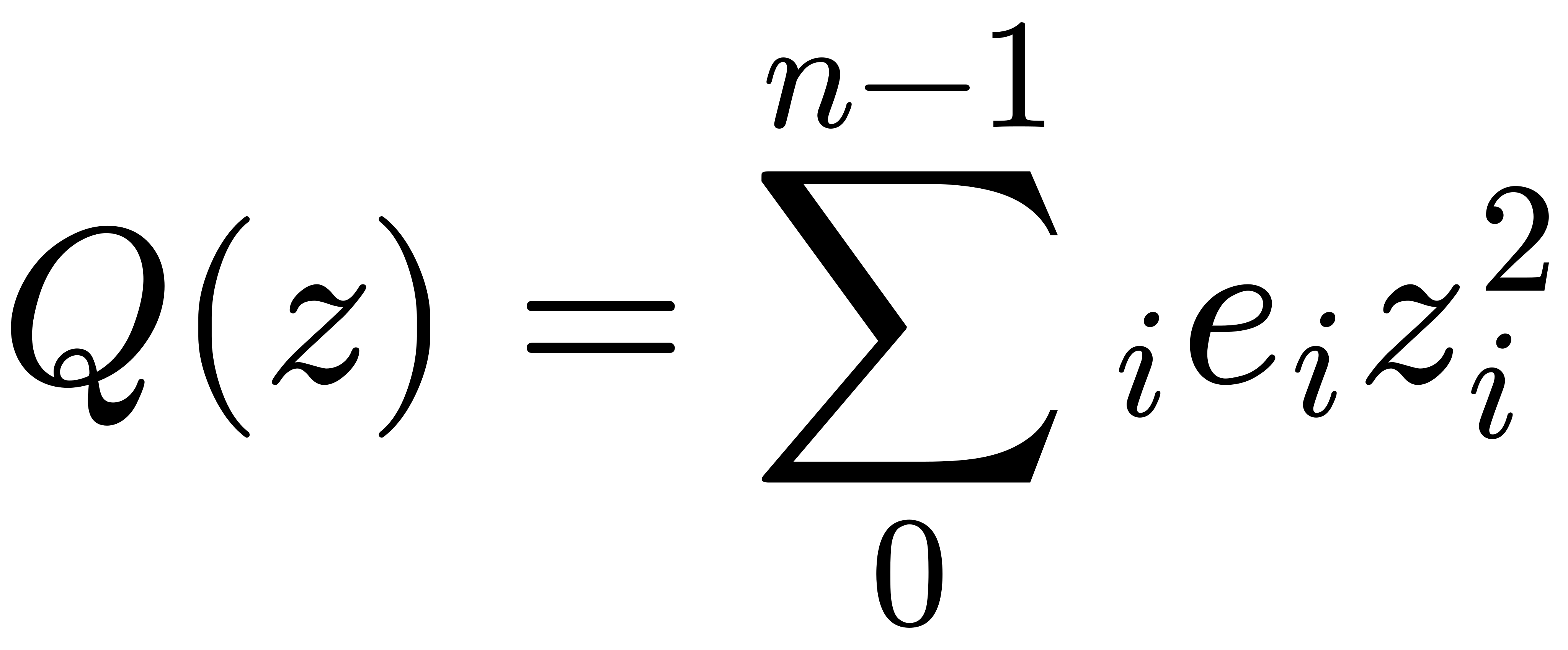 invariant. Thus the coefficients
 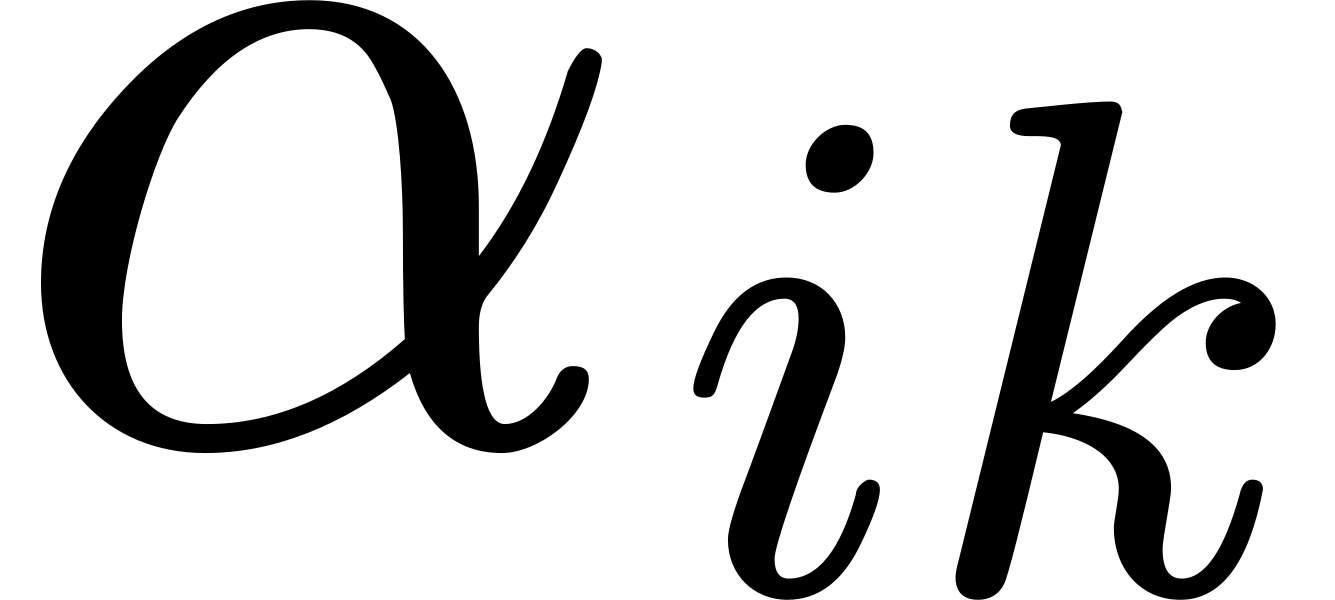 of a
pseudo-orthogonal transformation of this kind must satisfy the
conditions
of a
pseudo-orthogonal transformation of this kind must satisfy the
conditions
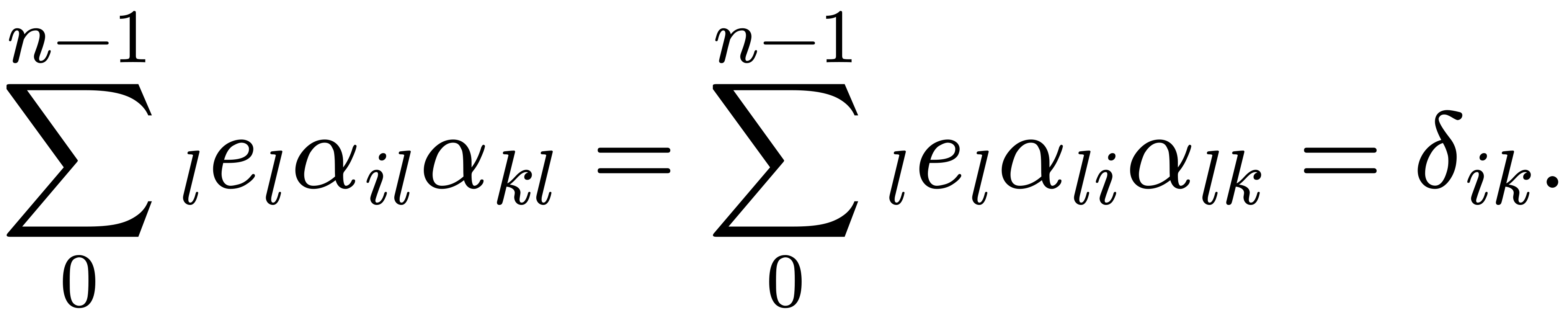
The most general expression which can be attributed to the coefficients
in the case of infinitesimal pseudo-orthogonal
transformations follows immediately from the condition that the form
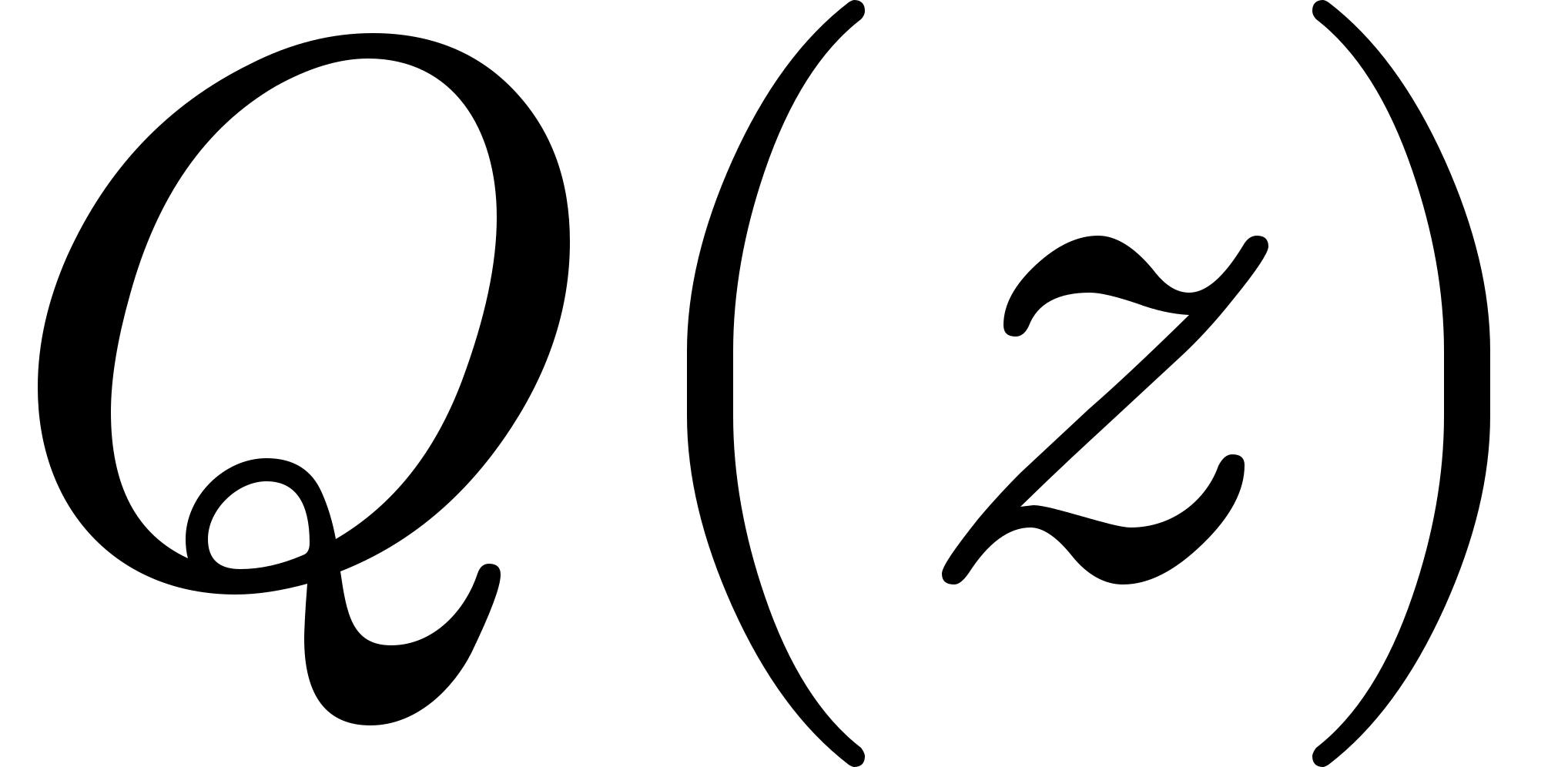 is to be invariant. We have merely to put
 and to regard the quantities
  as indefinitely small. If
in
as indefinitely small. If
in  we carry out the substitution
 and require that
  should retain the form
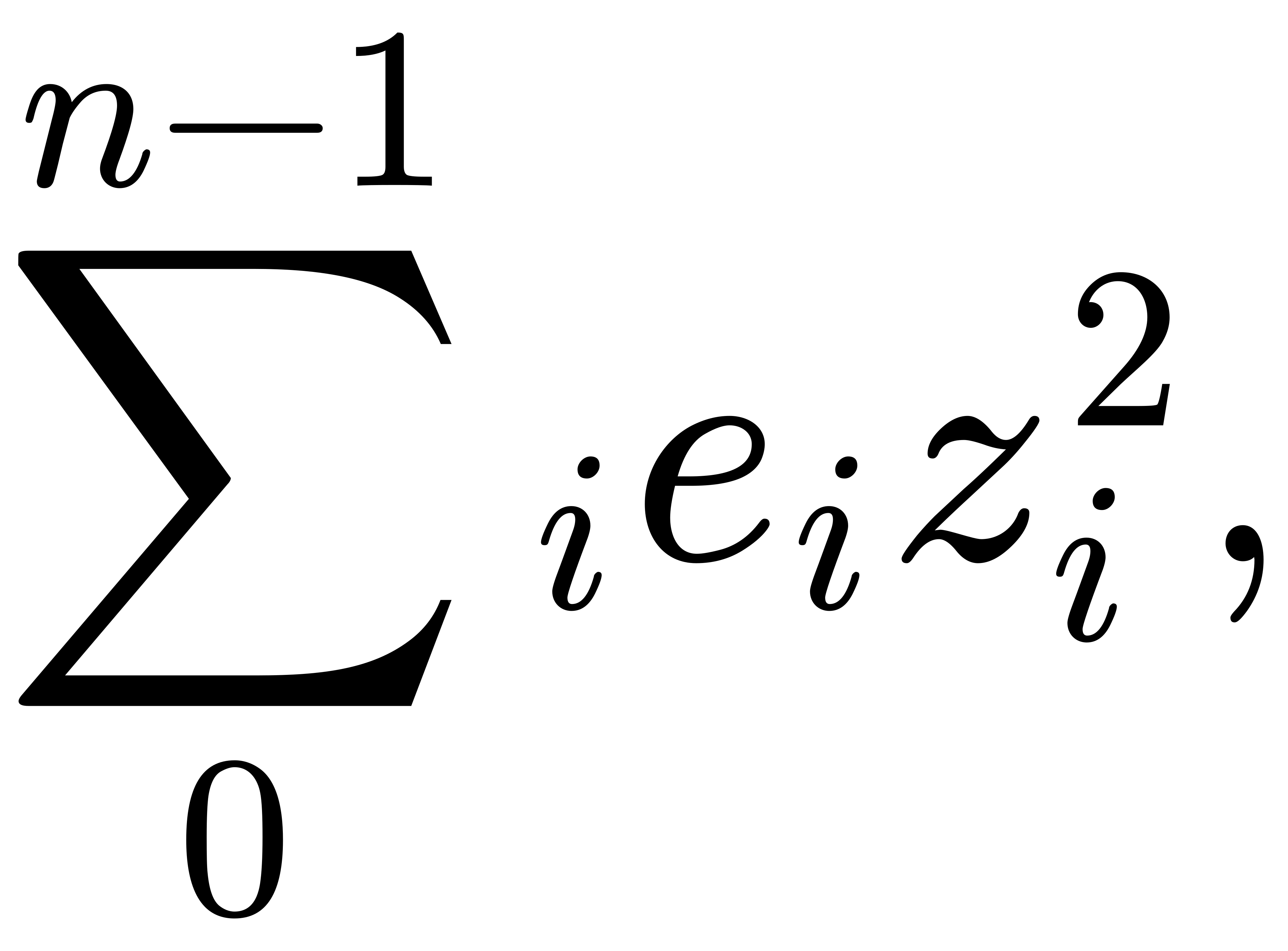 what we obtain (as in the case of pure orthogonal substitutions) is the
condition of skew-symmetry, namely
what we obtain (as in the case of pure orthogonal substitutions) is the
condition of skew-symmetry, namely

The components of an -uplet tensor are systems of numbers which
behave like tensors with respect to pseudo-orthogonal transformations;
for local -uplet tensors this behaviour is maintained only
with respect to pseudo-orthogonal transformations with constant
coefficients. The operators
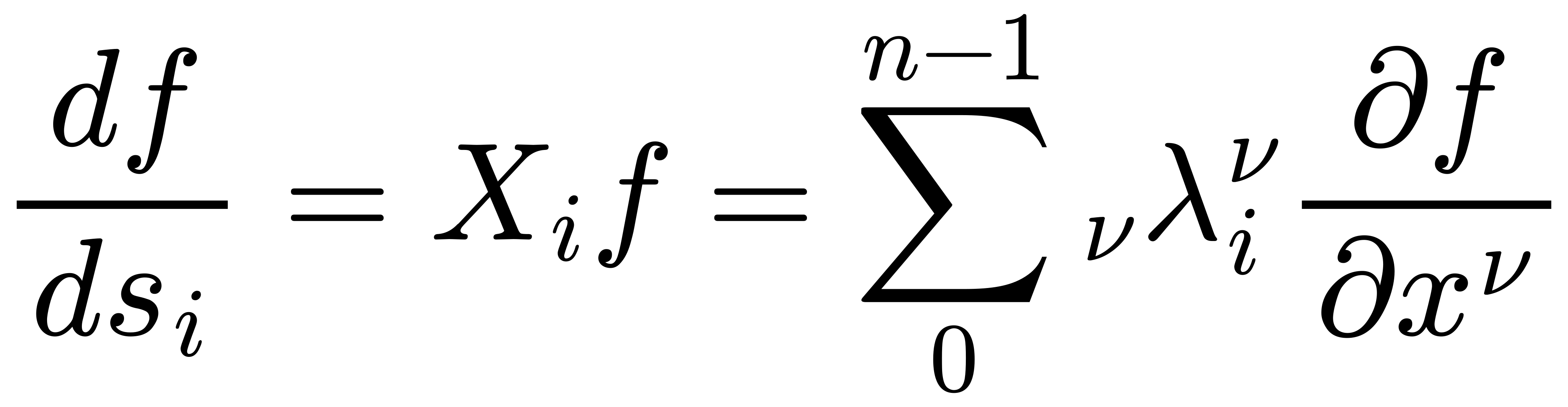 behave like -uplet vectors.
If () and () denote any group of -uplet indices and
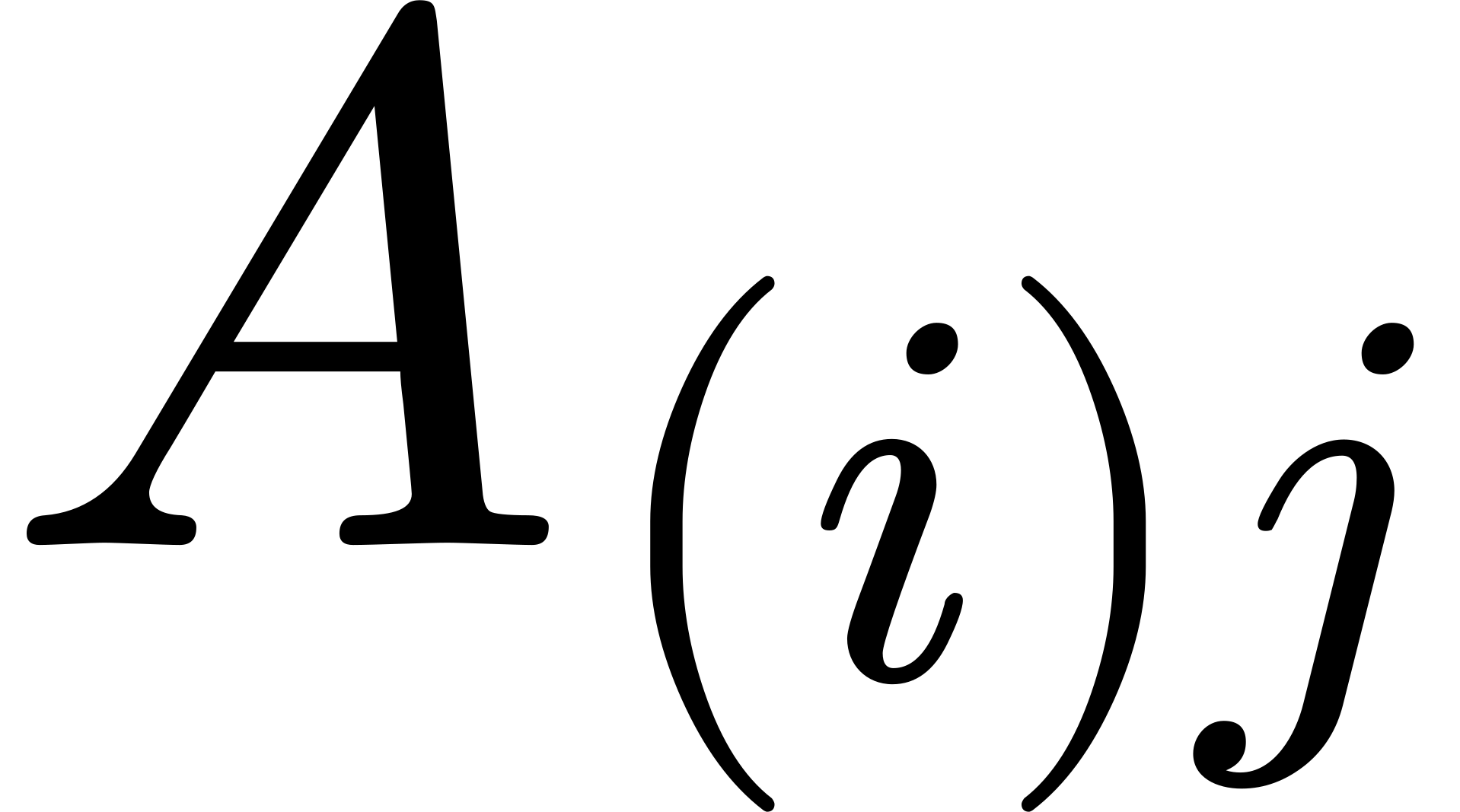 ,
, 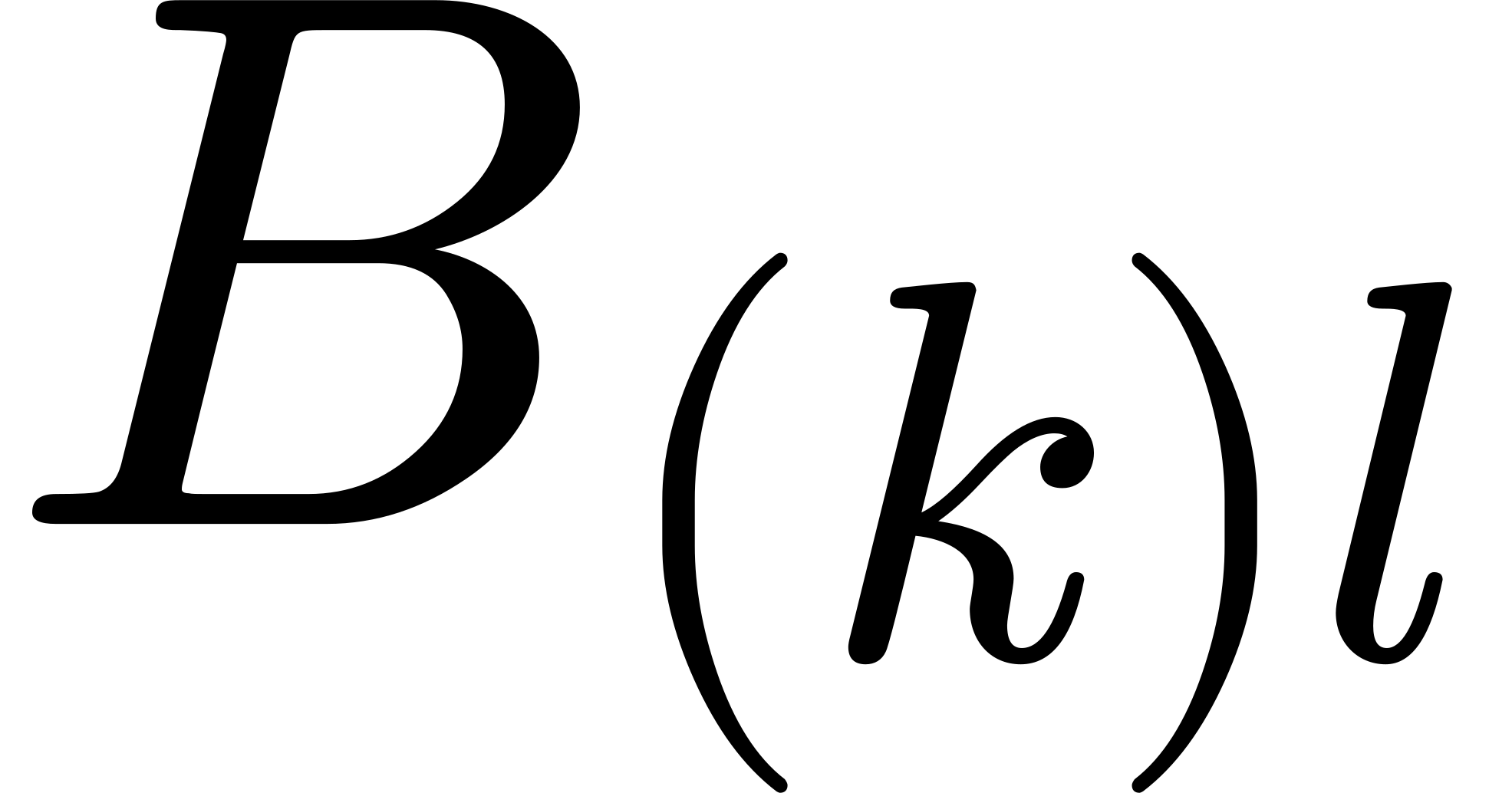 two local -uplet tensors, then
contraction with respect to
two local -uplet tensors, then
contraction with respect to  , is defined by the formula
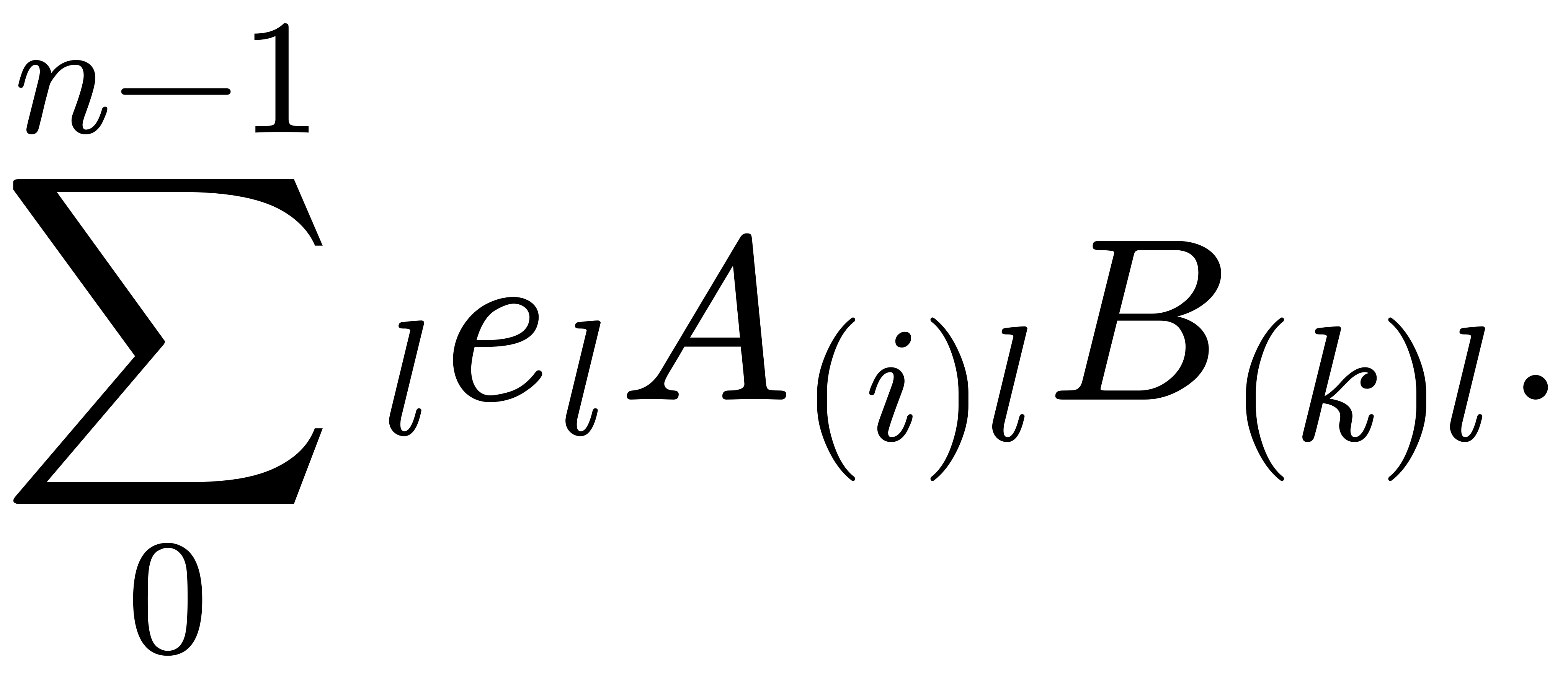
We accordingly obtain
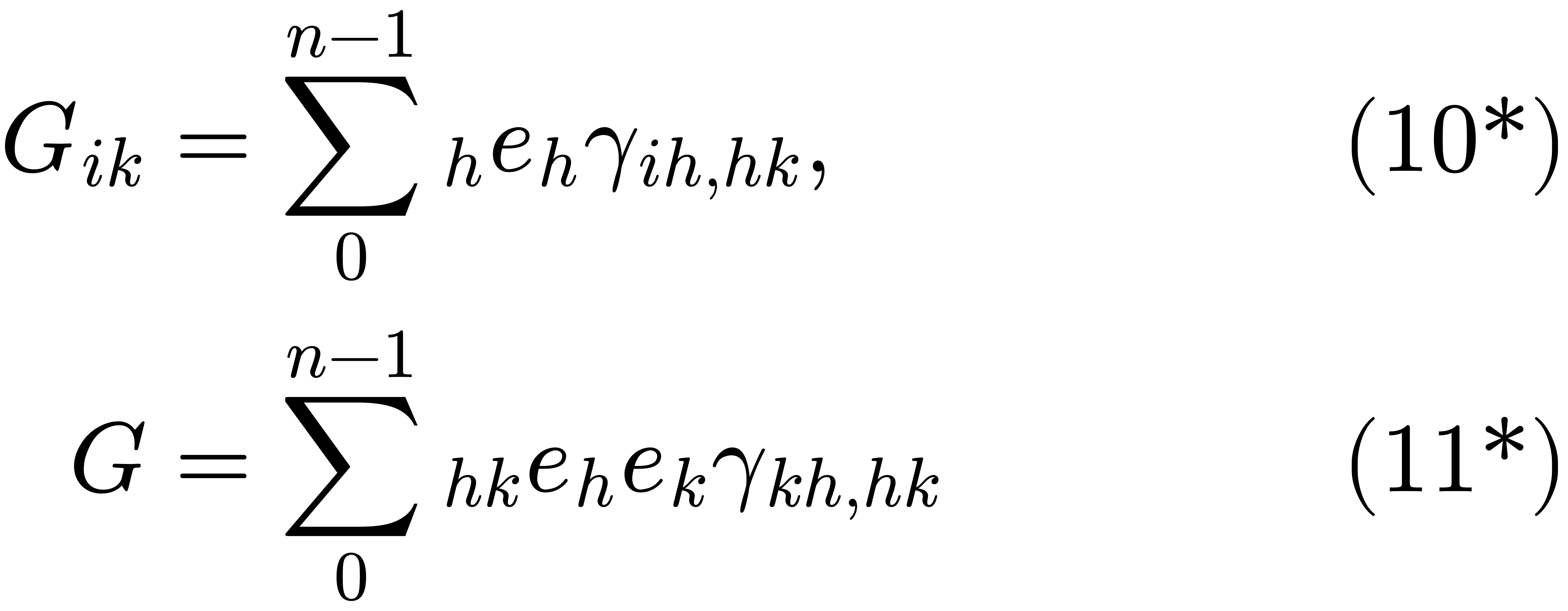 instead of (10) and (11).
Further, the formulæ (12), (14), and (15) must be replaced by and
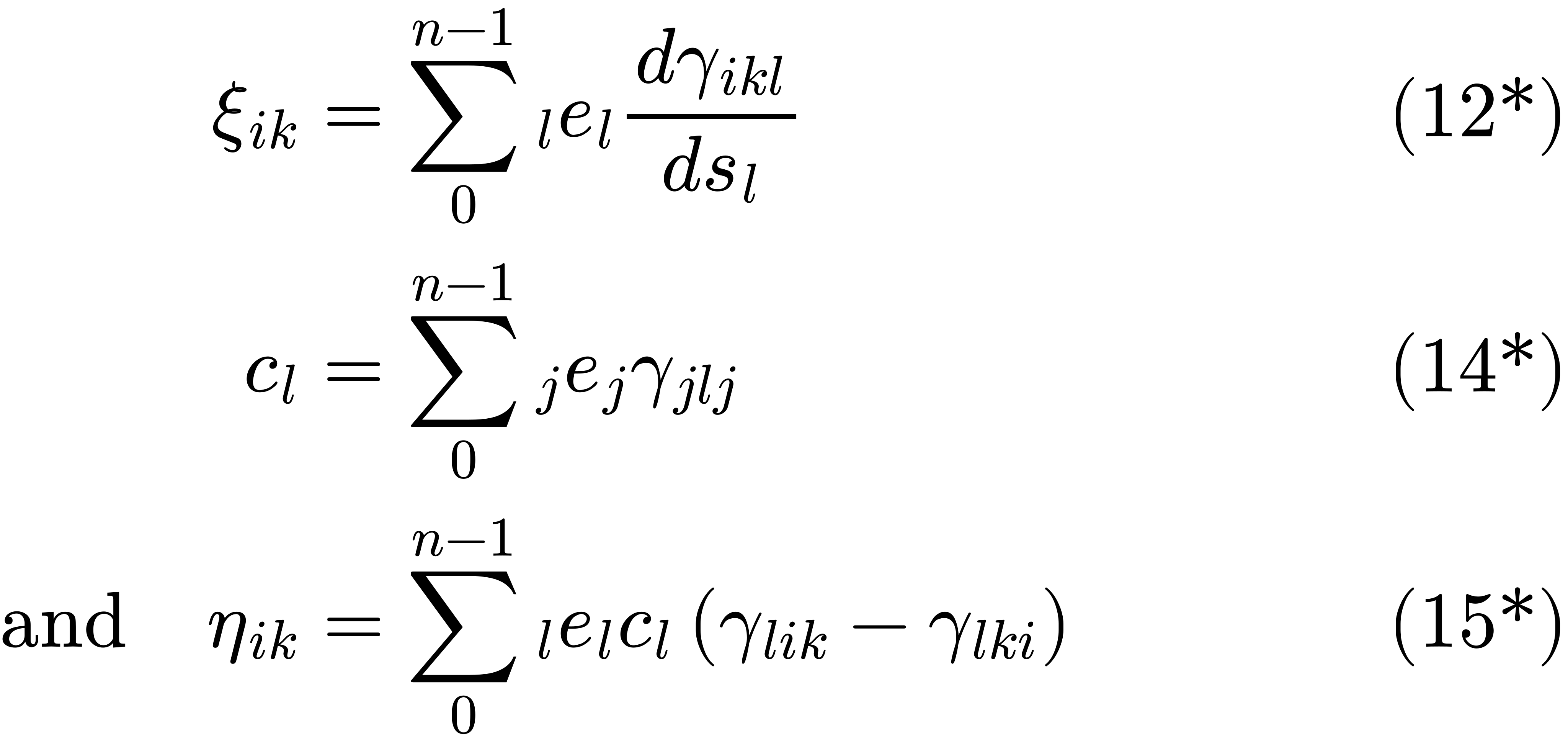 while the expressions (13) for covariant and contravariant components
in terms of the -uplet components
while the expressions (13) for covariant and contravariant components
in terms of the -uplet components  are to be
deduced from (1), the universally valid definition of the -uplet
components of a tensor. Hence they become
are to be
deduced from (1), the universally valid definition of the -uplet
components of a tensor. Hence they become

As contraction of pseudo-orthogonal -uplet tensors is brought
about by inserting the factor with the appropriate index, it is
at once clear that (19), (20), and (24) take the forms
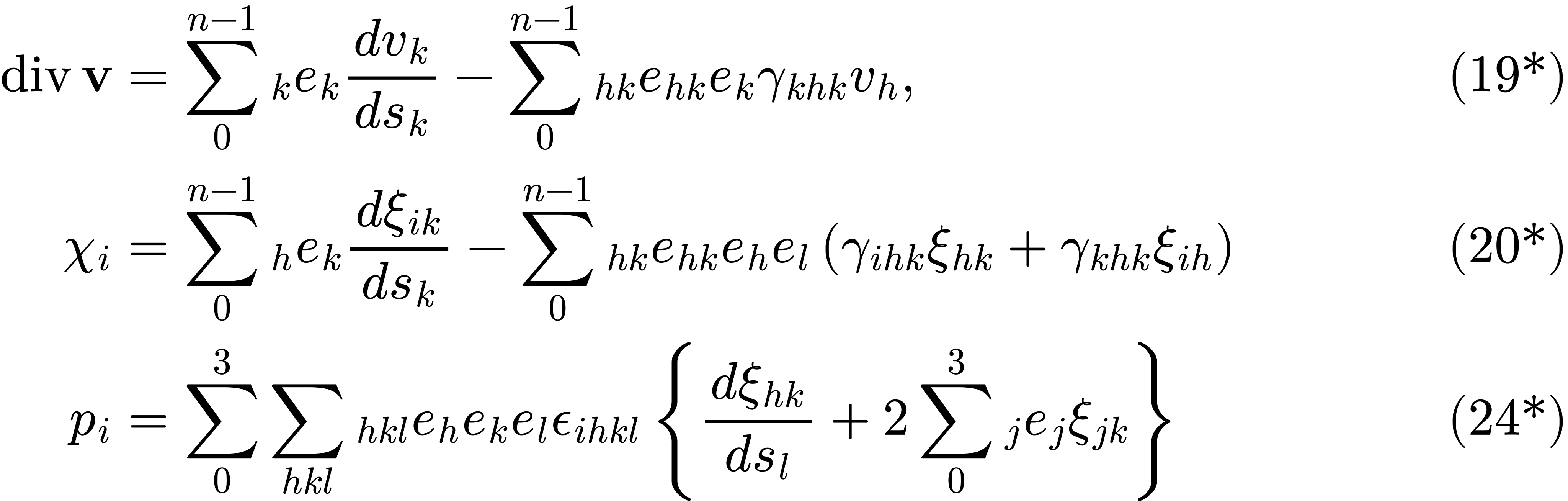
Of course the equations 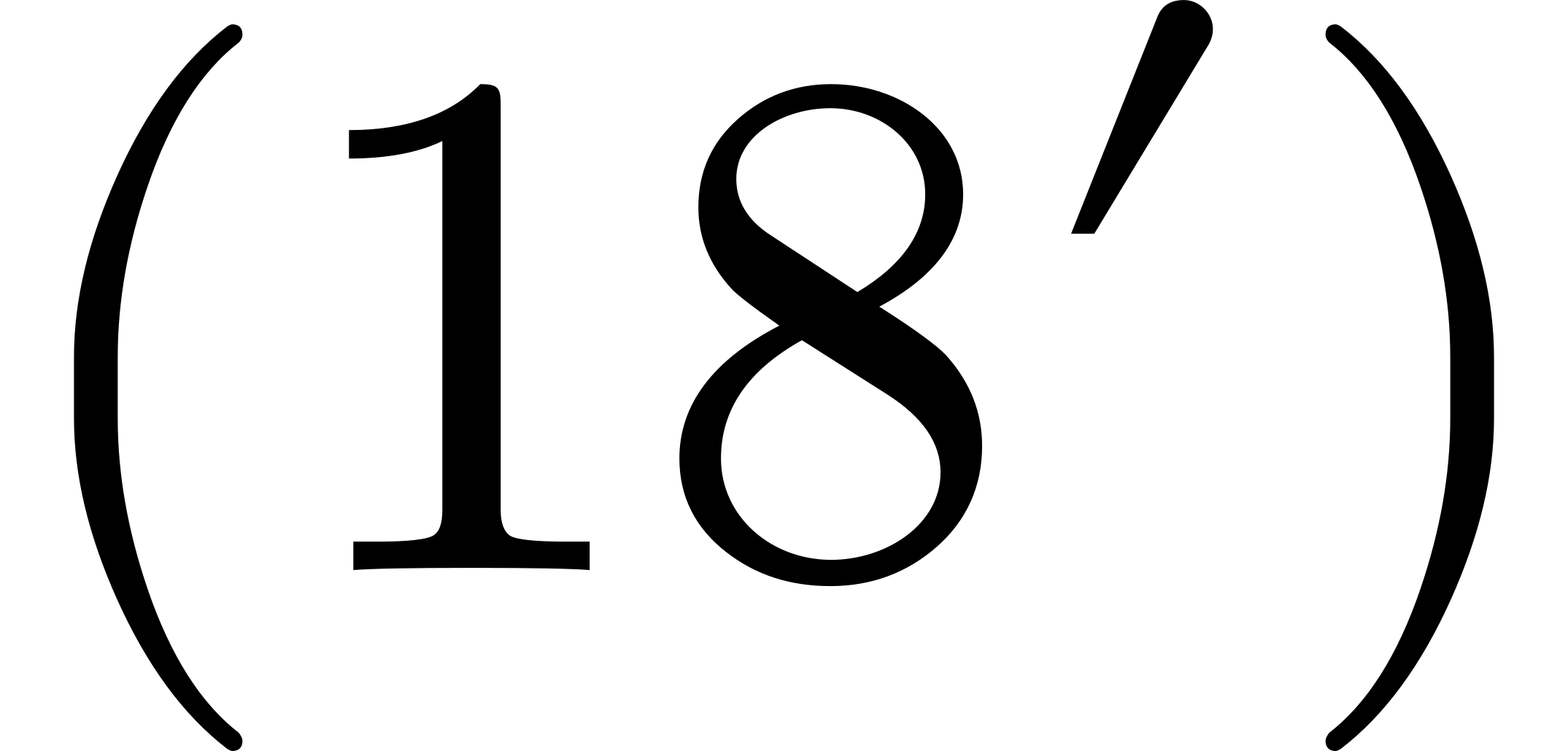 and (22), i.e.
 which express invariant properties, always remain valid.
4. Gravitational equations.
As usual, let the covariant components of the energy tensor be denoted
by 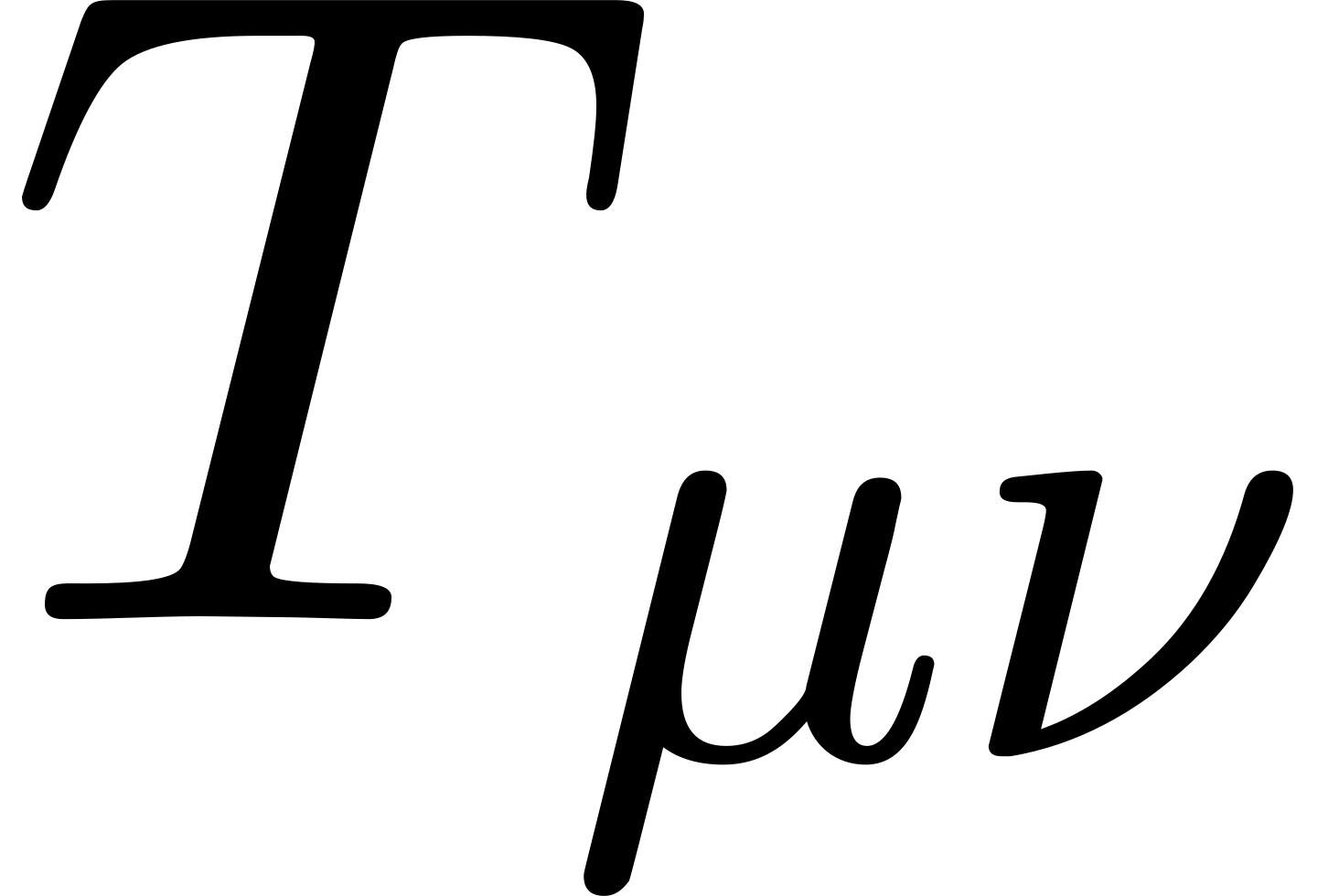 . If influences of any origin are admitted, these
quantities are to be imagined broken up into two parts,
one of which,
. If influences of any origin are admitted, these
quantities are to be imagined broken up into two parts,
one of which, 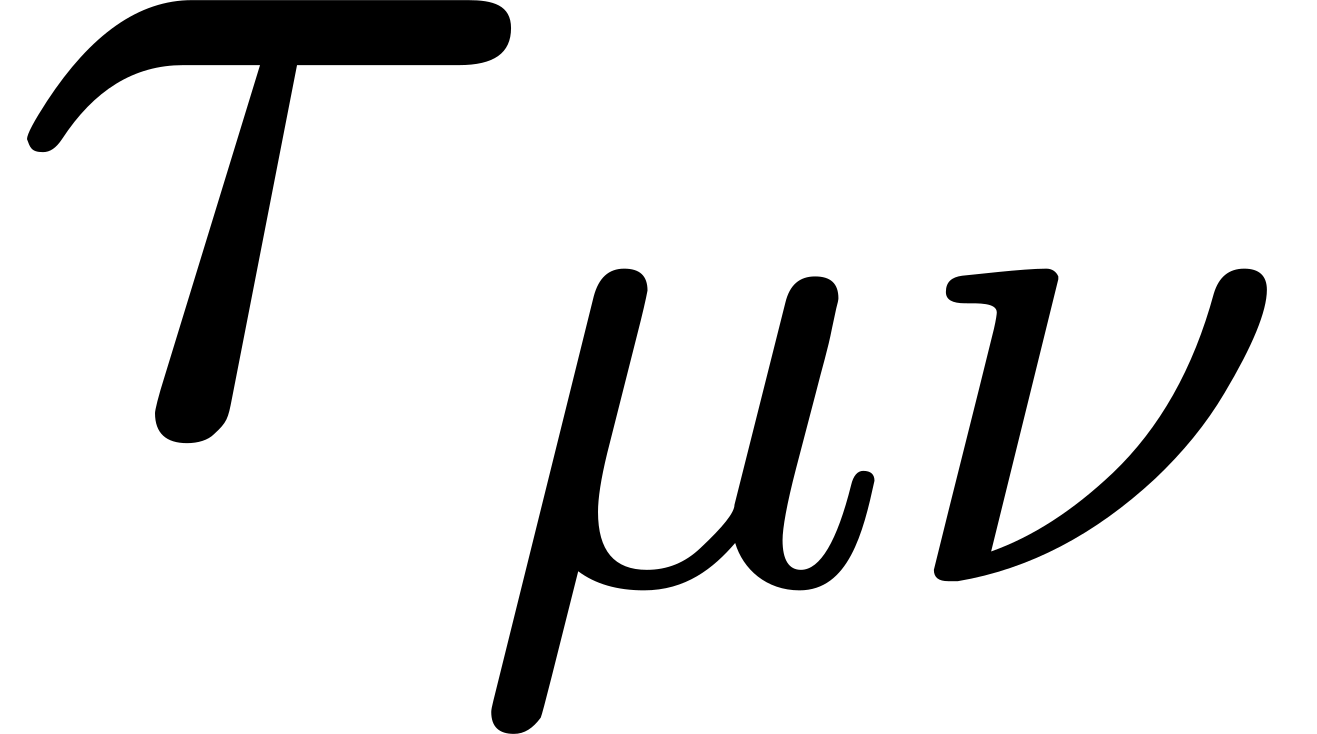 , is purely electromagnetic, and the
other,
, is purely electromagnetic, and the
other, 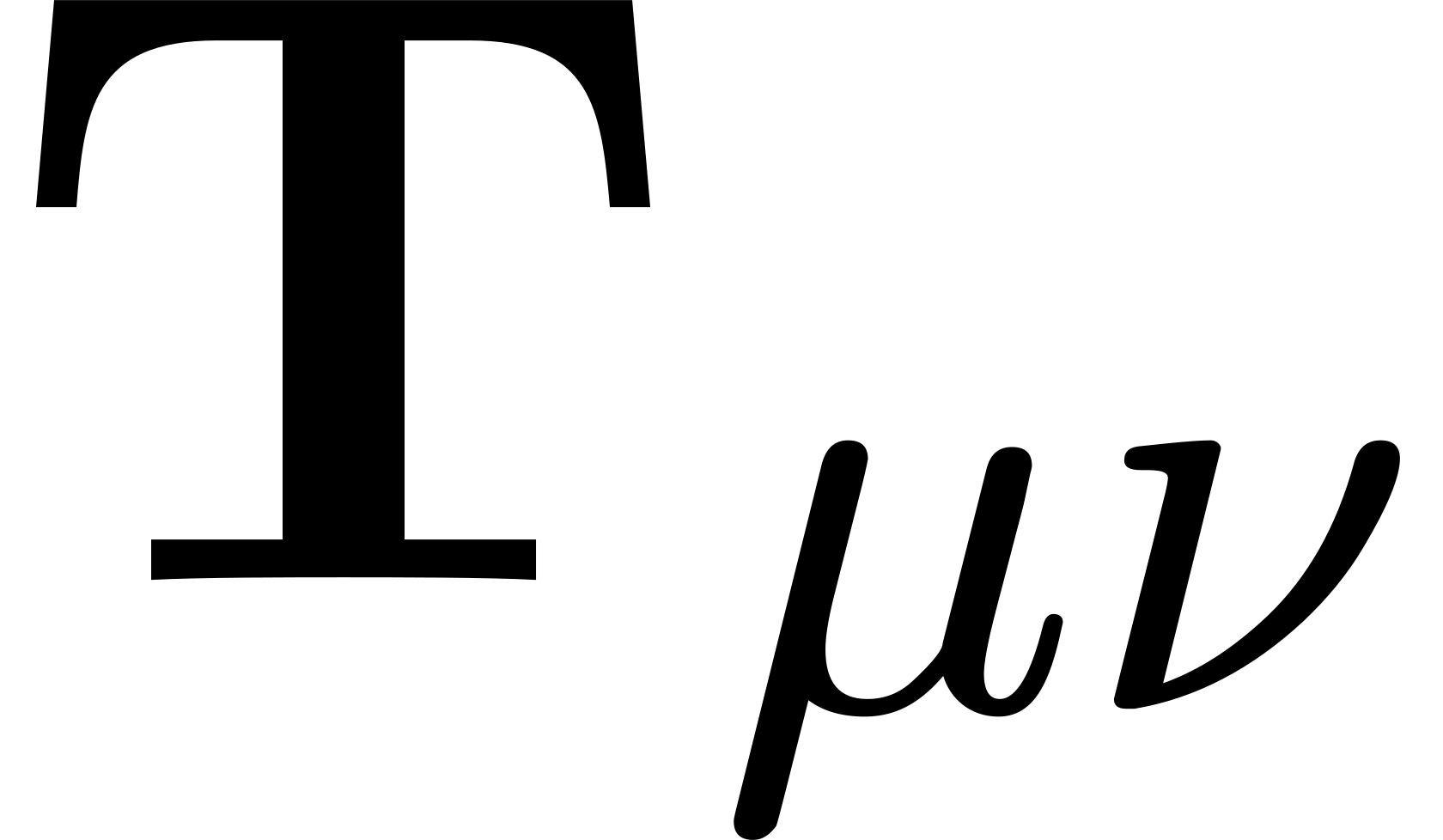 , represents the remainder, if any. We
therefore put
, represents the remainder, if any. We
therefore put
 where
where 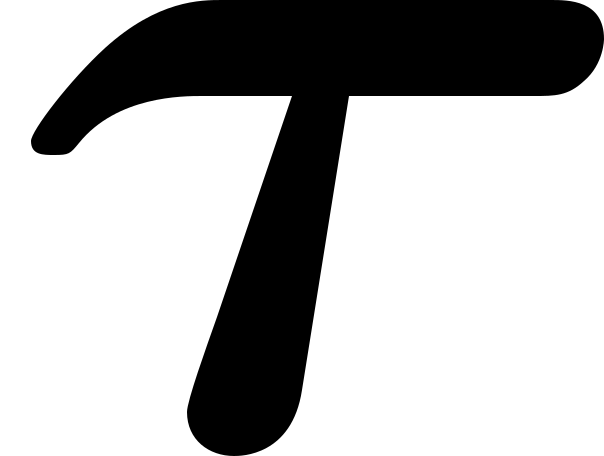 is the well-known Maxwell tensor; further,
for empty space is of course equal to zero.
is the well-known Maxwell tensor; further,
for empty space is of course equal to zero.
As is well known, the Einstein equations (without the cosmological
term) are
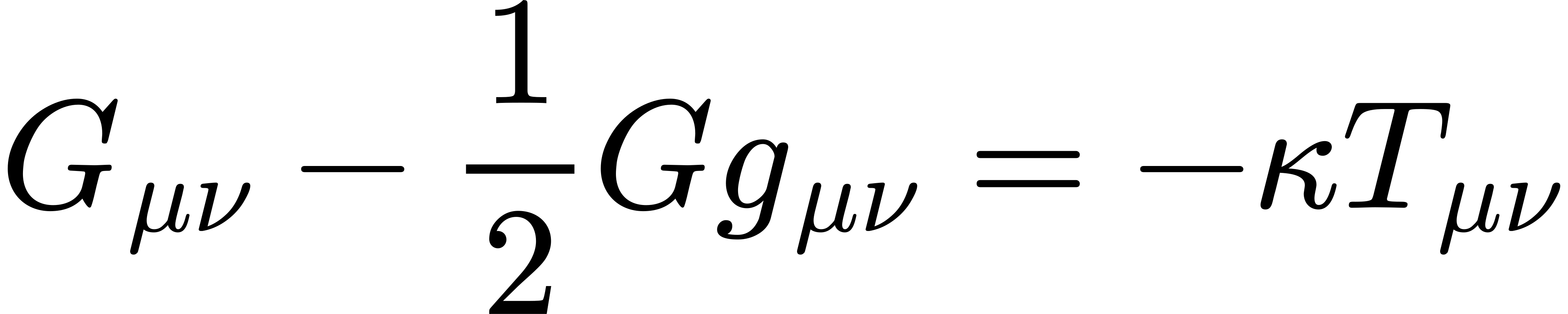 where the constant of proportionality
  may be expressed in
terms of
may be expressed in
terms of 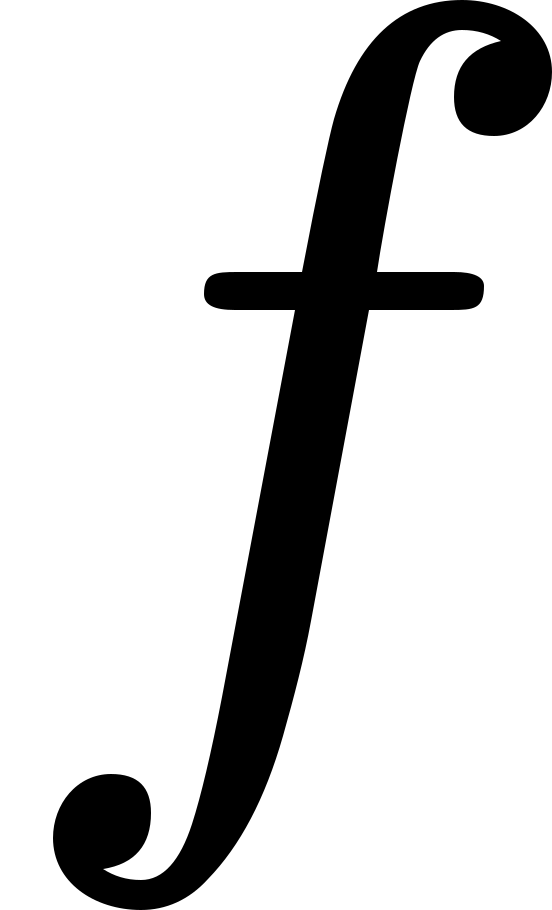 , the gravitational constant, and
  , the velocity of
light
, the velocity of
light 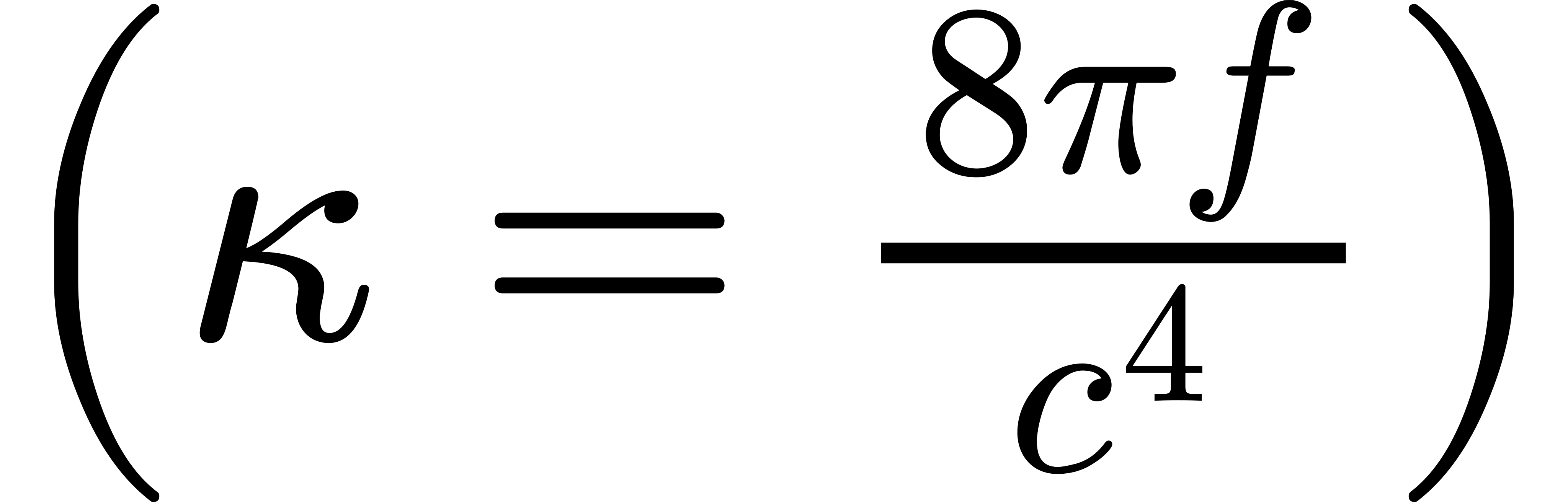 .
.
If we introduce the corresponding -uplet tensors in accordance
with the formulæ
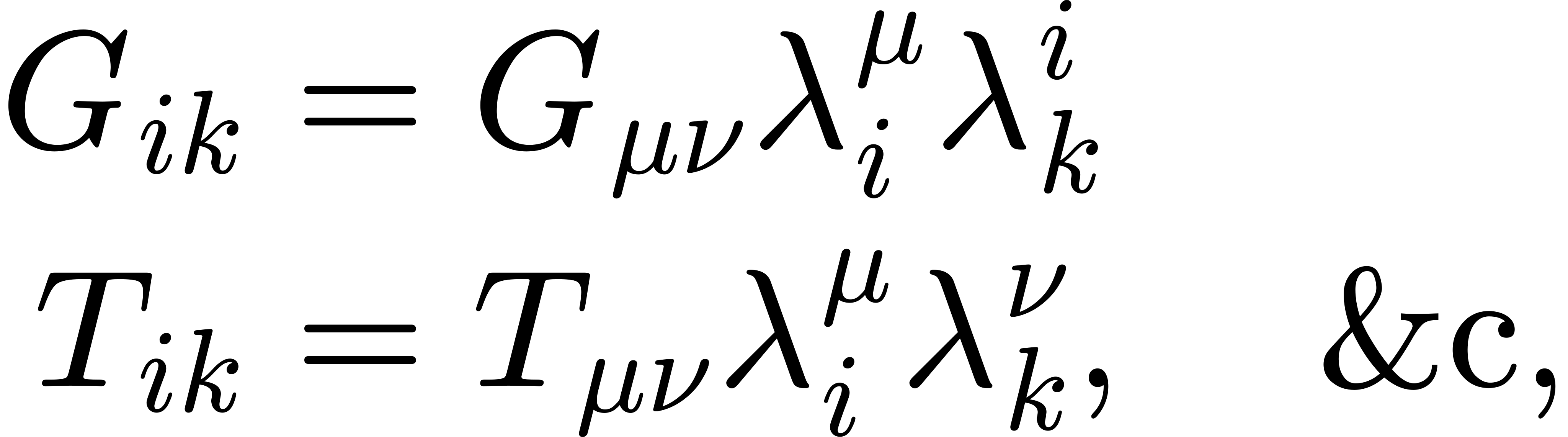 we have, on the one hand,
 from (32), and (what is most important) the gravitational equations in
the -uplet tensor form [8]
from (32), and (what is most important) the gravitational equations in
the -uplet tensor form [8]
 where, in accordance with (10*) and (11*),

As the space-time manifold on which the general theory of relativity is
to be based possesses an indefinite metric with an index of inertia 3,
we have to put

The quantities are introduced by the equations
(8*) as lattice differential elements of the second order. Their
combinations behave like tensors with respect to all
pseudo-orthogonal (i.e. in the present case Lorentz) transformations
(even if the coefficients are permitted to vary in any way with
position).
Accordingly, as indeed is clear from the outset, the ten equations (I)
do not, as far as their original form is concerned, favour any special
quadruplet. They are valid in one and the same form for all orthogonal
quadruplets of the relativistic 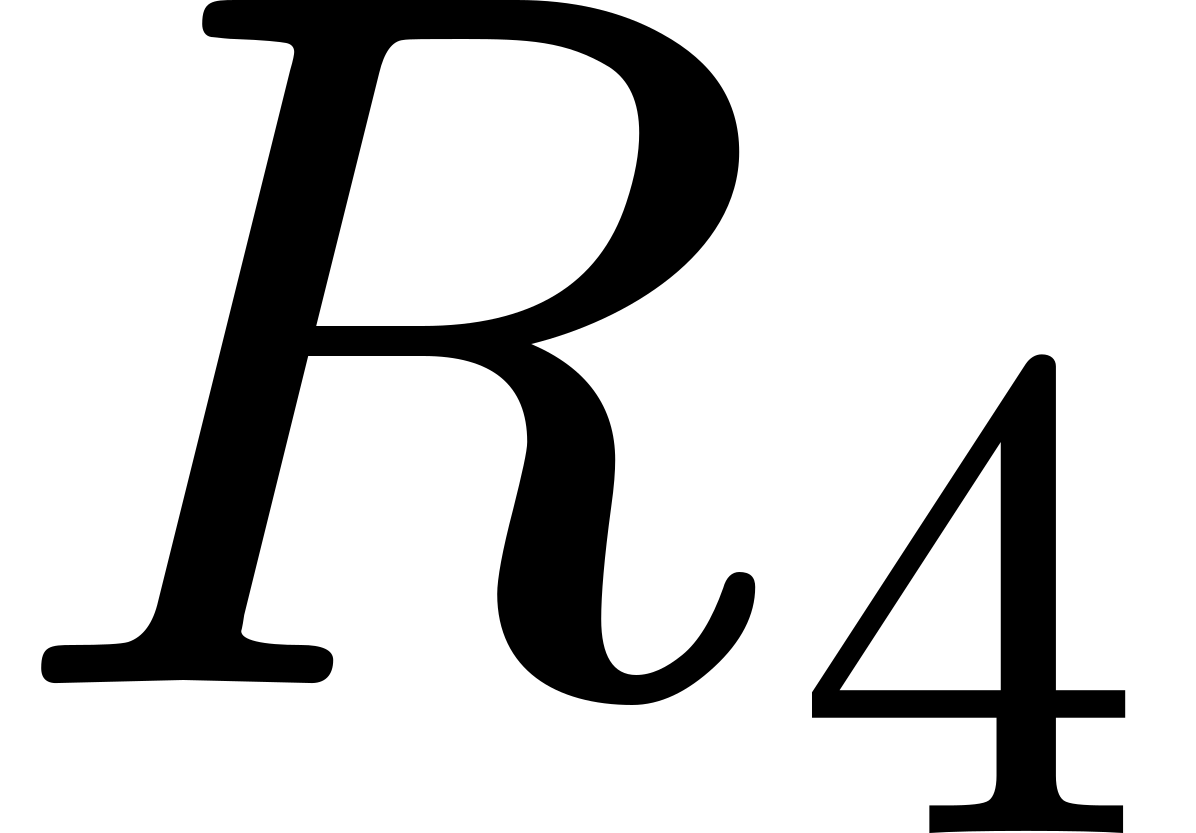 , and, as is well-known, serve
to define their metric.
, and, as is well-known, serve
to define their metric.
As in every case they give ten relationships between the sixteen
parameters , we need only find six other
apparently reasonable conditions connecting the latter, in order
to mark out a special lattice (the world lattice) from among
all the possible quadruplets and lattices corresponding to the
space-time-manifold .
We shall shortly (§6) carry out this final step, which is in fact the only essential one. Meanwhile we may appropriately lead up to it by putting Maxwell's equations into a suitable form.
5. Electromagnetic equations.
Let  be the (covariant,
contravariant, and -uplet) components of the skew-symmetrical
tensor
be the (covariant,
contravariant, and -uplet) components of the skew-symmetrical
tensor  which defines the electromagnetic field
in the space-time world; let
which defines the electromagnetic field
in the space-time world; let  (a vector) be the
current-vector[9] and
(a vector) be the
current-vector[9] and 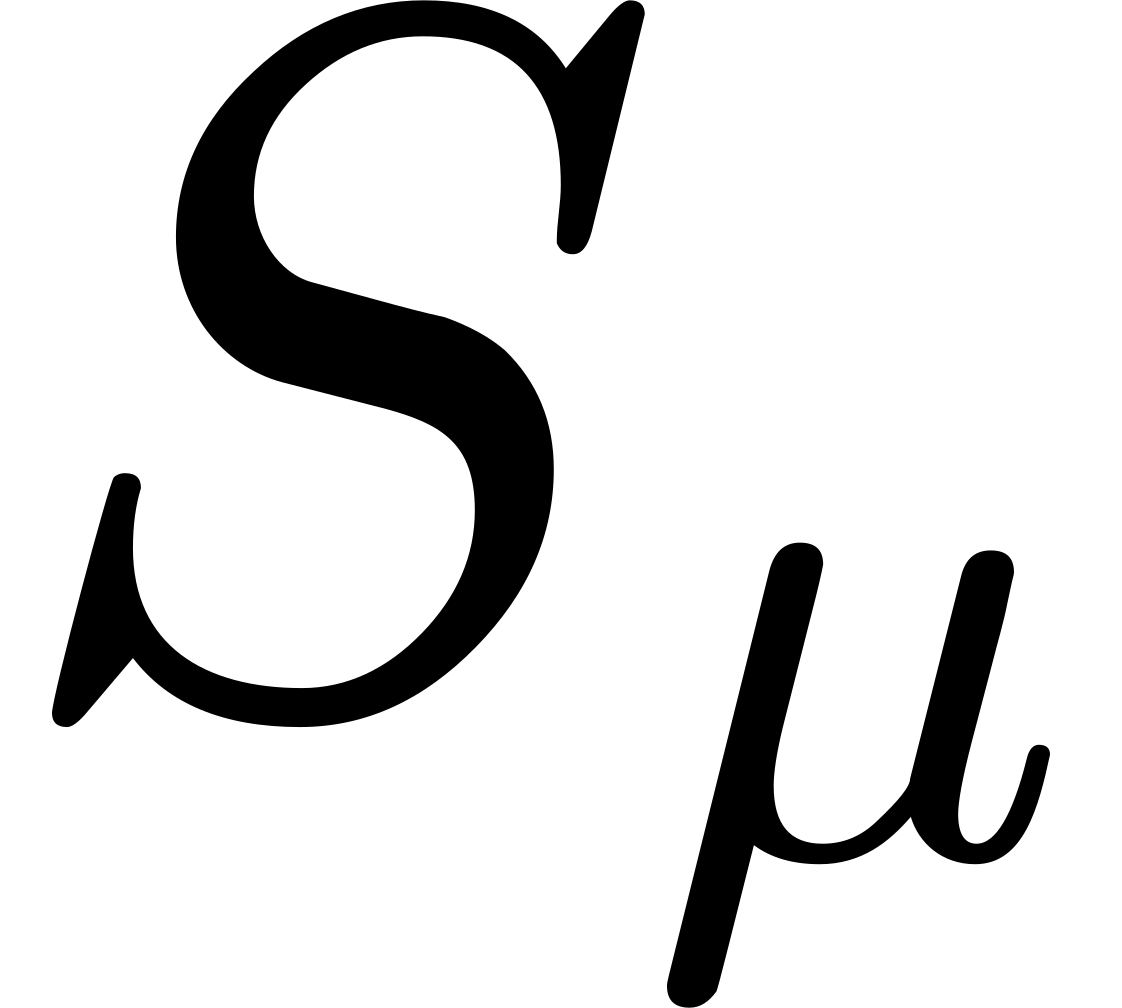 ,
,  , its four components, where
all the quantities are understood to be measured in so-called rational
units.
, its four components, where
all the quantities are understood to be measured in so-called rational
units.
Maxwell's equations (as adopted in the general theory of relativity
after Einstein) then take the forms

Each group contains four equations, so that at first glance one would
take the total number of equations to be eight. But we necessarily
have  , so that by (31) there must
exist two identical relationships, namely those which express the
fact that the divergences in question vanish. Thus two equations
of the system (34) may (with appropriate subsidiary conditions) be
regarded as resulting from the other six; and in fact we know that if
is regarded as given or as associated in some other way
with the tensor , then the equations (34) merely serve to
determine the six components of for
, so that by (31) there must
exist two identical relationships, namely those which express the
fact that the divergences in question vanish. Thus two equations
of the system (34) may (with appropriate subsidiary conditions) be
regarded as resulting from the other six; and in fact we know that if
is regarded as given or as associated in some other way
with the tensor , then the equations (34) merely serve to
determine the six components of for 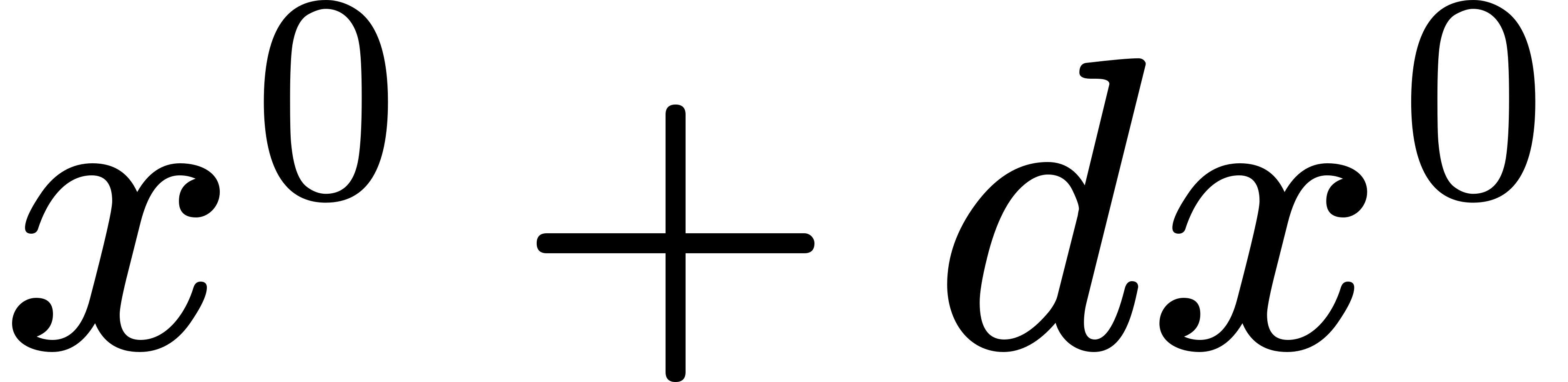 uniquely from their values for a given
 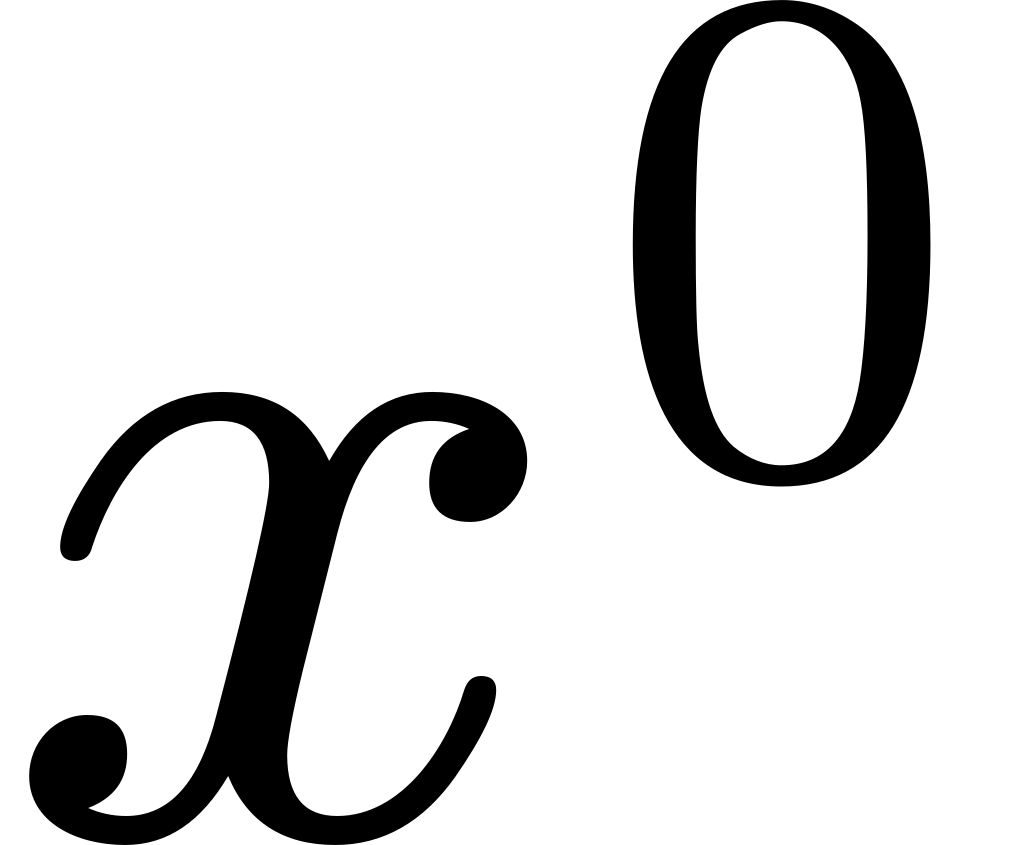 (and any
 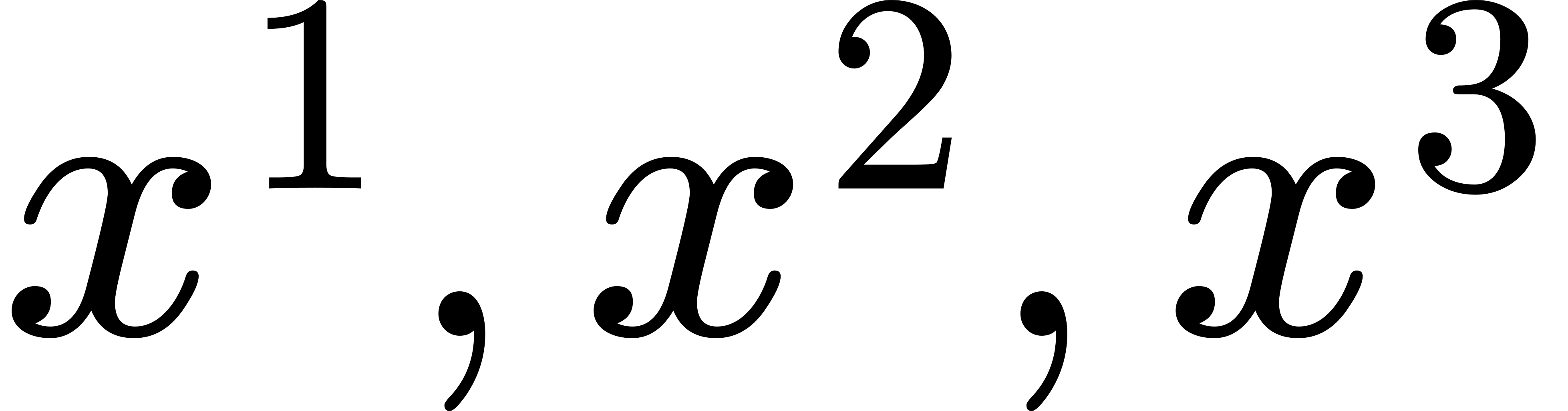 ).
).
We have still to write down the symmetrical stress-energy tensor
explicitly. As is well known, its covariant components are defined as
follows:

By composition with 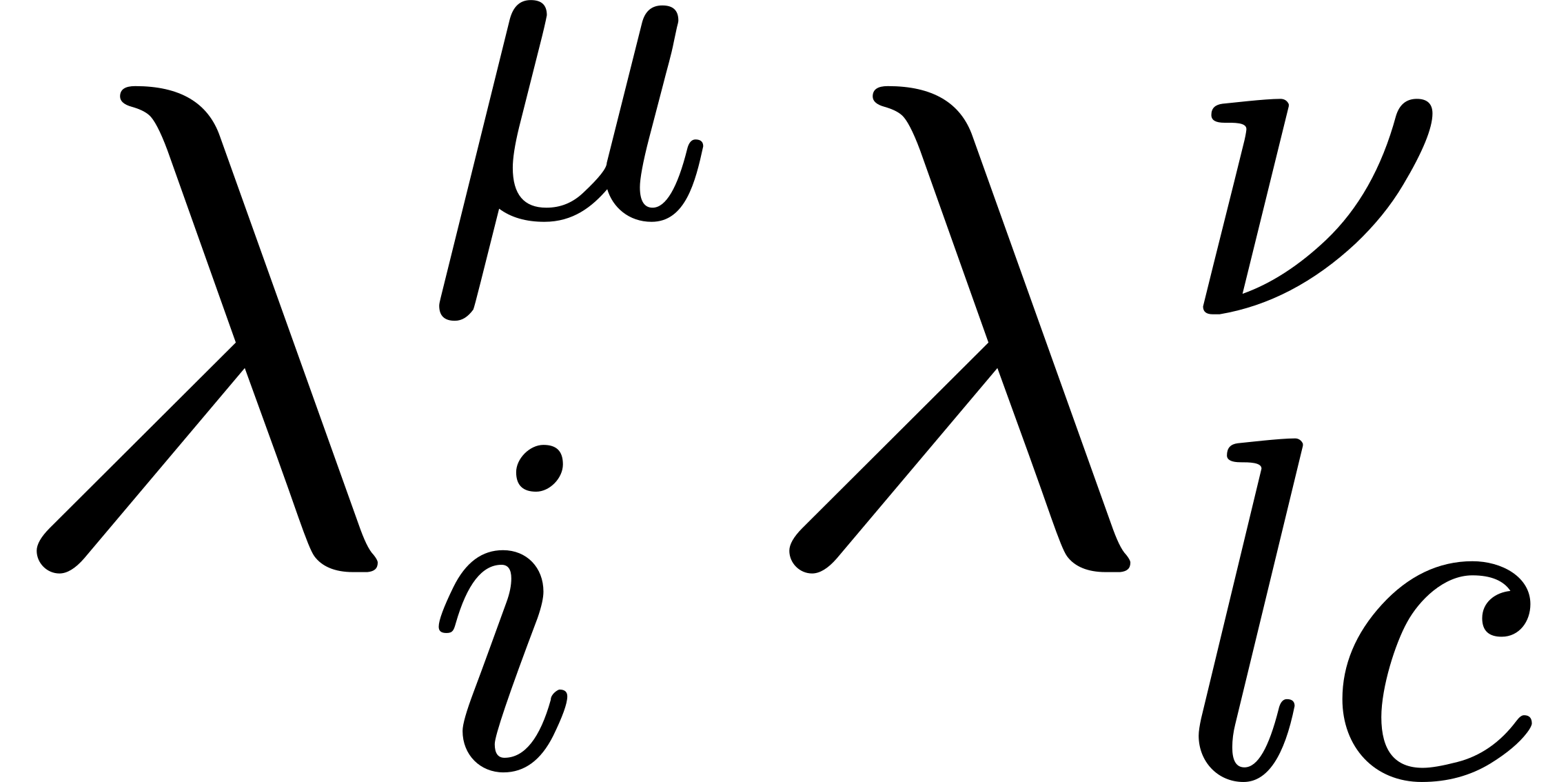 (by replacing
 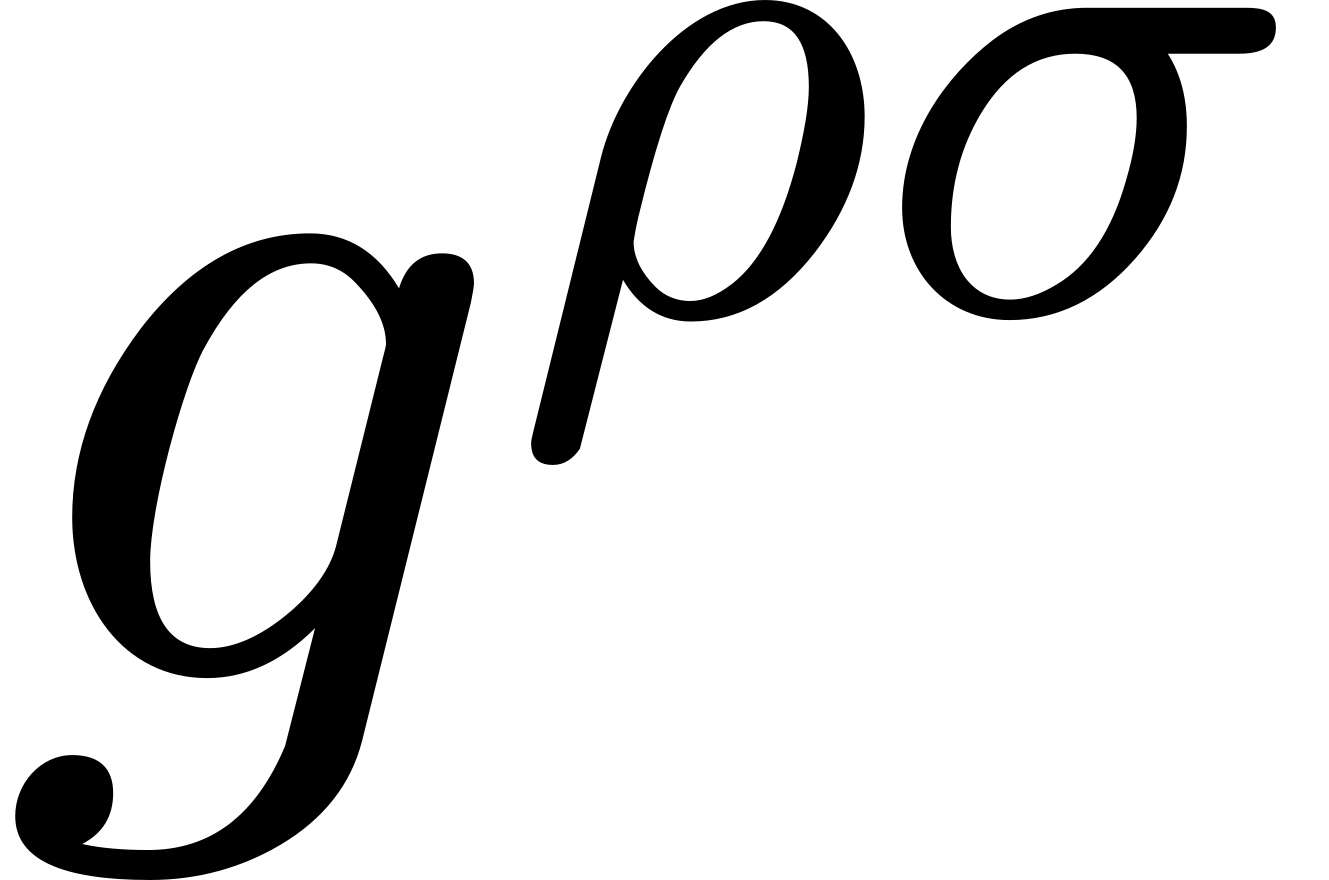 on the right-hand side by
 and
and 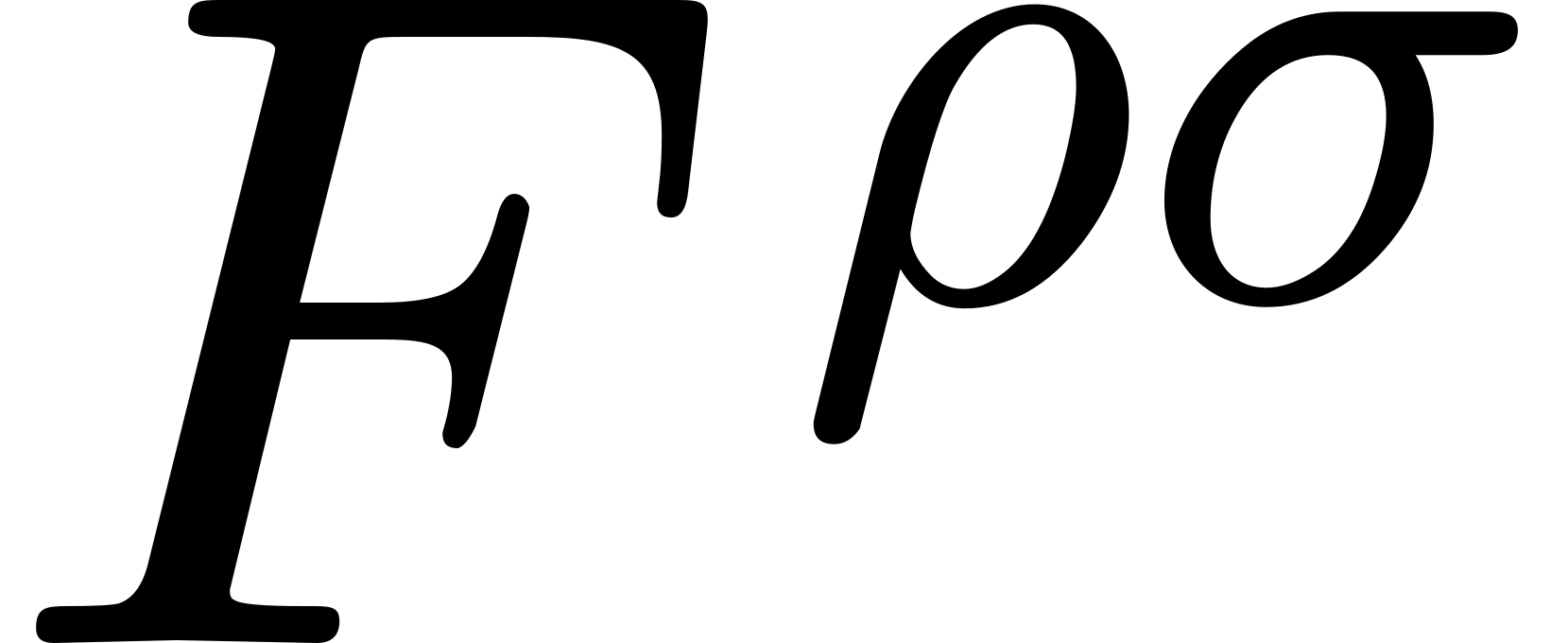 by
by  )
we obtain the required -uplet tensor formula:
)
we obtain the required -uplet tensor formula:

6. Interpretation of the electromagnetic tensor in the world lattice. Purely geometrical formulation of the field equations.
A priori we may quite arbitrarily connect the six -uplet
components  of the electromagnetic field
with any geometrical properties of a quadruplet (thereby defined)
of the . A very simple way of doing this is to make the
quantities
of the electromagnetic field
with any geometrical properties of a quadruplet (thereby defined)
of the . A very simple way of doing this is to make the
quantities 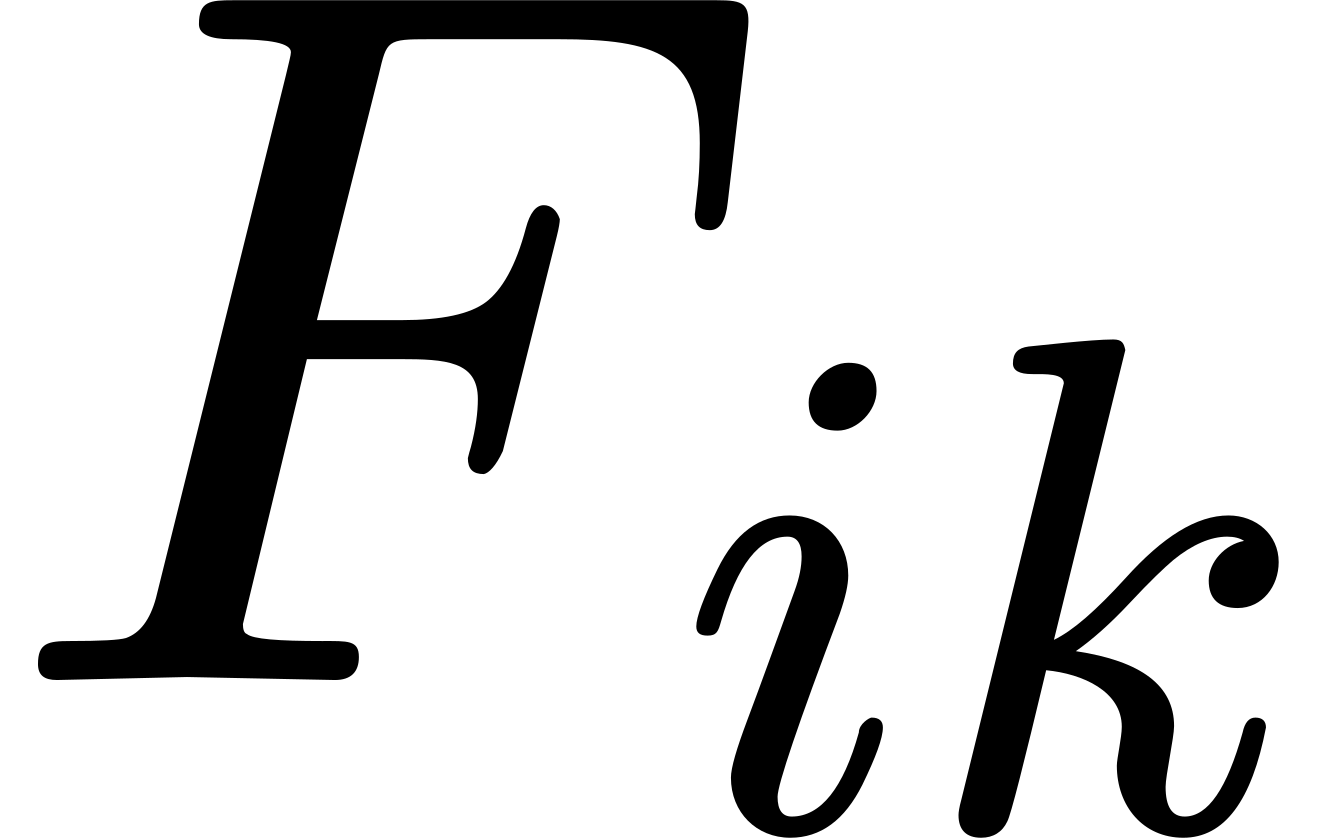 proportional to the corresponding elements of a
(differential) skew-symmetrical local -uplet tensor, e.g. to the
differential expressions, of the second or first order respectively,
which are defined by the equations
proportional to the corresponding elements of a
(differential) skew-symmetrical local -uplet tensor, e.g. to the
differential expressions, of the second or first order respectively,
which are defined by the equations
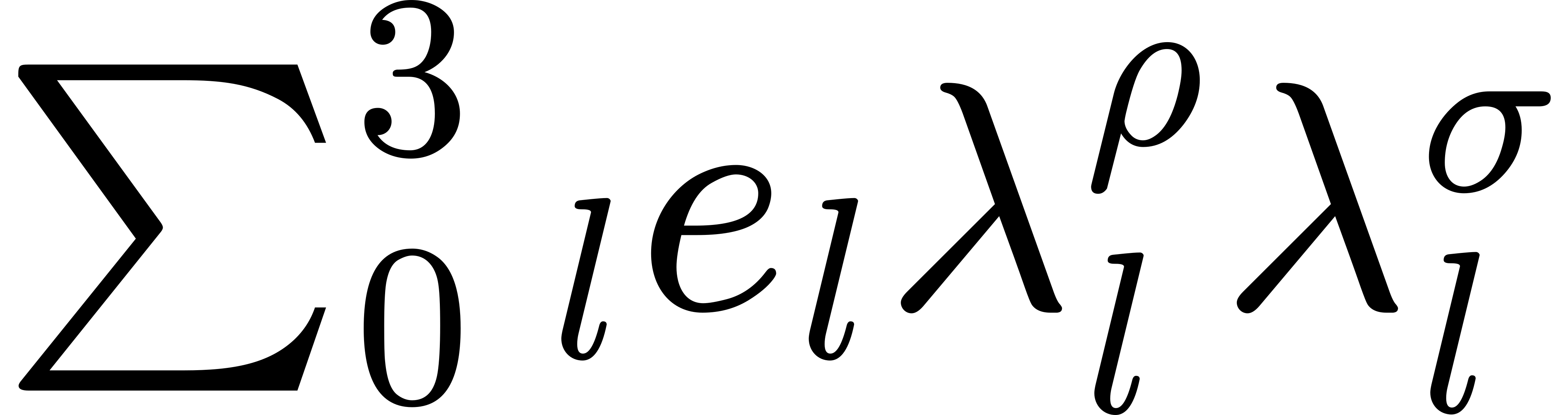
 of §3.
As we shall see, the best way is to select the first expression, and we
accordingly put
 where
where  denotes a constant.
As the Ricci coefficients of rotation are merely
ratios of an angle and a length, the quantities are of
dimensions 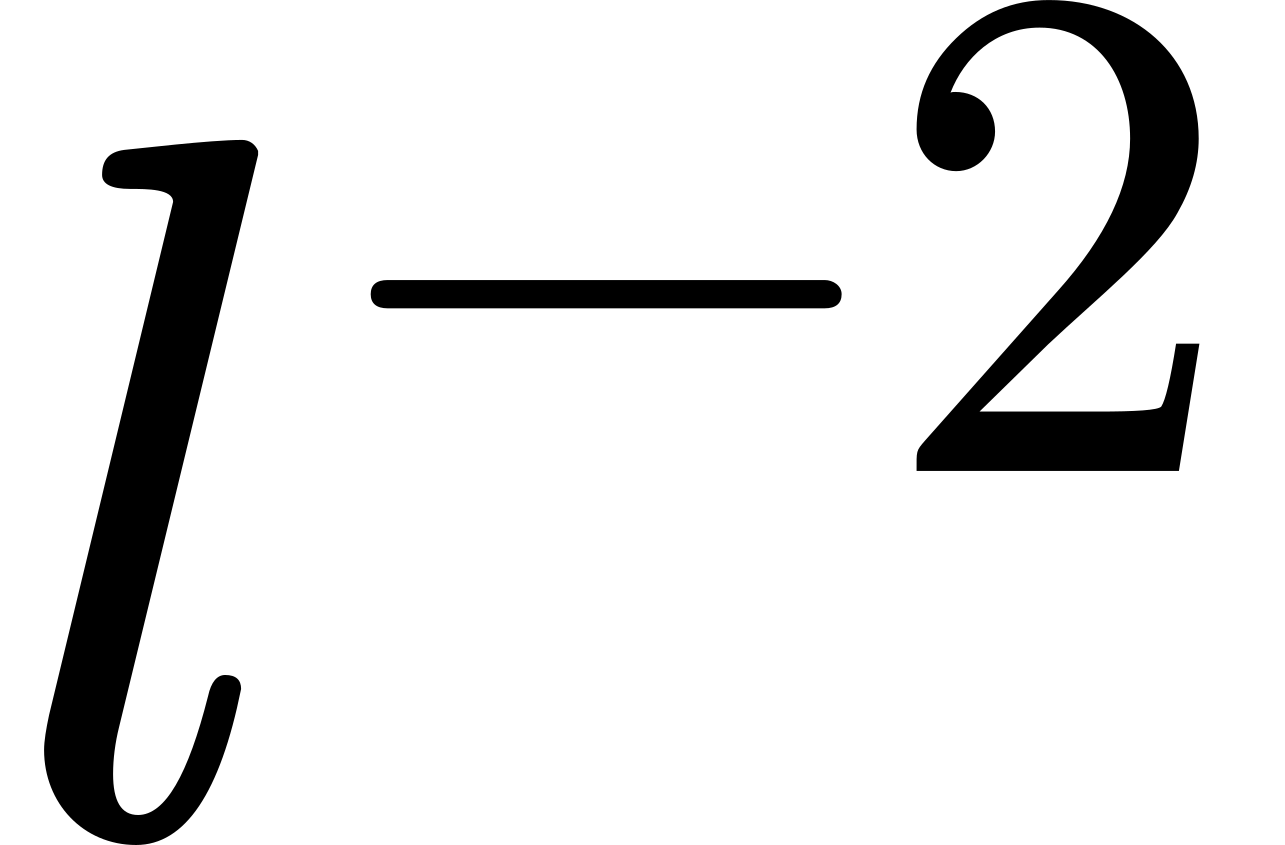 . The quantities , on
the other hand, behave like the square root of an energy-density.
Consequently we have
. The quantities , on
the other hand, behave like the square root of an energy-density.
Consequently we have

Hence the factor of proportionality has dimensions
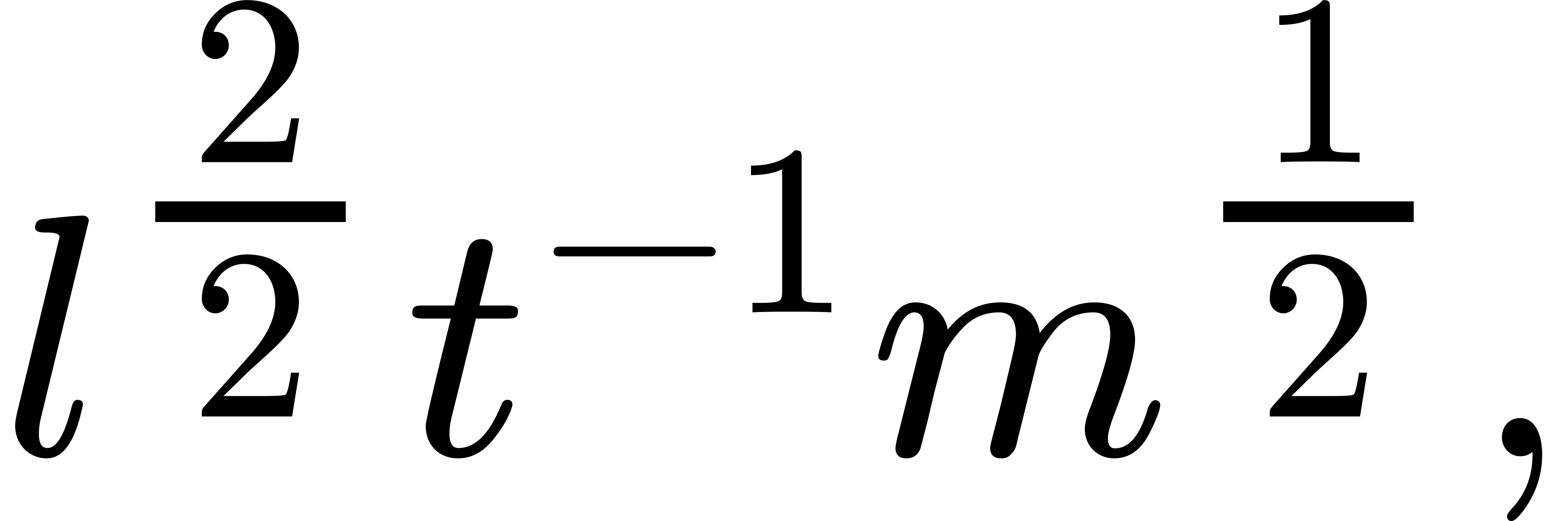 which are those of an electric charge , e.g. the electronic
charge, so that we may write
which are those of an electric charge , e.g. the electronic
charge, so that we may write
 where the factor of proportionality
 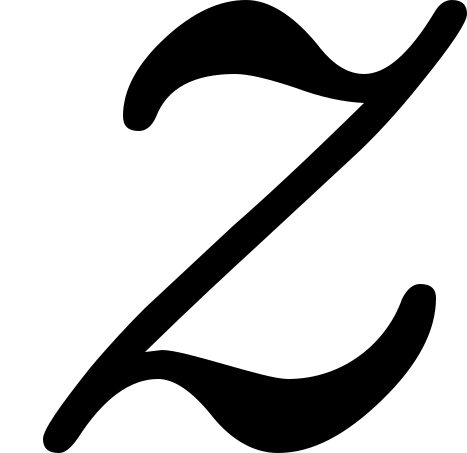 is now a pure number.
Moreover, we may also replace in (36) by any other quantity of
the same dimensions; e.g. we may put
is now a pure number.
Moreover, we may also replace in (36) by any other quantity of
the same dimensions; e.g. we may put
 where
where 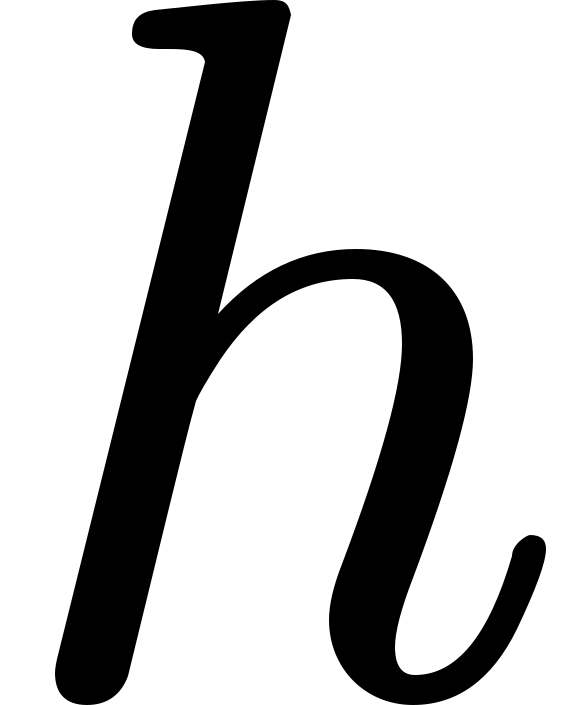 is Planck's constant, the velocity of light in empty
space, and
is Planck's constant, the velocity of light in empty
space, and 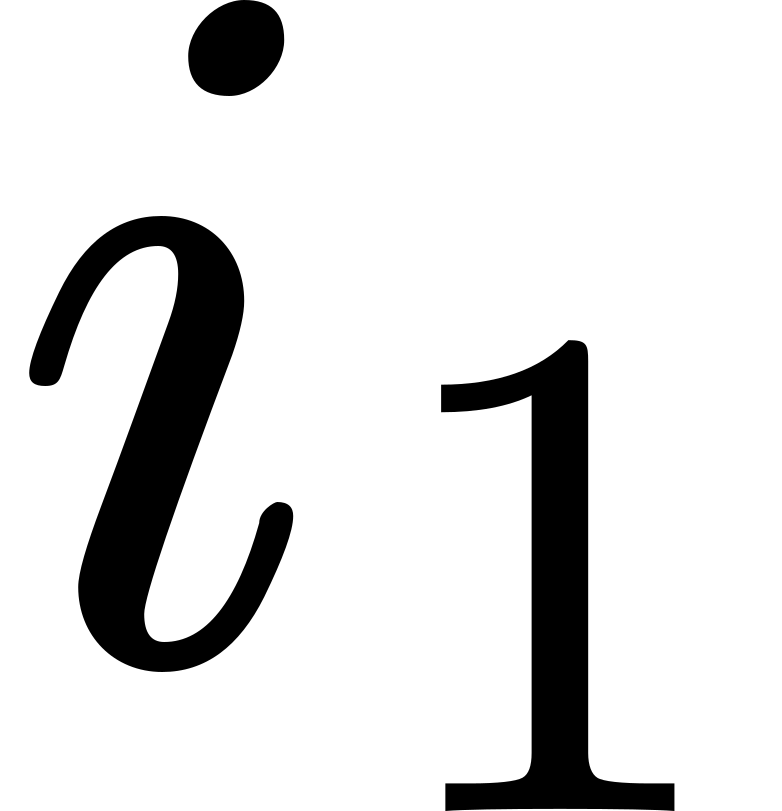 a pure number.
Hence the final forms of the geometrical equations which arise from the
Maxwellian system (34) and our proposed addition (P), are
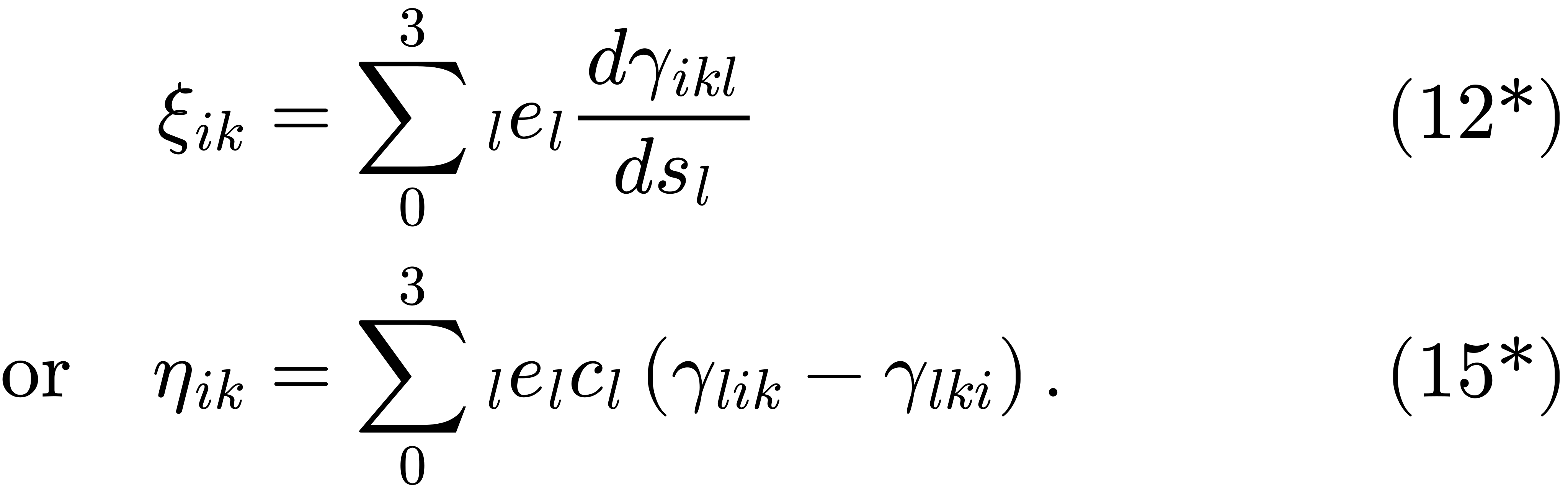
 where means the local -uplet tensor (12*).
In conclusion, then, the geometrical definition of the quadruplet
(world lattice) associated with the field is to be taken from the
two systems (I) and (II), which together give sixteen
(apparently eighteen, but in reality only sixteen) differential
equations (of the second and third order respectively) involving the
sixteen -uplet parameters .
where means the local -uplet tensor (12*).
In conclusion, then, the geometrical definition of the quadruplet
(world lattice) associated with the field is to be taken from the
two systems (I) and (II), which together give sixteen
(apparently eighteen, but in reality only sixteen) differential
equations (of the second and third order respectively) involving the
sixteen -uplet parameters .
7. The case of empty space: absence of an electromagnetic field.
In empty space  , (I) reduces in virtue of
(32) to the form
, (I) reduces in virtue of
(32) to the form
 where the term
 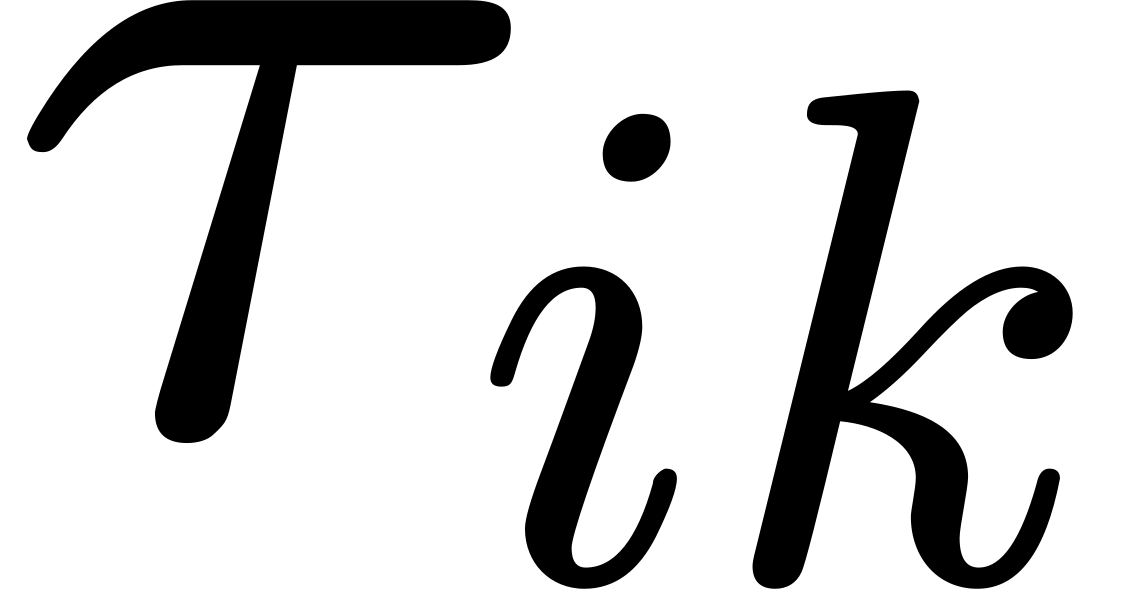 on the right-hand side is given by
 by (35) and (P); while the system (II) becomes

If the electromagnetic field vanishes in addition to the external
energy tensor  , the quantities , and
hence, by
, the quantities , and
hence, by 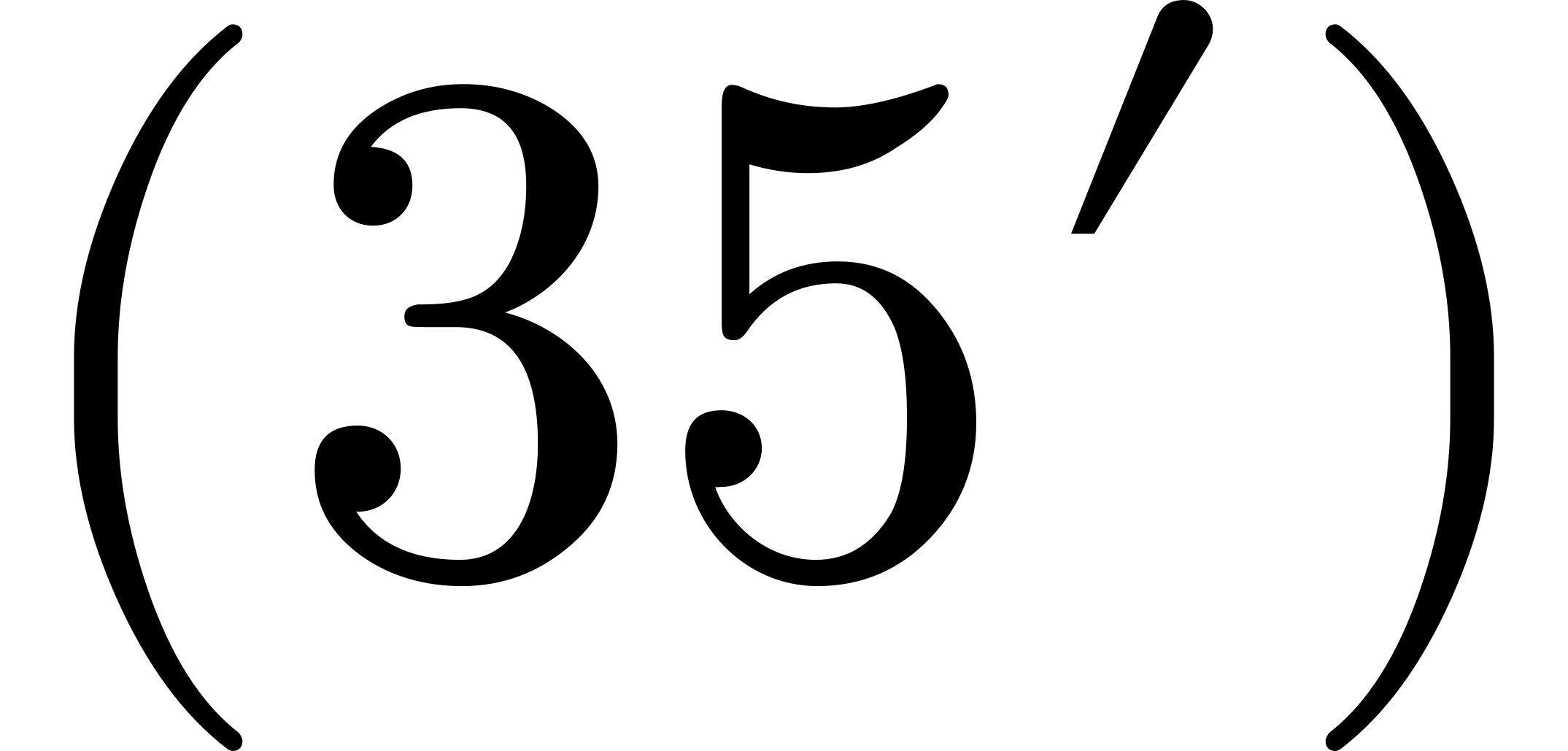 , the quantities
 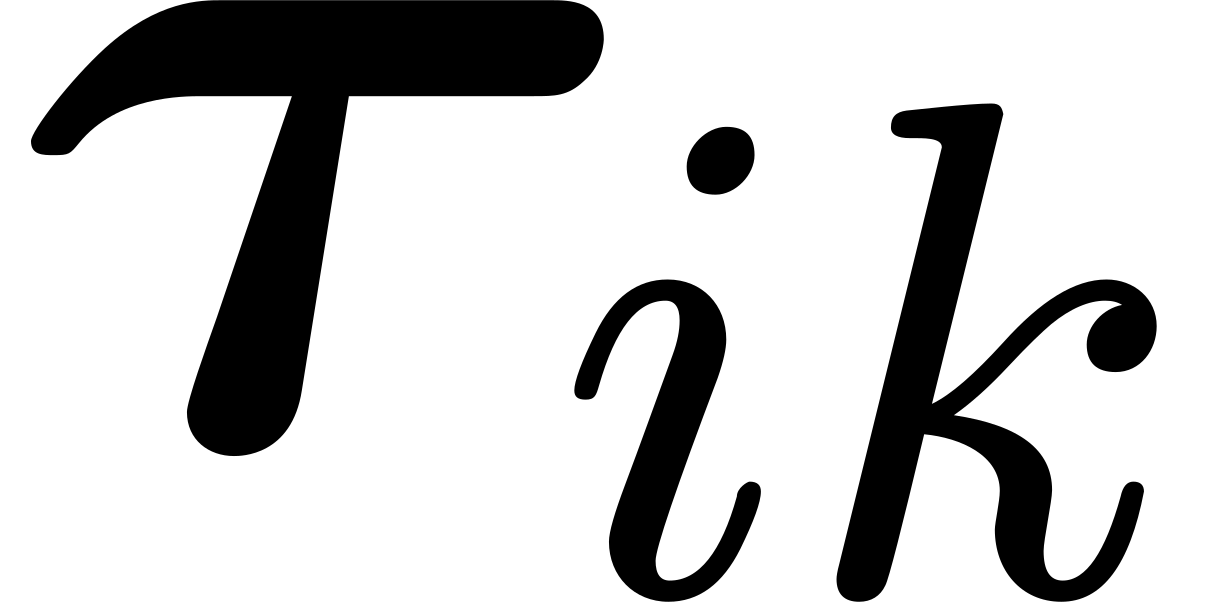 also, are
equal to zero. If this happens everywhere in the space-time world, we
know [10] that the equations
also, are
equal to zero. If this happens everywhere in the space-time world, we
know [10] that the equations 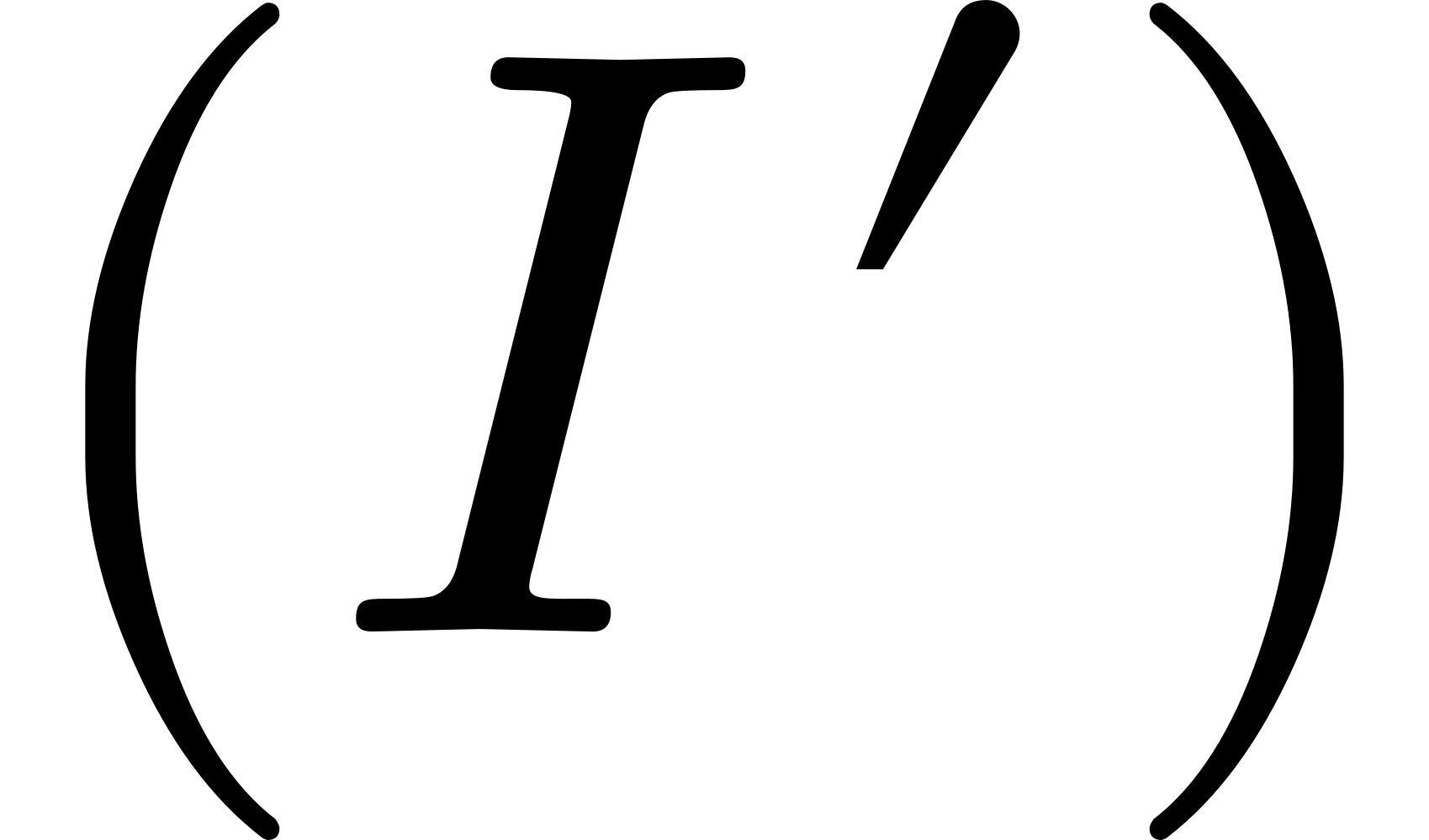 , which simply become
 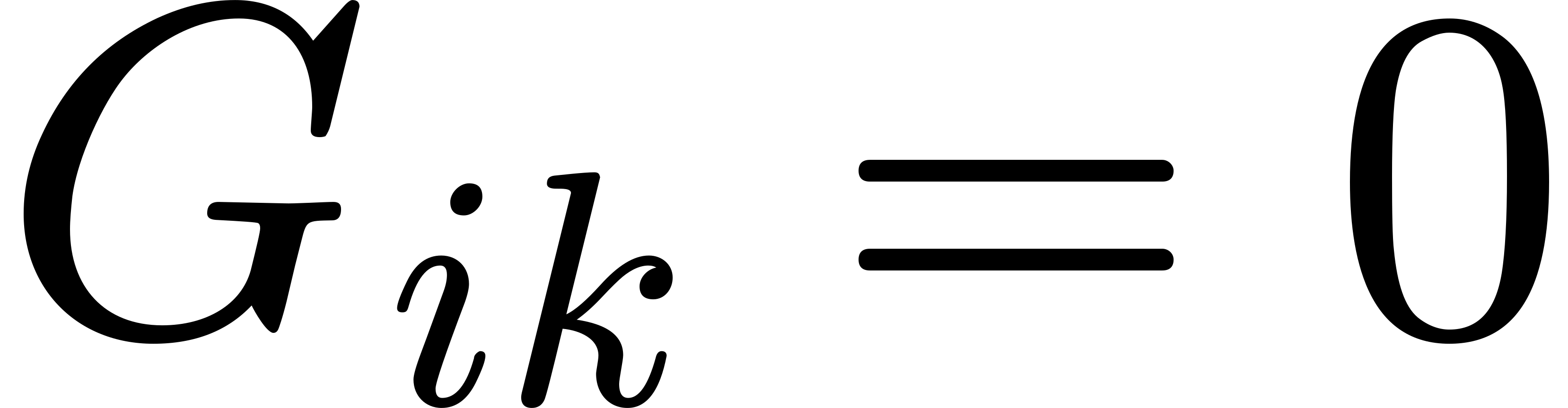 ,
necessarily imply that the metric of the space is Euclidean or, more
correctly, pseudo-Euclidean.
,
necessarily imply that the metric of the space is Euclidean or, more
correctly, pseudo-Euclidean.
What, then, is the geometrical meaning of the absence of
electromagnetic phenomena in this limiting case, i.e. what is the
geometrical meaning of the equations

They simply state the fact that the world lattice is Cartesian or, more correctly, pseudo-Cartesian.
In order to give as concise a proof of this as possible, I shall only consider quadruplets in which the deviations from a pseudo-Cartesian lattice are infinitely small.
If, in particular, we take the co-ordinates 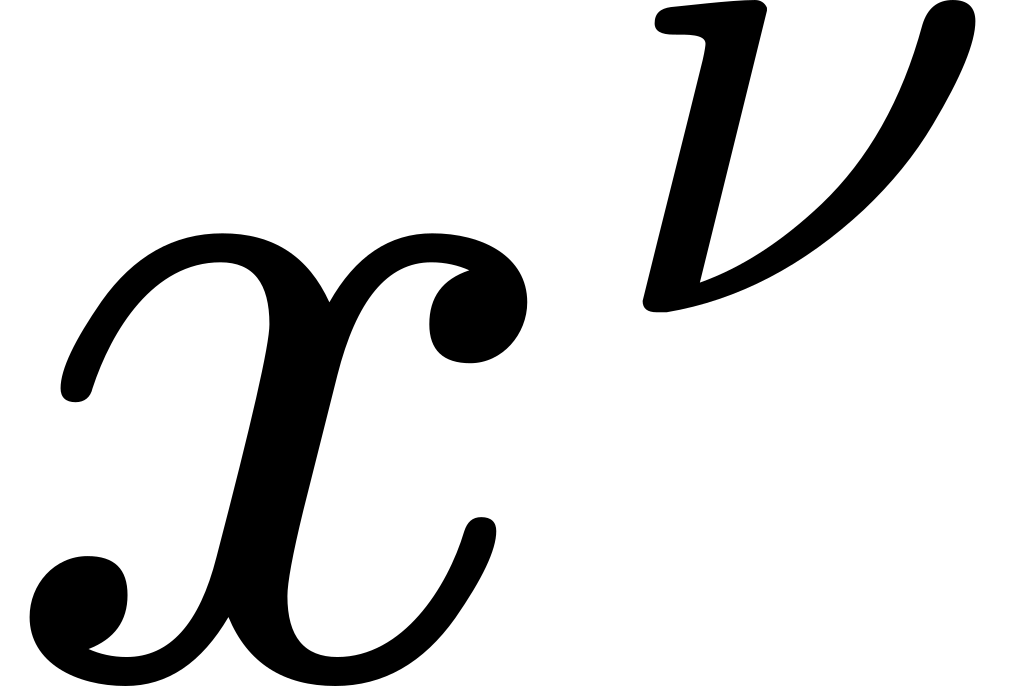 to be Cartesian
co-ordinates with respect to that lattice, we have
to be Cartesian
co-ordinates with respect to that lattice, we have
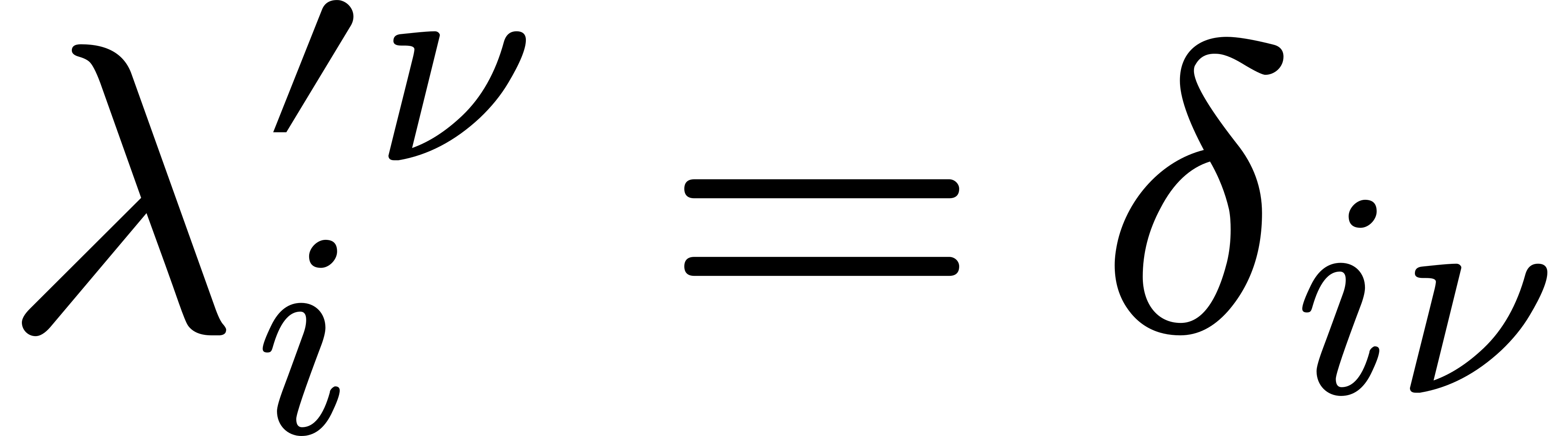 for the parameters of the corresponding quadruplet.
Let be the parameters of any
neighbouring quadruplet. Since the passage from the quantities
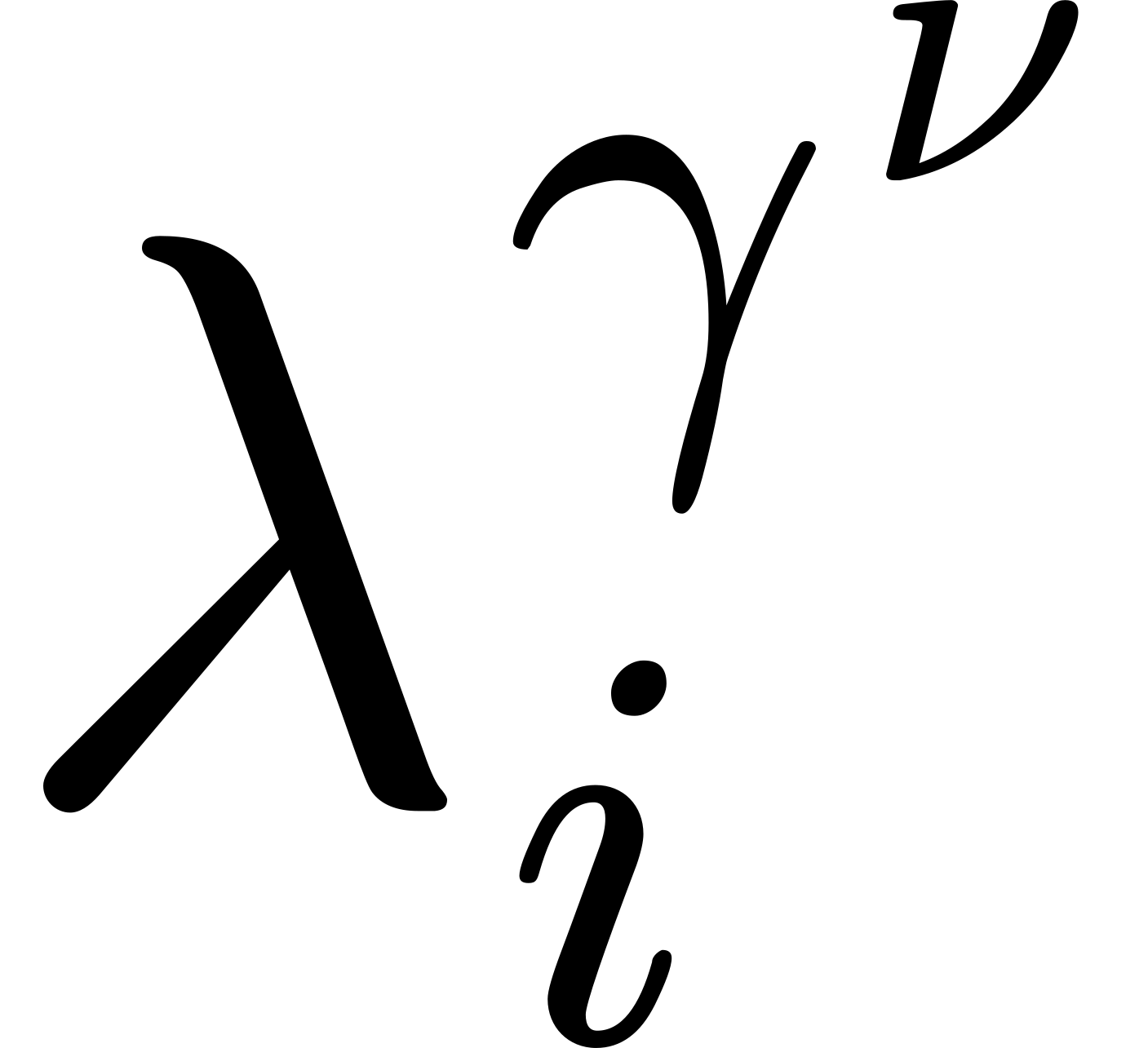 to the quantities
corresponds to an infinitesimal pseudo-orthogonal transformation, the
quantities must, by (29), be expressible as
follows:
to the quantities
corresponds to an infinitesimal pseudo-orthogonal transformation, the
quantities must, by (29), be expressible as
follows:
 where the quantities form a skew-symmetrical
-uplet tensor. From this we can immediately calculate the
reciprocal elements. To a first approximation we obtain
where the quantities form a skew-symmetrical
-uplet tensor. From this we can immediately calculate the
reciprocal elements. To a first approximation we obtain
 whence, multiplying by ,

On the other hand, if we altogether neglect infinitely small
quantities, the operators
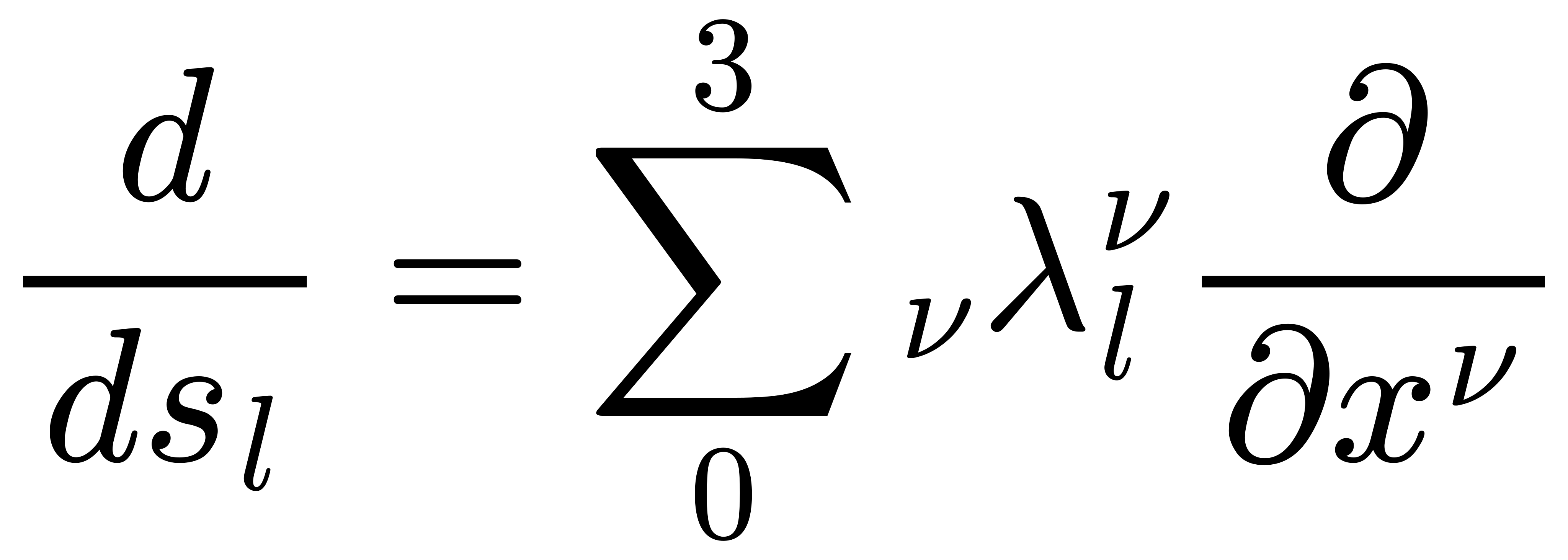 reduce to the simple form
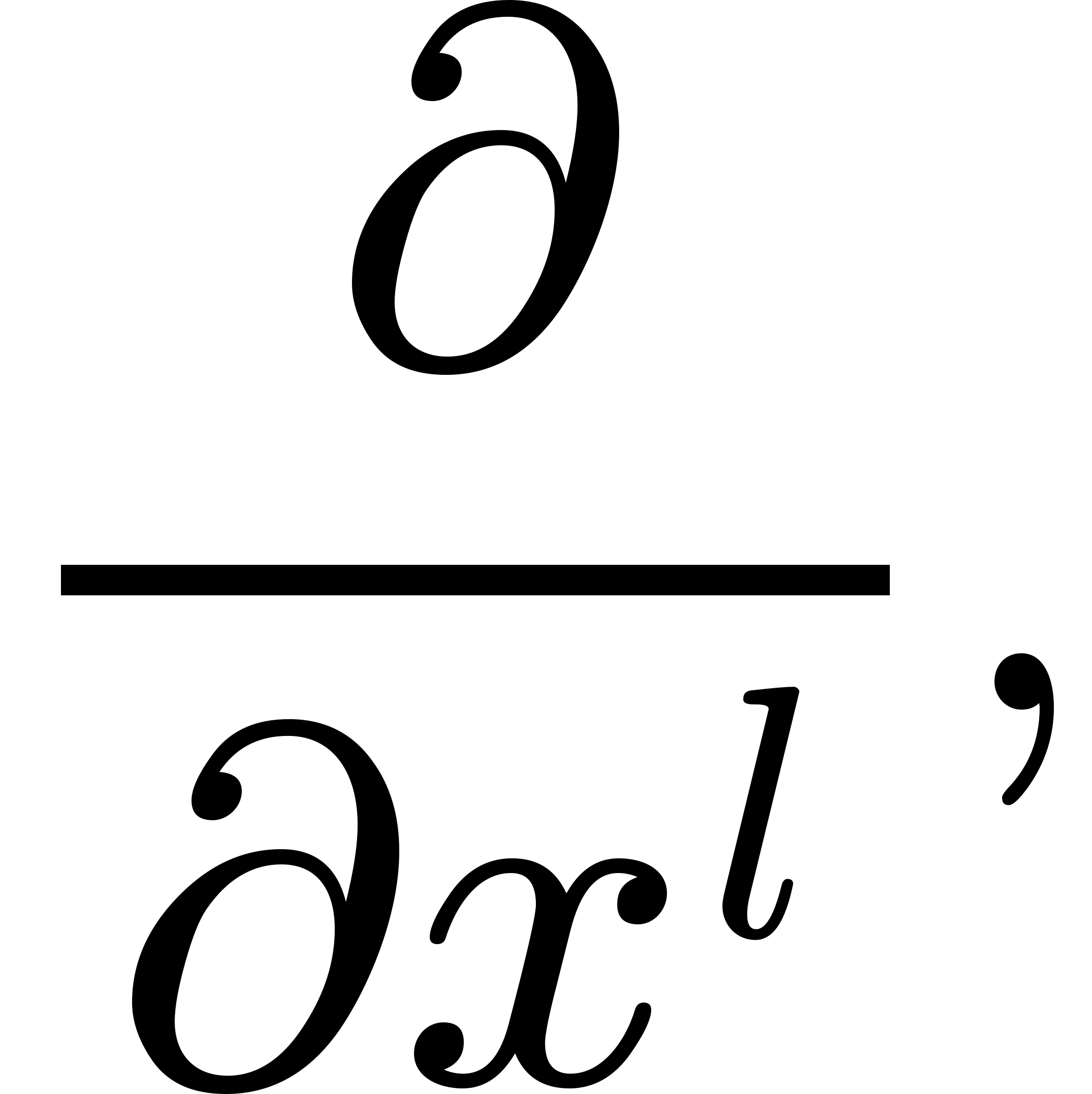 and the covariant derivatives reduce to their usual forms.
Thus (4), the definition of the rotational invariants , gives
(except for infinitely small quantities of the second order)
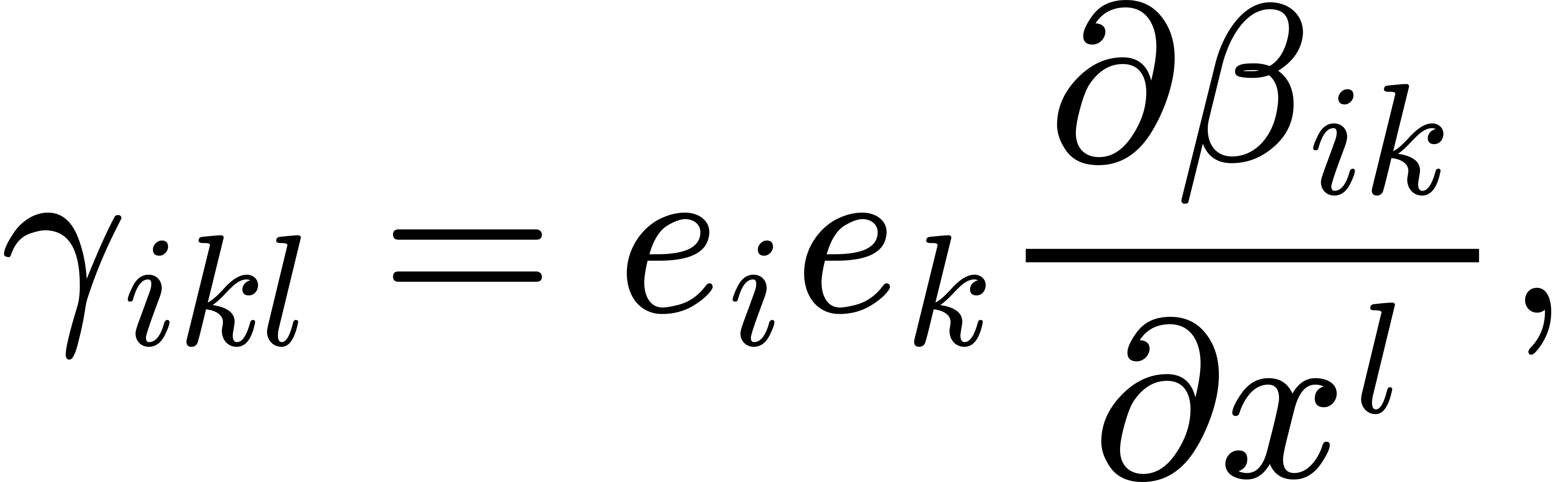 and from (12*) we further obtain
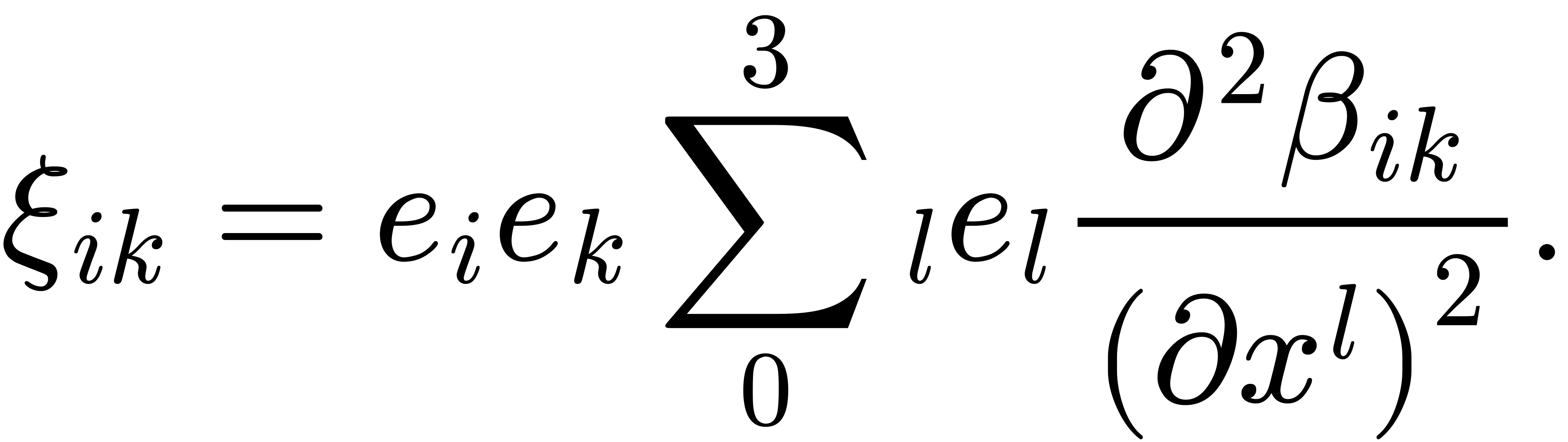
The differential operator 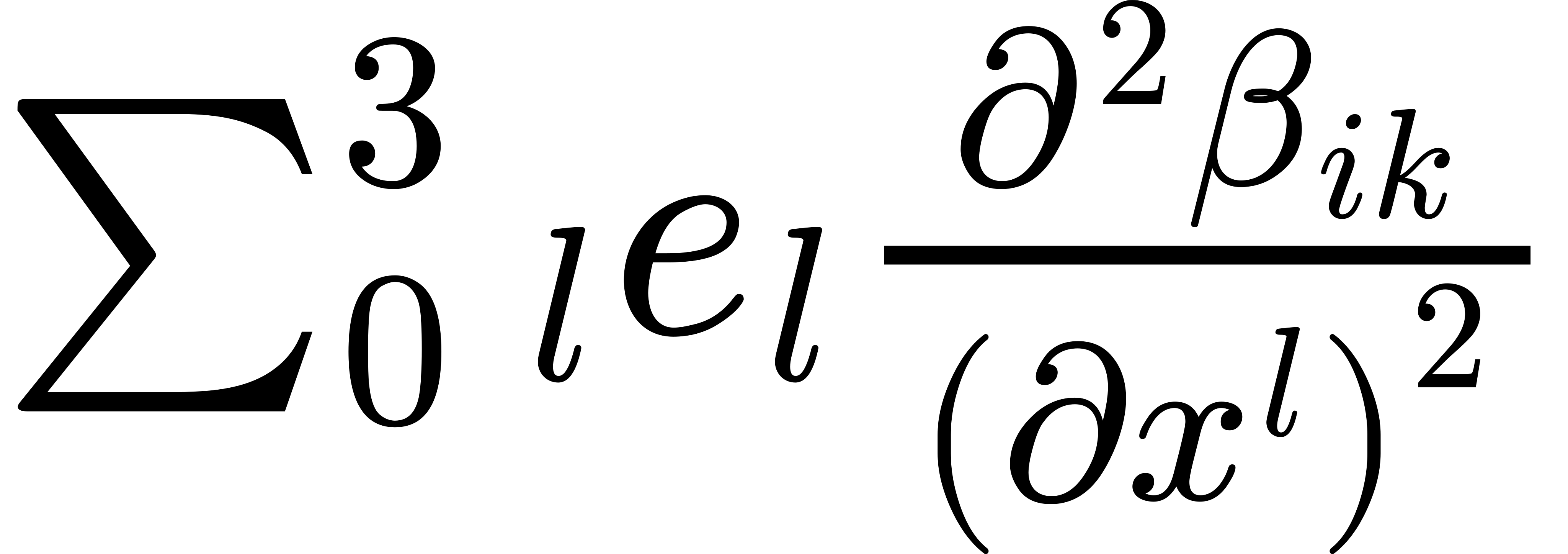 is none other than the Dalembertian or Lorentz operator
  .
Thus the equations (37) take the form
.
Thus the equations (37) take the form
 and together with suitable initial and boundary conditions they give
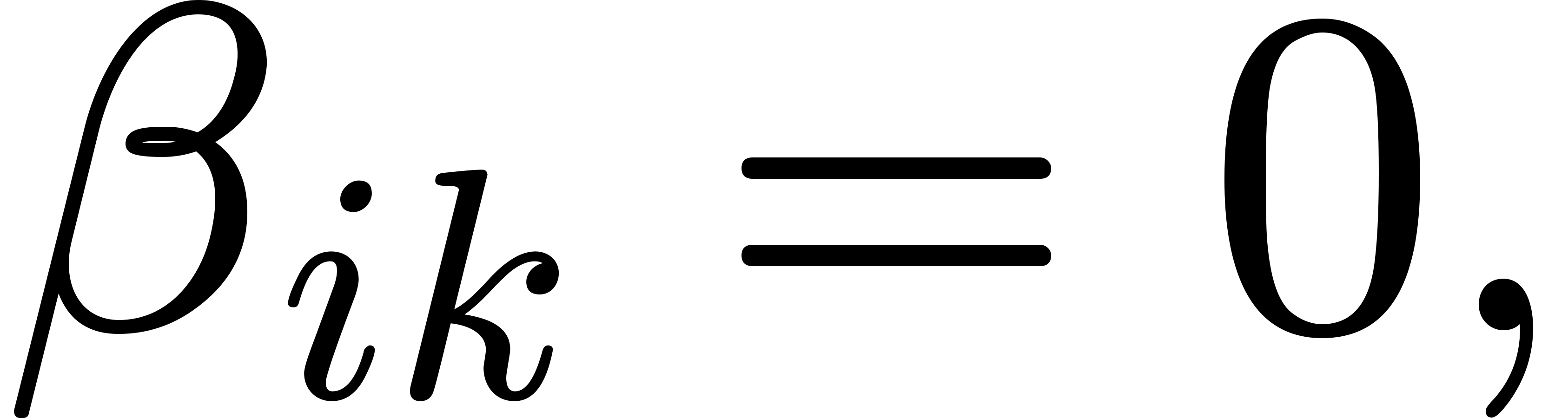 i.e. the Cartesian (or, more correctly, pseudo-Cartesian)
character of the world lattice. I think that this conclusion
justifies our assumption (P). If we had put, say,
i.e. the Cartesian (or, more correctly, pseudo-Cartesian)
character of the world lattice. I think that this conclusion
justifies our assumption (P). If we had put, say,
 where the quantities
 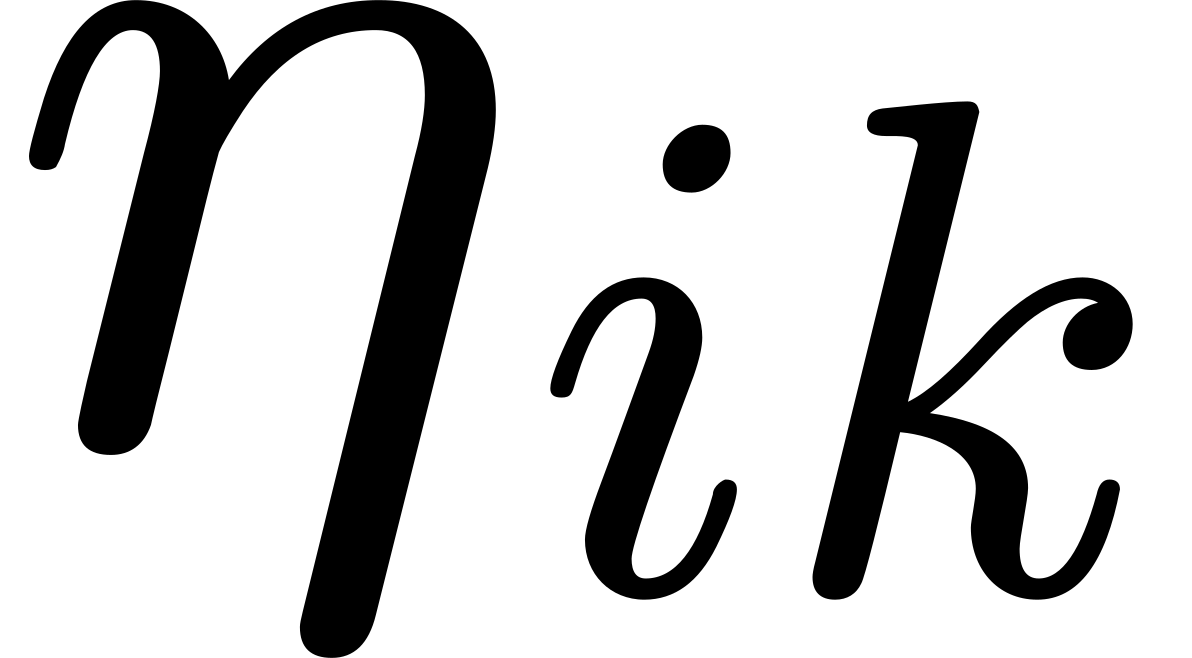 are given by the expressions (15*),
we should not have obtained any satisfactory result.
are given by the expressions (15*),
we should not have obtained any satisfactory result.
A more general assumption, such as
 would, on the other hand, be more complicated, though just as
admissible as (A) from the logical point of view. To a first
approximation, in fact, we should obtain the same result, as the
would, on the other hand, be more complicated, though just as
admissible as (A) from the logical point of view. To a first
approximation, in fact, we should obtain the same result, as the
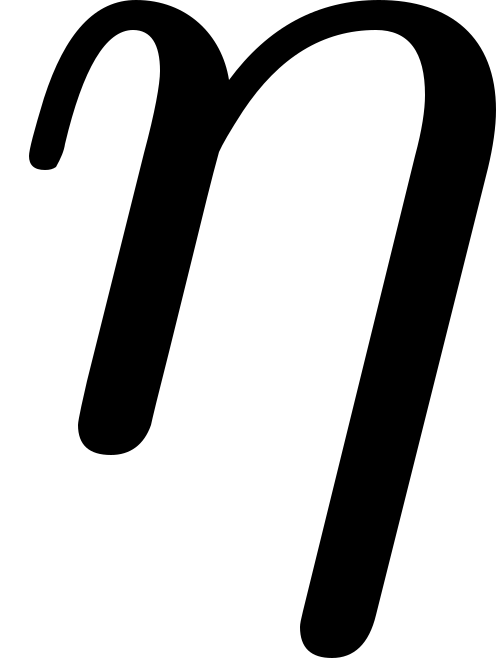 's are of higher order than the 's.
[1] Berliner Berichte, I, 1929, pp. 1-8.
[2] Ger. Vierbein.
[3] See in particular my Absolute Differential Calculus (English translation by Miss Long), Chap. III. Blackie & Son, Ltd., 1927.
[4] Ger. n-Bein.
[5] Ger. Beintensor.
[6] Die Relativitätstheorie, Bd. II (2nd edition, Vieweg. Brunswick, 1923), § 14.
[7] Riemannian Geometry, Princeton University Press, 1926, Chap. III.
[8] Given in 1918 by Cisotti (Rend. Acc. Lincei, Vol. XXVII, pp. 366-371), but confined to the (imaginary) notation of (8), (10), (11).
[9] Ger. Viererstrom.
[10] Cf. Serini, Rend. Acc. Lincei, Vol. XX VII, 1918, pp. 235-238.